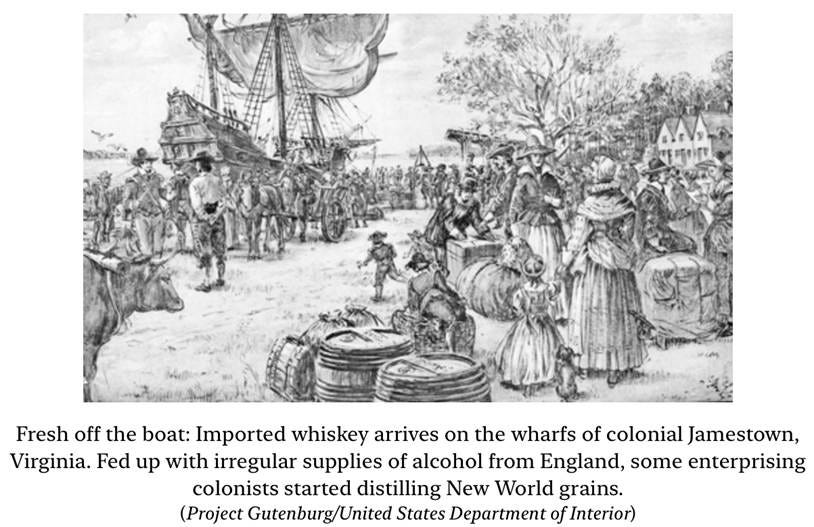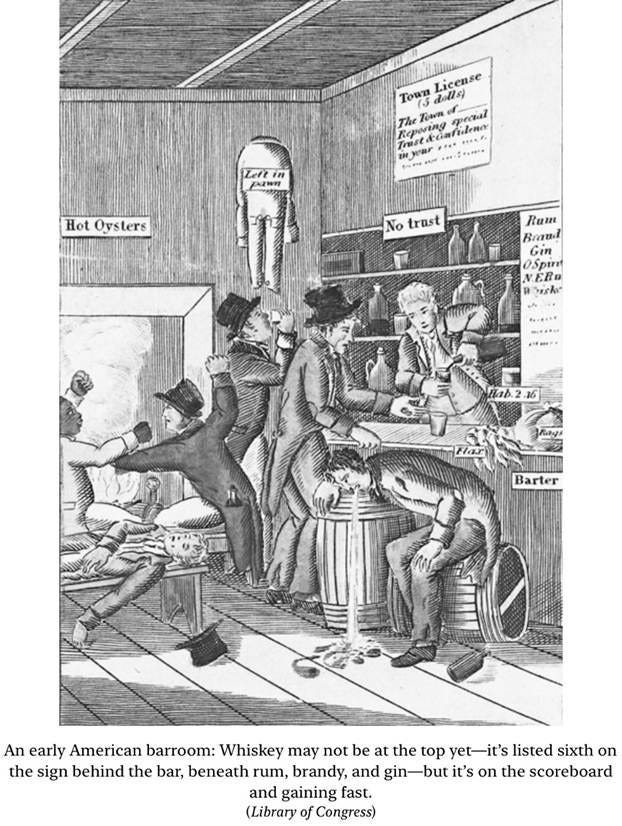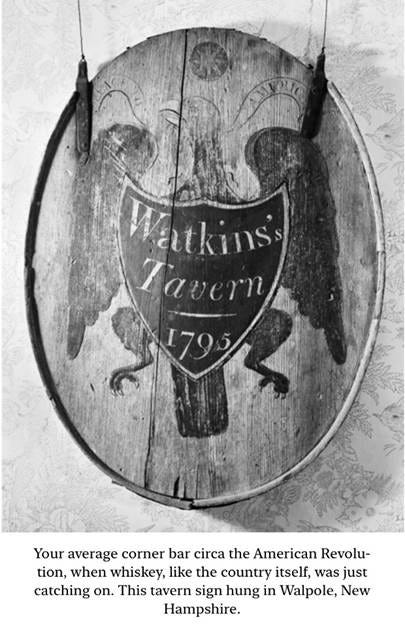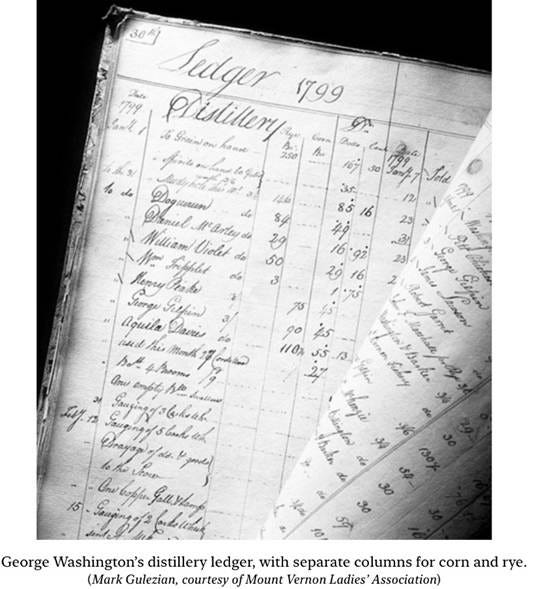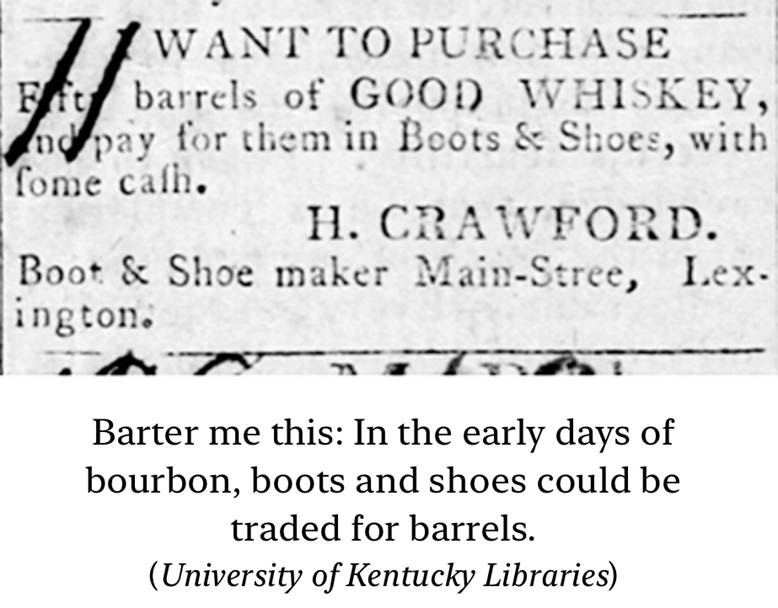


I covered the origin of corn spirit in my last piece, American Whiskey’s early days. Treat this current article as a supplement to the mashbill. Will rum of the corn come up again? It must. But only because cane spirit helps to tell the full story of American drinking. This piece will be significantly shorter with many quote dumps (and added context) to round out the learnings on “America’s Native Spirit.” A bunch of pictures at the end to help those who need to see it to believe it.
Hell, let’s start with a quote right now –
“It should therefore become the particular aim of the American distiller to make a spirit purely American, entirely the produce of our own country; and if the pure, unadulterated grain spirit cannot be rendered sufficiently palatable to those tastes, that are vitiated by the use of French brandy or Jamaican rum, let us search our own woods for an article to give it taste sufficiently pleasant for these depraved appetites.” — Harrison Hall, The Distiller, 1818
Translation: we need to make our own juice using our domestic agricultural materials, and if our booze doesn’t taste as good as “French brandy or Jamaican rum,” then we need to try harder.
Historical references to whiskey, in relation to “brandy” and “rum” (the original indulgences), are incredibly mundane to the initiated, though I acknowledge that those references will read surprising to most. To share another example, the man donning our hundreds uttered grape-spirit and “rum” references as well, very explicitly I’ll add –
“First, for making good wine of our own wild Grapes. Secondly, for raising Madeira Wine in [this] province. Thirdly, for the Improvement of our Corn Spirits, so as they may be preferable to Rum. And this seems very material; for as we raise more Corn than the English West-India Islands can take off, and since we cannot now well sell it to the foreign Islands, what can we do with the Overplus better, than to turn it into Spirit, and thereby lessen the Demand for West-India Rum, which our Grain will not pay for?” — Benjamin Franklin, Poor Richard’s Almanac

A 1620 attempt at naming the “father” of bourbon.
One George Thorpe, Esq. –
But stating that bourbon, even in a primitive or inchoate form, did not exist before acquiring its moniker is a bit like saying America did not exist prior to the Declaration of Independence. There’s always something there beforehand, and such things warrant not only mention but the credit they deserve. Which is why we’re not only going to slap a birthday on bourbon a good century and a half before conventional estimates, we’re also going to file our own version of a historical paternity suit—and make the controversial claim that the real father of our national spirit was not some philandering frontiersman or seductive Scots-Irish fellow, but an educated English gentleman by the name of Captain George Thorpe, Esq.
On December 19, 1620—the date of birth we’re going to stamp, although not without some controversy, on bourbon’s birth certificate—George Thorpe wrote the following in a letter to his buddy John Smyth of Nibley, with original seventeenth-century syntax preserved for effect: “Wee have found a waie to make soe good drink of Indian corne I have divers times refused to drinke good stronge English beare and chose to drink that.” – George Thorpe, Esq.
Crowgey also notes this exchange in his book. However, where Huckelbridge’s analysis misses the mark for me is that I’m fairly certain the discourse is centered around a beverage closer to corn beer and not corn whiskey.
By 1620, one of the colonists could write to a friend in England that they were making a drink from Indian corn which he preferred to English beer. — Crowgey
To be fair to Huckelbridge, he does affirm that we should acknowledge George Thorpe as a worthy predecessor rather than scrutinize the “good drink of Indian corne” as a firm whiskey stance. Put simply: everything starts somewhere, regardless of how rudimentary those initial steps.
A Pre-American Revolution reminder of Rum’s importance.
1770 is a particularly great year to analyze, given the economic history recordkeeping for that particular season (see this piece for reference) –
By 1770, the 140-some rum distilleries of the colonies were producing more than five million gallons of rum on their own, and importing another four million from the Caribbean. Some estimates put the average amount consumed by an adult male of that era at three pints a week. Rum, it seemed, had become the American drink, thanks to its colonial master an ocean away. And as long as the cheap rum kept coming, America, although not entirely content with British rule, was at least willing to suffer it. Why tinker around making whiskey, when rum could be had for next to nothing? A good question, and one that several hundred thousand redcoats were soon to answer.
But as we know, the newly minted nation ripped this historical sheet of paper to shreds in 1776. As Huckelbridge funnily notes, the American colonists went on to battle “intoxication without representation.”
The Scots-Irish are coming: from one land to another, constantly.
Between 1717 and 1775, the peak period of immigration, perhaps as many as a quarter of a million of these border people left the English colonies of Scotland and Ireland for the English colonies in America, coming at a rate of more than five thousand a year. Some stayed on the Eastern Seaboard, but many more set off for the hinterlands of Pennsylvania and Virginia, where the land they craved was still available for the taking. And American Independence—an event in which their long rifles and anti-English sentiment had played no small part—opened up even more land in Kentucky and Tennessee, frontiers that had previously been made off-limits by the British. The Scots-Irish packed their mules and wagons, headed down the famous Wilderness Trail, and poured through the previously infamous Cumberland Gap, a pass made passable by Daniel Boone himself. Cabins were built, crops were planted, and trusty old stills were fired anew. Which brings us back to the matter at hand: bourbon whiskey.
Backwoods whiskey production commences in a new location (Kentucky). The author makes clear that rye whiskey (in the contemporary sense), or “Monongahela” (in the back-then sense), was produced in “Pennsylvania where many Scots-Irish initially set up camp before the opening of Kentucky.” Rye is, of course, an “Old World grain,” so those Europeans who fled were simply working with what they were used to. Or, as most immigrants do, recreate home away from home.
Civil War and whiskey.
“I hope to have God on my side, but I must have Kentucky.” — Abraham Lincoln (a native of the Bluegrass State)
As mentioned in the Crowgey piece, I maintain low expectations for historically rigorous analysis surrounding chattel slavery and its consequences for American Whiskey’s earliest days. And so it was here as it was there; I don’t say this to project negative sentiments. Only to say that it is a fairly predictable outcome that, unfortunately, keeps the rigorous reader wanting.
But Huckelbridge does a good job showcasing the inflationary consequences of war as it relates to the brown juice –
A gallon of good-quality whiskey in the winter of 1860 would have run the secession-minded Southerner a mere twenty-five cents. By 1863, that same gallon of spirits would break his bank at a whopping thirty-five dollars. And it wasn’t just aged rye and smuggled bourbon that yielded to the immutable laws of supply and demand—even the rough stuff shot through the roof.
Some of that “rough stuff” went by names such as “Popskull,” which Popcaan would approve of, and “Nockum Stiff,” which is one of the more quintessential Southern epithets I’ve come across. One misstep I believe the author made was concluding that the Civil War led to the death of the small timer (farmer-distiller) in favor of those more enterprising. It is more complete to say that there was less competition post-War, so those still around – those who were able to adapt – had the good fortune of not having as many people to compete with. Nonetheless, it is a very apt point to highlight the emergence of today’s notable names out of a treacherous time –
What had formerly been an industry of small-timers seeking to make a little profit from leftover grain became, as a result of that winnowing process, a legitimate and serious business enterprise, led by the likes of D. M. Beam & Company, H. Wathen, Early Times, and J. W. Dant—names easily recognizable to the bourbon connoisseur today. And driven by postbellum opportunities, a scrappy new crop of entrepreneurial-minded candidates stepped to the distilling plate and took their swings, including an ambitious teenage boy left parentless and penniless by the war, just south of the Kentucky state line in Tennessee; his full name was Jasper Newton Daniel, but most of the folks around the way just called him Jack.
Whiskey in a country on the up-and-up.
The author notes that the “Gilded Age,” generally recognized as the years between 1870 and 1900, is a critical period to understand whiskey’s inflection point in the nation. The Gilded Age is when many of our modern-day cultural drinking scrutiny practices took form. Namely, the urge to know “what the hell is in the bottle?” Huckelbridge captures the story not often told around why regulatory pressures and the three-tier system developed: yes, to prevent monopolistic pressures from developing, which I’m not sure we necessarily accomplished, but also to prevent the mafioso-style undercutting of government tax profits. This is all in addition to, of course, protecting the producers.
In the late 1800s, the “Whiskey Ring” scandal was all the rage. Whiskey makers in St. Louis, New Orleans, Chicago, and Cincinnati sold lots of booze under the government’s nose –
The debacle that followed—complete with hired spies, deadly gangsters, warehouse brawls, and even secret telegrams from a shadowy figure code-named Sylph—would tarnish the reputation of the president [Grant] and that of the United States government as a whole, at a time when both were increasingly assumed to be in the pocket of big business.
The foremost and most press-worthy of the whiskey scams of the Gilded Age were those that occurred on a broad, financial scale, generally involving collusion of some form between the government bodies that regulated whiskey distilling and the distillers themselves.
There was very little regulation at the time, so the “Whiskey Ring” (and others) manipulated tax loopholes, speculated, and severely exploited anything else under the ‘white-collar’ crime bucket. Additionally, people cut corners on the production of whiskey – caramel coloring & additives – which further incensed producers and the government (firstly), and then consumers. The latter group would come around to the former group’s frustration because harmful chemicals/agents were mixed into the “whiskey” being produced, which often had fatal consequences.
On bad booze –
“Producers cannot afford to wait so long a time, and there being no demand from consumers for the newly distilled liquors, they are obliged to dispose of their product to what we in this country call Compounders, or Rectifiers, and in France Fabricants, or (vulgarly) empoisonneurs, which means poisoners.” — Leonard Monzert (19th century)
Again –
“Looking to add an artificial bead to your ersatz booze? Try “sweet oil and sulphuric acid.” Want your whiskey a little more astringent? “Cream of tartar, acetic acid, acetic ether” can all do the trick. If the spirit’s too sallow, a little “burnt sugar” and “black tea boiled thirty minutes” should suffice, and if it’s that good old “bed-bug flavor” you’re after—whatever the hell that is—good Sir Monzert suggests adding “a few drops of strong ammonia in a barrel of liquor.”
Even distributors were not to be trusted, since they too tampered with or mislabeled the liquid prior to it hitting the shelves (if the economic incentive was strong enough) –
For the sake of efficiency, whiskey makers became highly reliant on these sorts of regional distributors—Old Jordan bourbon was handled by W. H. Thomas & Son in Louisville, and Cedar Brook bourbon was the sole province of James Levy & Bro. in Cincinnati—and once the whiskey was under their control, what actually became of it was anyone’s guess.
Given the state and rigidity of American Whiskey rules today, we know that the above was cleaned up and straightened out, ushering in a new age of authenticity. From the government’s perspective, the age of making sure that he will get his cut no matter what!
Much left unsaid, which is simply encouragement.
One, to pick up the book.
Two, it is a friendly read because Huckelbridge takes a witty/humorous approach to telling the bourbon tale, which I find easiest for most to digest.
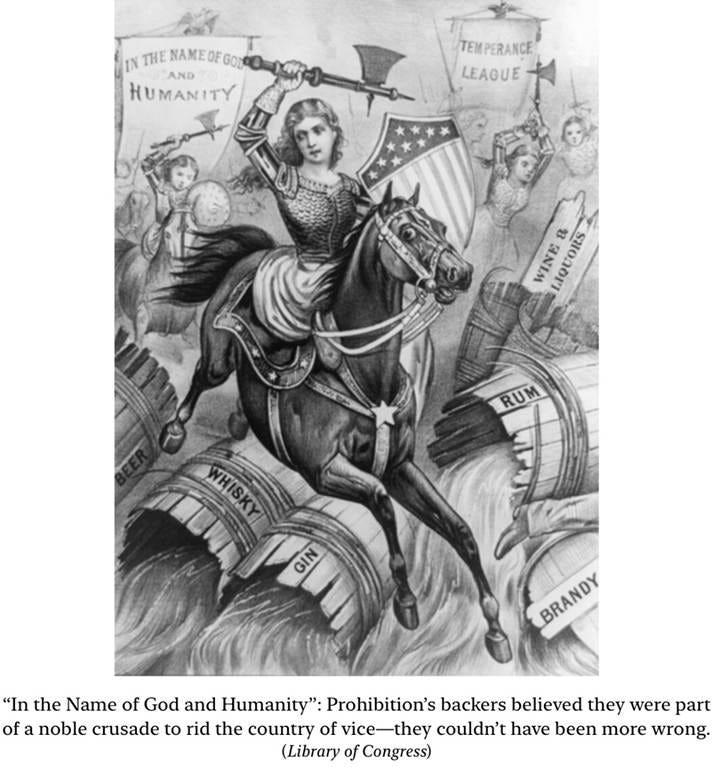
Three, he goes on a tear to describe the period from Prohibition (“The Noble Experiment”) right up to the 21st century. Well worth the time.
Before we wrap, I want to satisfy the itch of the corn whiskey enthusiast among us who have a penchant for detail surrounding the historical names behind the many expressions and/or distilleries that pay homage to those figures today.
Exhibit A: Edmund Haynes Taylor and his fight against the whiskey bandits of the day.
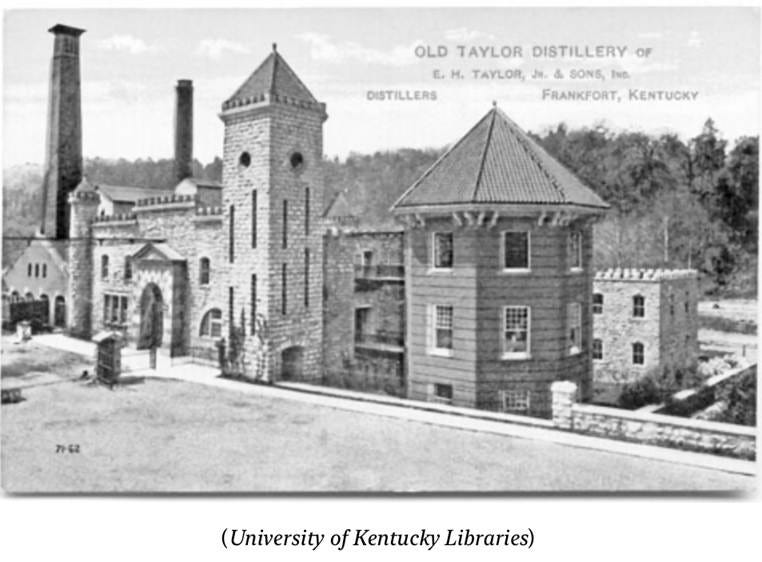
One of the first true bourbon aristocrats, he would run seven different distilleries over his career, including such famous tipples as Old Crow, Old Pepper, Old Taylor, and Old Fire Copper—all highly respected bourbons at that time. His greatest accomplishment was bringing to bourbon the concept of branding, imbuing each label with a character of its own. Whereas Dr. James C. Crow had made bourbon commercially viable through scientific innovation, Taylor furthered that legacy by making it marketable in a highly competitive whiskey field. No friend to the indifferent methods of the Whiskey Trust and their ilk, he would lament the arrival of “carelessly made whiskeys, whose aim is quantity and whose objective is mere chaffing for cheapness,” and bemoan how “the quality recedes as the cheapness advances. . . . The ancient Bourbon flavor has departed.”
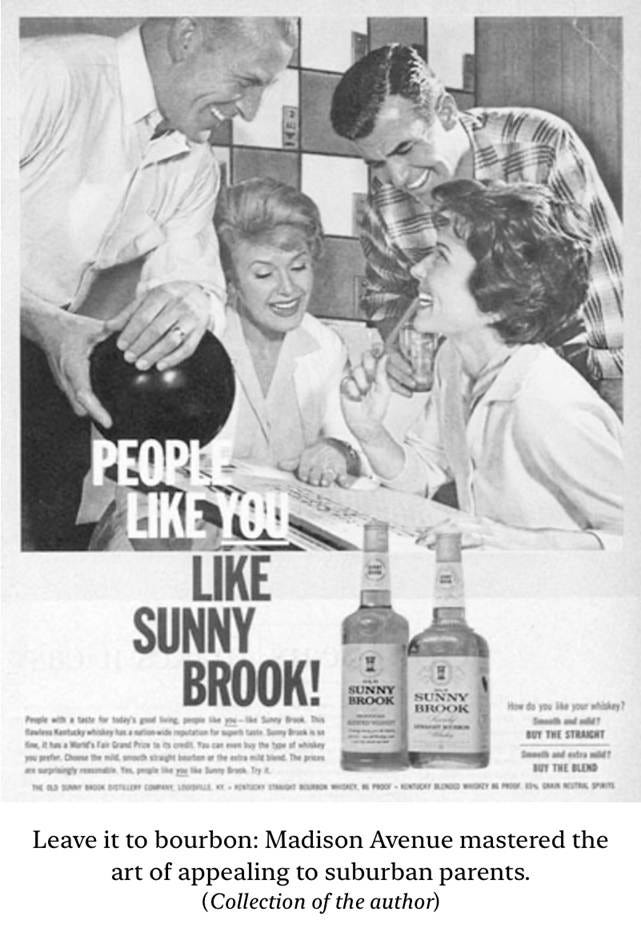
Exhibit B: Whiskey advertising, Bottled-in-Bond, and the turn of the 20th century.
All of which changed with E. H. Taylor. He invoked the unique qualities of fine Kentucky bourbon in the new forms of advertisements and pamphlets he produced, and he purposefully promoted his brands by name, with distinct marketing strategies for each. He even went so far as to establish his Old Taylor distillery as a legitimate tourist attraction and vehicle for public relations, complete with reception rooms, a Roman-columned springhouse, and a medieval castle. To what end? Well, to lend each of his brands a sense of quality and distinction that the inferior whiskeys produced by the industrial distilleries of the Midwest were lacking. And thanks to the political connections he accrued in the process, he would prove instrumental in the passage of two of the most important, preventative, and ultimately restorative acts of legislation of that era. The combined efforts of bourbon whiskey’s three most prominent champions of the era—Brown, Sherley, and Taylor—culminated in the Bottled-in-Bond Act of 1897, and the Pure Food and Drug Act that passed less than a decade later. The former established a government-certified seal of authenticity for packaged whiskey, and allowed bourbon to be readily “bottled and marketed in store windows with stamped assurance that its contents were as the snappily designed labels claimed. The latter, perhaps even more significantly, at last defined what constituted real bourbon, and officially differentiated it from its cheaper blended competition. Thanks to the aggressive lobbying and ardent testimony of Kentucky’s bourbon leadership, their cherished product at last had government protection guarding its integrity and guaranteeing its good name. Gone were the days of low-quality knockoffs claiming to be Kentucky’s finest, and barrels with unknown chemicals sloshing within—Uncle Sam had at last stopped counting his money bags, and finally got back to the business of doling out justice. This was the birth of the Progressive Era in America, one of political activism and social reform, born from a national desire to rub off the phony gold spray paint of the Gilded Age and get back to something honest and real. The American Spirit, having at last reconciled its industrial growth spurt with the moral integrity it had so nearly lost, was almost ready for the twentieth century.
Exhibit C: Jack Daniel illegally skirting Prohibition, and the general state of ‘do whatever is necessary.’ Jim Beam and Old Crow make appearances.
“Jack Daniel’s. Prohibition came to Tennessee a solid decade before the rest of the country, but rather than buckle and submit, the company simply skipped town and moved the distillery to St. Louis. When the law finally caught up with them there, they teamed up with none other than George Remus and his Kentucky Drug Company, who helped them to circumvent the government lockdown on their warehouses via a secret network of hoses and pipes that emptied right into waiting tanker trucks; the government inspectors were slow to catch on because the empty barrels had been filled with booze-scented water as a clever form of decoy. Pulling off the massive caper involved an unprecedented amount of bribery, causing Remus to later remark, “A few men have tried to corner the wheat market, only to find there is too much wheat in the world. I tried to corner the graft market, but learned there isn’t enough money in the world to buy up all the officials who demand a share.” And do you remember Old Crow? The brand continued to make fine Kentucky bourbon, although not in Kentucky; the American Medicinal Spirits Company opened an outpost in Canada and “and recruited Guy Beam, one of the Beam family’s best distillers, to make it there. Once aged and tasted for quality, the Old Crow could be smuggled right back in across the border and sold to Americans, just as it had been for nearly a century.
One of the best ways to understand a timeframe, certainly from the 1900s onward, is to indulge artists – be it musicians, painters, writers, whoever – and how they discussed the motions of their days. Sentiments on whiskey fit the bill –
“During the prohibition period, you could always buy good whiskey from somebody in the Cotton Club. They used to have what they called Chicken Cock. It was in a bottle in a can, and the can was sealed. It cost something like ten to fourteen dollars a pint. That was when I used to drink whiskey as though it were water. It seemed so weak to me after the twenty-one-year-old corn we had been accustomed to drinking down in Virginia. That was strong enough to move a train. . . .” – Duke Ellington
That closes my chapter on talking about corn whiskey (for now). I’ll pour a glass of some good stuff this weekend. Cheers.
Just remember,
in all that you do, please, don’t ever stop reading.

Postscript.
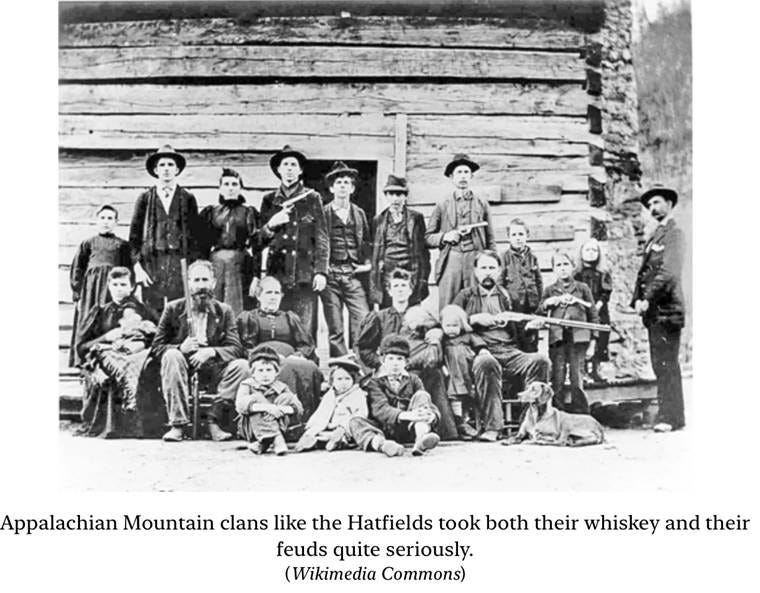
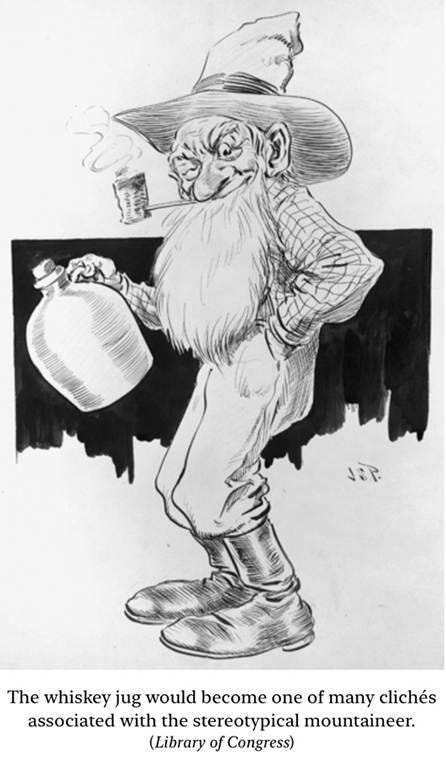
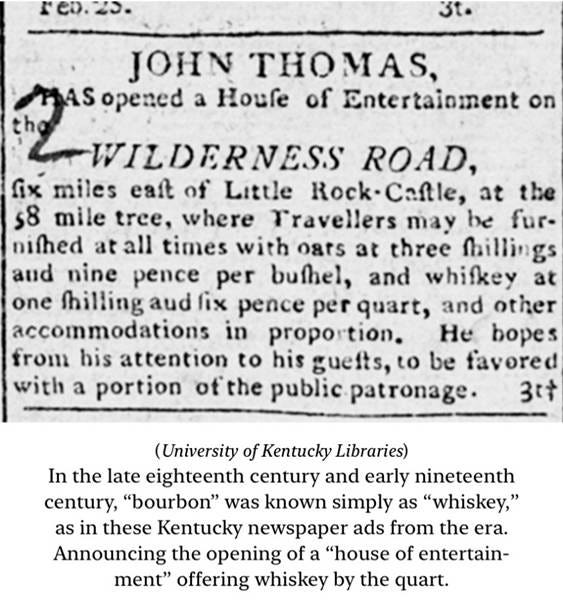
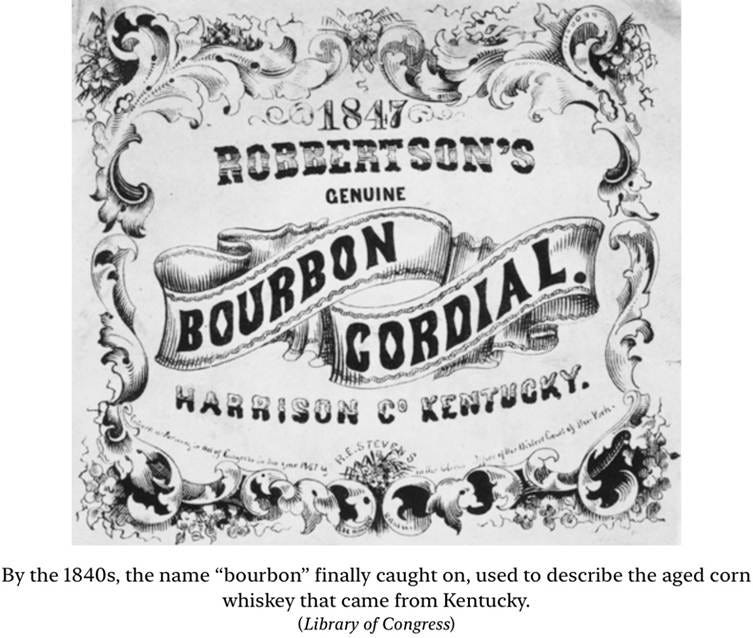
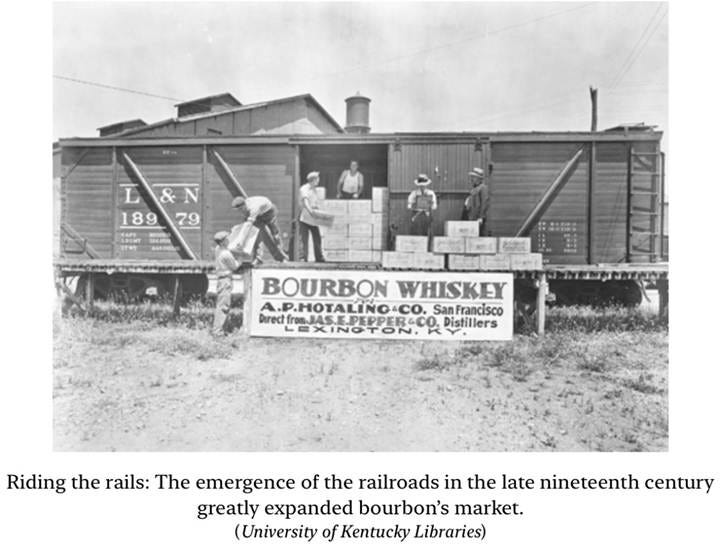
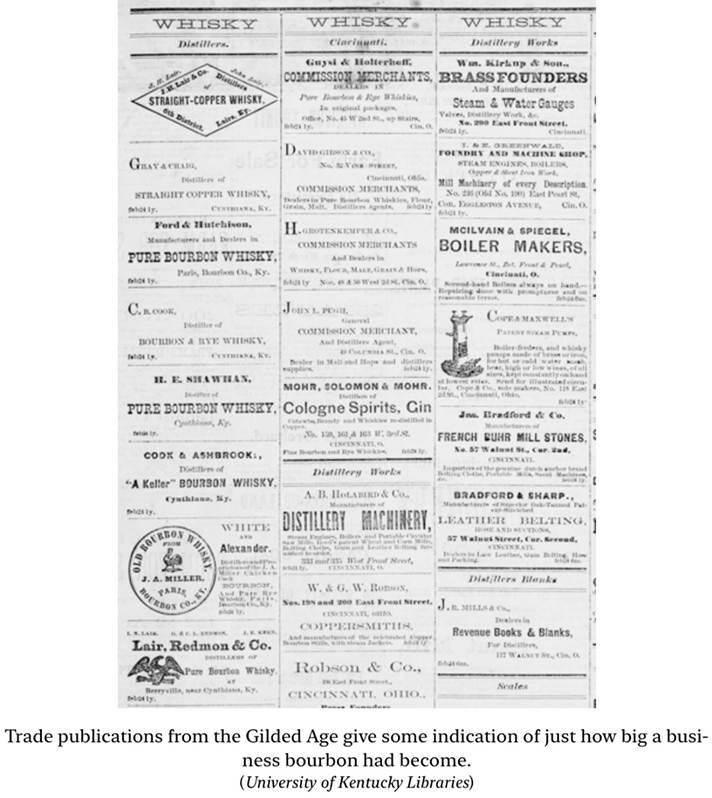
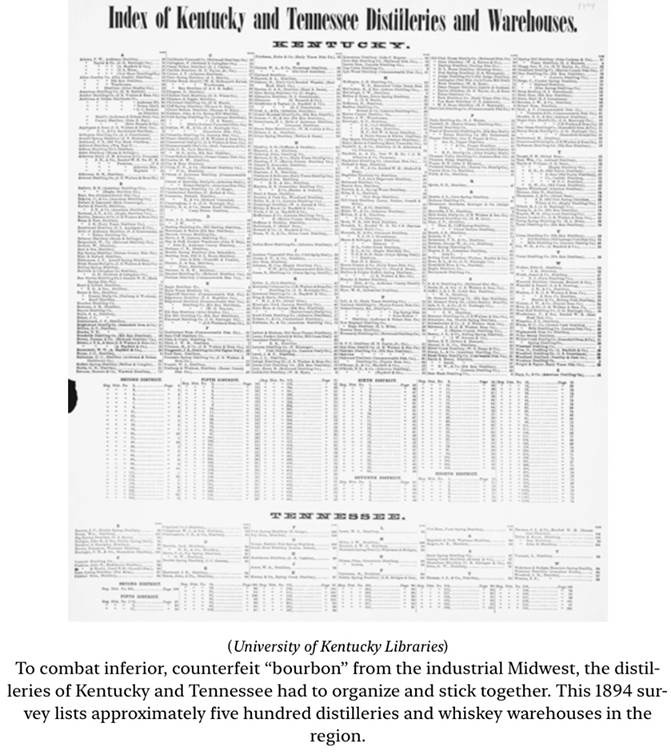
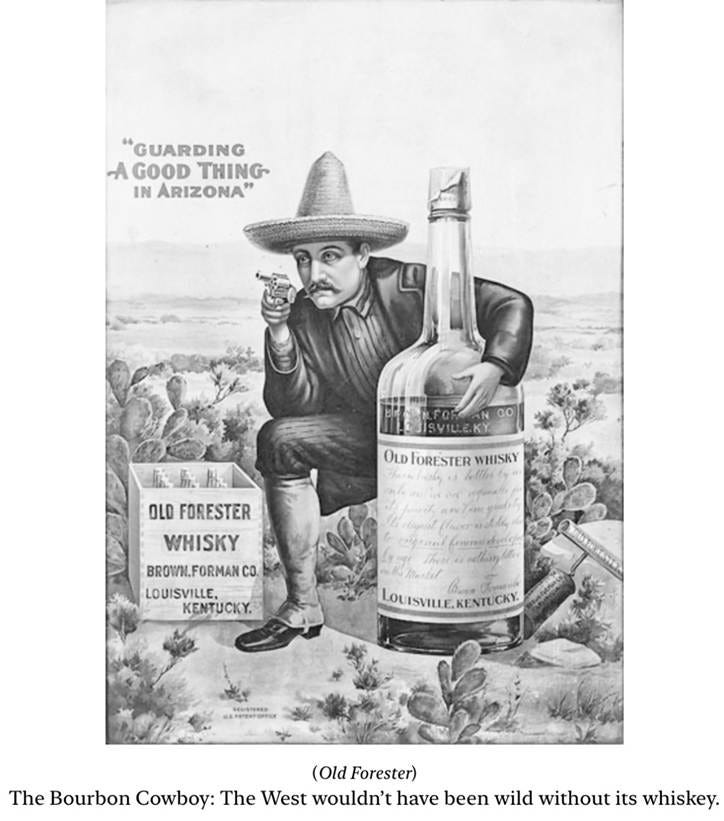
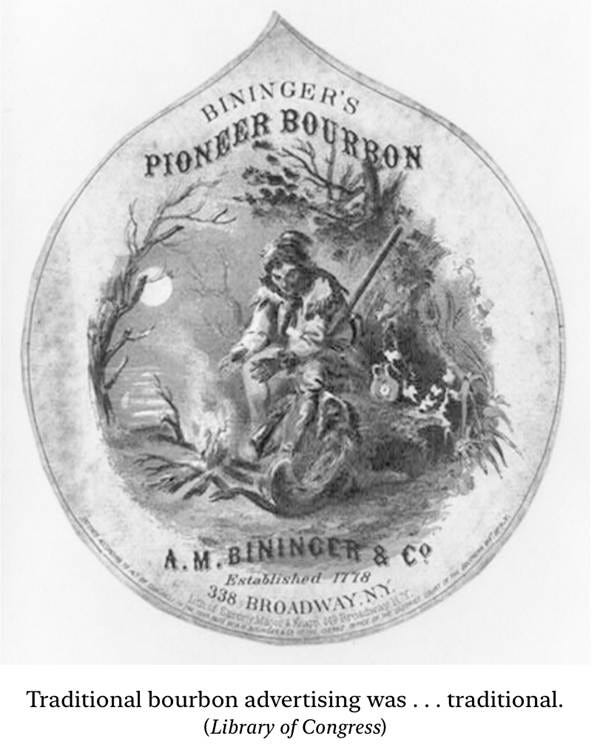
A barrage of images to showcase and substantiate the history.