


Picking up from Part 1.
Last week, we left off with a brief bit on how Caribbean rum production served British soldiers (rum rationing) and, ultimately, the British Crown’s interest in maintaining its imperial holdings: padded the British coffers with plenty of pound sterlings. And then I transitioned into (back, really) the point from where I’ll start this piece: African (“Old World”) drinking habits that rum ultimately benefitted from. We’ll then fast-forward again to the end of the 1700s and jump into the 1800s since Part 1 covered the first 300 years (1400s – 1700s), give or take. That felt super academic, my bad, that’s not my style.
So, let’s make it personal before we get into the mix.
Me. Ghana. December 2017. Before the place “full up.” When ticket prices were still reasonable. The first time I heard J-Hus x Friendly. What a chune! Had Accra – and all the Ghanaian-British diaspora – going crazy!
Note: me and Ghanaians go way back. Shout out to my guys from Highbridge, Tracy Towers, Burnside, Yankee Stadium and the sprinkle of Twi you may hear Uptown.
While in Ghana, my friends played a wicked (but lighthearted) trick on me (kwasia!). Here’s how the story goes –
→ My boy, who shall remain anonymous, gave me a clear-ish-looking beverage in a bottle we purchased from a vendor off the roadside.
→ This felt like a transaction that would easily take place in Jamaica (or Fordham Road), so I was comfortable.
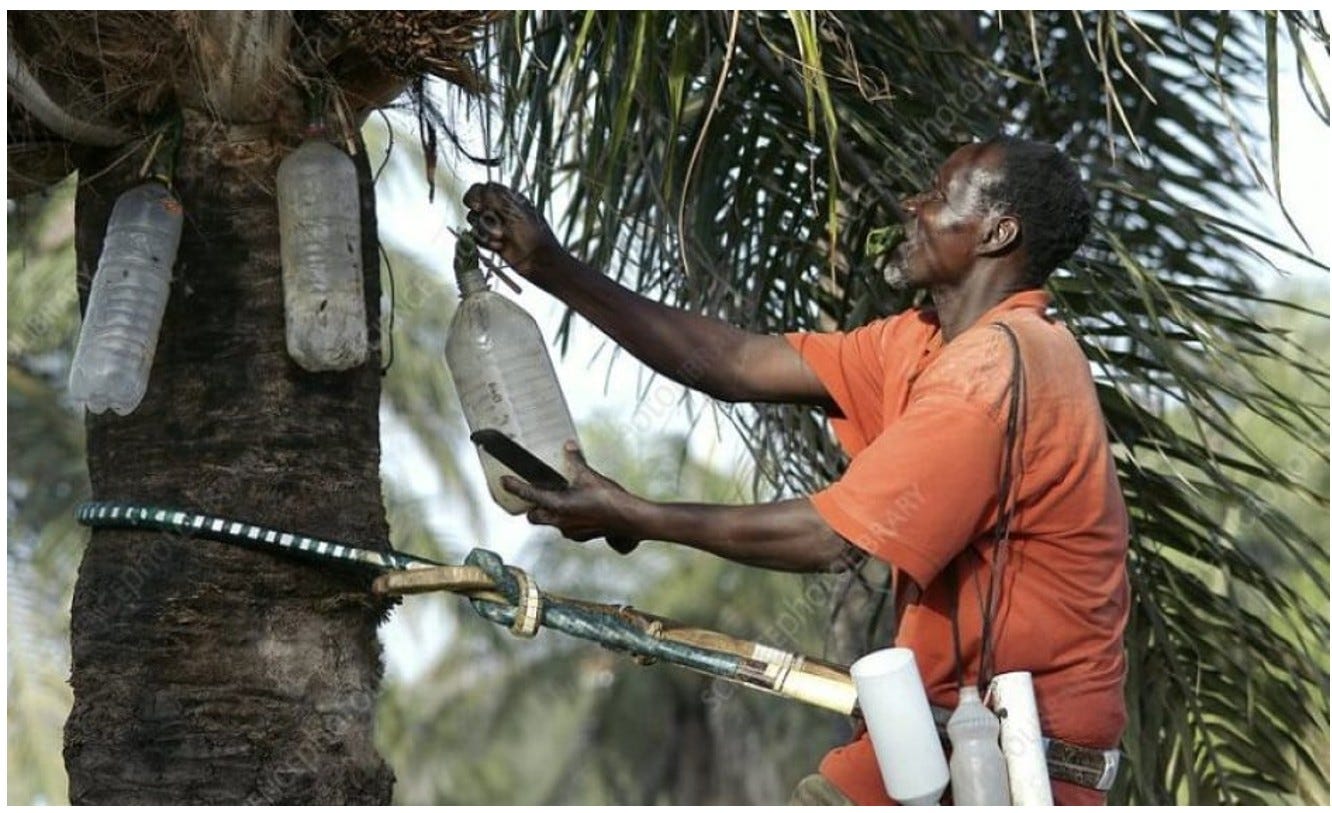
→ At first taste, it was good…oh man, it was good. I inquired: what am I drinking? I was told it was palm wine, but I thought it was odd that something with the name “wine” in it wasn’t alcoholic.
→ Whatever, I’m on vacation and desperately needed hydration from the back-to-back 6am/7am party nights. When we got back to the apartment, we placed the bottle in a corner, and it rested for maybe 24-36 hours before I got back to it.
→ When I got back to it, it tasted the same, maybe an ounce more of a fizzy texture on the mouth, but otherwise – it was the same. And then it began: that little buzz you get when the liquor starts to the Ghana Bounce in your system.
You can take my money, I don’t mind extortion. As my wise, Jamaican, male elder would say – woman tun man inna fool! Great chune.
→ This brought me back to when I was maybe 15. I went up the street (this is in the Bronx) to get a plate of food from one of the many Jamaican take-outs in my area. I was reasoning with an elder about something specific, and he then recommended that I drink a Magnum (pictured below). I drank the Magnum, not knowing it was alcohol, and you can imagine how that went.
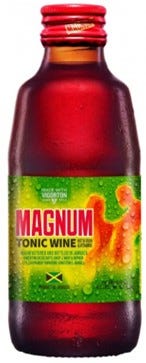
Conclusion of the story: The same thing happened to me – as a grown man – in Ghana. Them boys did not tell me that the beverage would become alcohol because of fermentation’s natural process (i.e., yeast eating the sugars and converting the liquid to alcohol while it rests). See Part C of my What is Rum article for an overview of fermentation. When I look back on that moment, I think about how crazy it is that my Ghanaian friends, who primarily grew up in the country, knew this intuitively. They were organically schooled in how fermentation works based on their environment. And this is why alcoholic beverage consumption is, in part, a profoundly ancestral/heritage practice. A sip means you are engaging in something so rooted in centuries-old practice.
The Akan poured libations and made alcohol offerings to ancestors and deities before most significant undertakings. In 1602, slave trader Pieter de Marees described an Akan drinking occasion in which the first drops of palm wine were poured on the ground in reverence for the ancestors…The Igbo also [did the same]…Barbot wrote of that worshippers in the serpent cult at Ouidah community left…had a strong spiritual component in West Central Africa.
As I mentioned at the top of Part 1, pouring one out for the deceased is a deeply, deeply ancestral practice in West Africa.
…as soon as the corps is let down into the grave, the persons who attended the funeral drink palm-wine, or rum plentifully, out of oxes horns; and what they cannot drink off at a draught, they spelled on the grave of their deceased friend, that he may have his share of the liquor. – John Barbot (European), 1700s
This palm wine heritage, but more importantly, these drinking practices/habits, did not die when these West (Central) Coast Africans endured being captured, traded, and hauled across the ocean to the “New World.”
…African slaves in the French Caribbean tapped palm trees in order to produce a type of palm wine, one of the most widely consumed alcoholic drinks in West and West Central Africa.
Come to this next bit with an open mind.
We think, understand, believe, and largely operate within the bounds of the days we're living in. The ol' product of your time/environment. It’s why, I believe, you can ascertain a lot about a period by listening to the music of that era or reading diaries and historical accounts from those periods. It usually lays bare how people operated, what was considered normal (read: unspectacular), etc. So, everything I’m about to outline will sound absolutely nuts to a 21st-century brain. However, remember that for the 1500s – 1800s, what's mentioned below was likely par for the course, unsurprising, “just the way it was.” Does not take away from analyzing these things from a moral and ethical point of view. That’s for another article (coming soon).
Modern attitudes about the vulgarity of alcoholic beverages have helped magnify the evils of the slave trade. Yet, the reality of alcohol’s part in the trade is more mundane than the images so passionately depicted.
Don’t fully agree with the first sentence, though I understand the connection being made. The second sentence (mundane for the times), I can agree with. Okay, ready?

Trading spirits for humans (at that time) seemed “mundane” and conspicuous.
Unfortunately. However, in the context of indigenous African alcoholic beverages and the European “Age of Exploration,” the trading/interaction between the two resulted in the expansion of both parties' drinking palettes. Naturally, many African elites viewed the consumption of foreign alcohol as a way to confer and confirm status. This is true today for many people (i.e., viewing non-domestic beverages in their homeland as status symbols). The status and foreign product paradigm is even more historically accurate when we examine it from the lens of attire (furs, cloth, etc.). As for beverages, this was especially true (initially) with drinks such as brandy and wine. These European bargaining chips (drinks) may have been part of the reason, as I highlighted throughout Part 1, that the Spanish and French curtailed rum production in their colonies (i.e., to prevent disruption of the metropolitan/home spirits). They probably had a lot of success trading those beverages with the Africans and exporting them throughout Europe. Therefore, French and Spanish wine/brandy were so critical in this barter/exchange system with Africans (for labor) that the colonists were seduced by a very crude form of ‘if it ain’t broke, don’t fix it.’ As we know now – to their detriment.
Note to reader: The author concedes that he “focused…on the drinking patterns of the Akan, Igbo, Kongo, and Arada, four African culture groups viewed by many historians as having the greatest impact on British and French Caribbean slave life.”
Eventually, rum became far more popular with Africans. One observation as to why is that distilled spirits (rum) were heavier in alcohol content, which may have induced the Africans into their more spiritual beliefs about alcohol consumption: connecting with elders/spirits/etc. And I can see, from a place of practicality, how higher proof rum could have been more appealing to Africans. It’s all alcohol, but this one gets us where we want to be faster.

Rum may have also carried symbolic value for Africans who were still on the continent.
…the heavy emphasis on rum in the African slave trade may also reflect a special appreciation for African slave-made products and symbolic respect for brethren stranded overseas.
…and the rum made by our kinsmen who are there [Americas], for these will permit us to smell their presence. – A Dahomean chant, reportedly performed in respect for ancestors and kin sent across the Atlantic
I don’t know how valid any of the above is. But remember – contextualize this in the context of the times. Maybe it’s true. I don’t know. But it is thought-provoking. The main thing is this: countries and regions such as Angola and the Gold Coast had direct trade with the rum-making regions for a long time. In the late 1600s/early 1700s, it’s estimated that the Gold Coast received 48,000 gallons of rum annually. Much room for speculation. What we can’t deny is that there is rich history here and there, much of which has gone unaccounted for/undocumented.
But remember, African drinking customs pre-dated interactions with Europeans
For many centuries. These practices “followed” the Africans into the Americas.
In 1588, trader James Welshman wrote that in the Bight of Biafra “there are great store of palme trees, out of which they gather great store of wine.” Alcohol use among the Kongo of West Central Africa and Aja-Fon of the Slave Coast also predated the rise of the transatlantic slave trade.
…at the level of the lowest common denominator, African slaves in the Caribbean created drinking customs that embraced their shared West and West Central African beliefs about the spiritual meaning of alcohol.
The spiritual meaning of alcohol being referenced is connecting with ancestors, burial traditions, resisting, maintaining their humanity, etc.
…in 1782, Neptune, a slave, was transported off Jamaica “for making use of rum, hair, chalk, stones, and other materials relative to the practice of Obeah, or witchcraft.” According to Jamaican sugar planter Bryan Edwards, colonial officials detected obeah practitioners by their fetishes, which typically included rum. The use of rum in Obeah practices reveals the transfer of African beliefs, especially Igbo and Akan beliefs, about the sacred nature of alcohol.
“transported off Jamaica” = deported elsewhere because Neptune’s “Obeah” was considered a formidable threat to the plantocracy.
The author (naturally) avers that understanding information about African and African enslaved drinking traditions (in this historical context) is difficult given that those traditions have primarily been narrated through the records of Europeans, who didn’t care to explore the nuances of the customs of people they didn’t consider fully human. Not to mention that a lot of the slave drinking rituals were done in private, away from the eyes of Europeans. My only disagreement with this is that many of these traditions have been maintained and are easily understood (e.g., my experience in Ghana and palm wine) within those communities, given that much of them have been passed down via word of mouth. From what I've examined, traditional academia doesn’t find word of mouth to be a credible method of chronicling history. However, it becomes the holy grail 'thing' to master when discussing product marketing efficacy (as an example). I’ll leave that there.
When the Africans “arrived” in the Caribbean, they met the reality that alcohol was used either for practical purposes (from the lens of European planters) or very dark, nefarious reasons.
Practicality (remember, people weren’t very intelligent, in the modern sense, back then): Planters believed that rum was a good dietary supplement, both to satiate and to cut costs; I think more the latter (‘give them whatever’ mentality). The colonists would reportedly give rations of shots to the enslaved 1) when they landed in the “New World” (a psychologically-off means of transitioning the Africans into what they were about to experience), 2) before and after grueling cane/fieldwork, and 3) as rewards every now and again. What’s worse – children on plantations were given rations of rum, at times, to keep them “cheerful.”
Nefarious (example): The same Thomas Thistlewood I referenced in Part 1 was a notoriously serial sexual offender, and Smith, very awkwardly, described the vile behavior as – “the exchange of rum for sexual favors…[Thistlewood] gave to the female slaves under his supervision.”

It was not all doom and gloom.
I don’t know if I believe that necessarily, but let’s keep rolling. A somewhat positive example of rum and native-born people, or Creole as they would've been referred to, can be found in late 18th-century Barbados –
Entrepreneurial freedmen and women seized part of the rum shop trade. In the 1770s and ‘80s, Rachel Pringle-Polgreen, a freedwoman, ran one of the most popular taverns in Bridgetown, Barbados, which catered to the colonial and military elite.
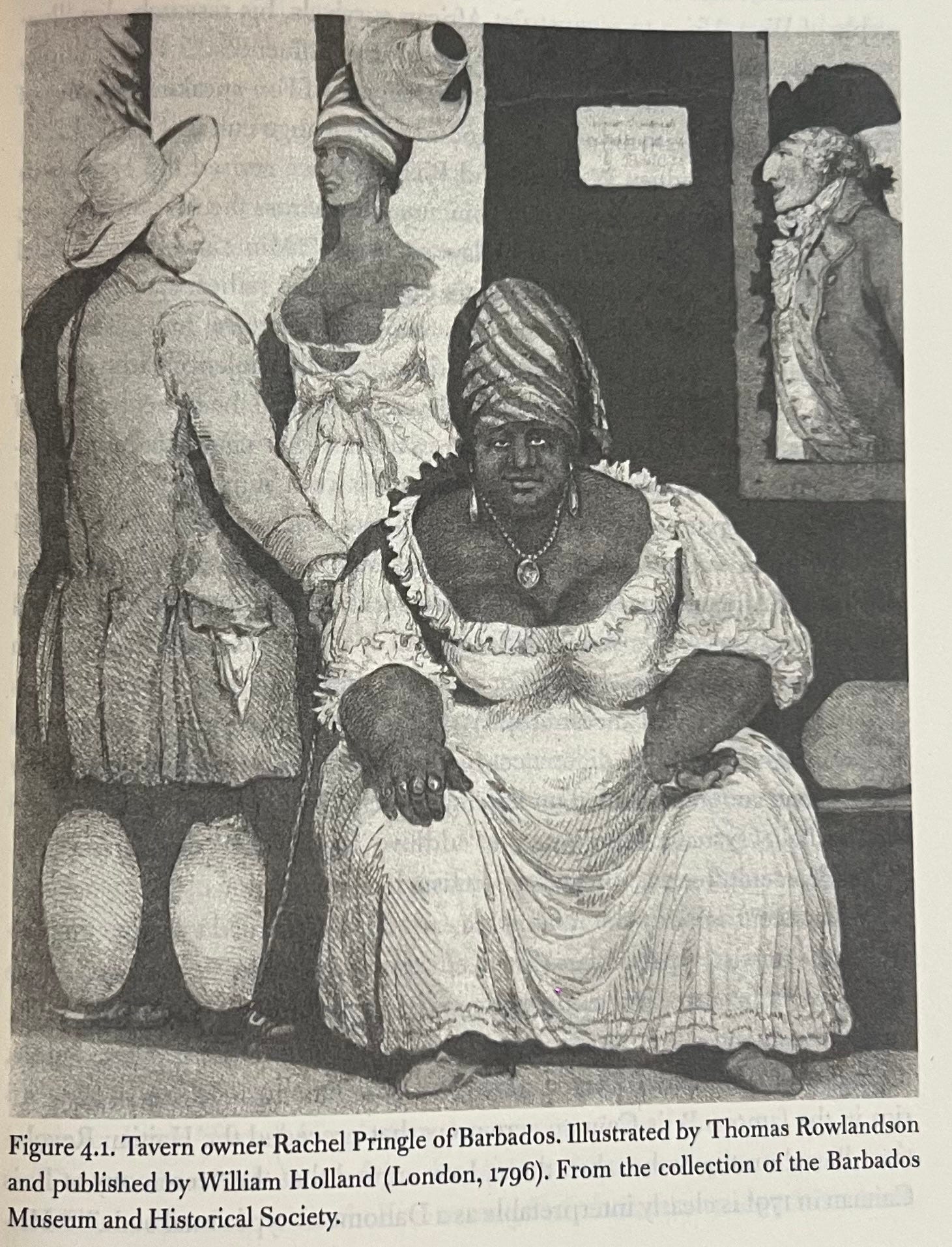
I suspect that the profile of freedmen and women who were able (read: allowed) to partake in this trade was highly dependent on the size of the Caribbean country (i.e., but so much division you can sustain when there’s limited space). Many other factors, of course, but I just wanted to make note of this since these developments can’t be explained away so neatly. Everything packs nuance.
Sent the image of Rachel Pringle to my Bajan friend, The Loyalist (I referenced her in Part A of the What is Rum series), along with the context, to which she responded –

The high-heat melting pot of cultures – Indigenous, White, Black, and eventually Asian migrants – and their respective drinking habits/norms shaped the structures of rum consumption and its reputation. The above highlights, very cursorily, the contributions of Africans and their Caribbean-born kin. However, as Smith correctly points out, this information can mostly be taken at face value because the Africans weren’t the scribes and narrators of these traditions. In fact, most of what Smith sources are testimonies and observations by Europeans, many of which, to justify chattel slavery, stereotyped and dehumanized the people they subjected. More accurate accounts would largely come from African/Afro-Caribbean sources. Please share book recommendations that would lead me down that path, please and thank you.
Early writers paint a complicated picture of slave drinking. The lack of firsthand reporting by slaves forces us to rely heavily on white perceptions of slave alcohol use.
…no taste but for women; gormondizing, and drinking to excess. – Edward Long commenting on Jamaican male slaves
Yard mon stole Eddy boy’s girl.
The planters were heavy drunks themselves, logically.
In Part 1, I mentioned that leisure and idleness were signs of wealth for the times. As such, sociable drinking and hosting indicated you were living the good life. This leisure was a direct juxtaposition to the back-breaking work the enslaved did. Friendly reminder that high status needs a base to compare itself to. Status only lives if there is context and legitimacy.
But what happens when you have too much leisure and idle time? You get bored. Boredom. New world (far away from Europe). Surrounded by mostly non-native people (to the Europeans). Rum is available. Recipe for overdrinking.
Moreover, these tensions were magnified by epidemic disease, poor living conditions, natural disasters, international conflicts, and unstable food supplies.
Probably no other group in the Caribbean had a worst reputation for excessive drinking than indentured servants and other classes of poor whites…Some poor whites in Barbados were known to steal rum from sugar estates…was not limited to Barbados…in Jamaica [too]…
The issue, however, is that leisure was promoted as pure bliss to wannabe planters. Images and propaganda of 'doing nothing' probably spread far and wide (throughout Europe) to encourage others to 'get in on it.' My analysis of the above is that this was a recruitment strategy for the different imperial crowns at the time who NEEDED enterprising planters to go off and maintain their colonies. Convincing them that they would face disease and loneliness would have been unwise for imperial interests. So, they likely received the below imagery to encourage their migrations –
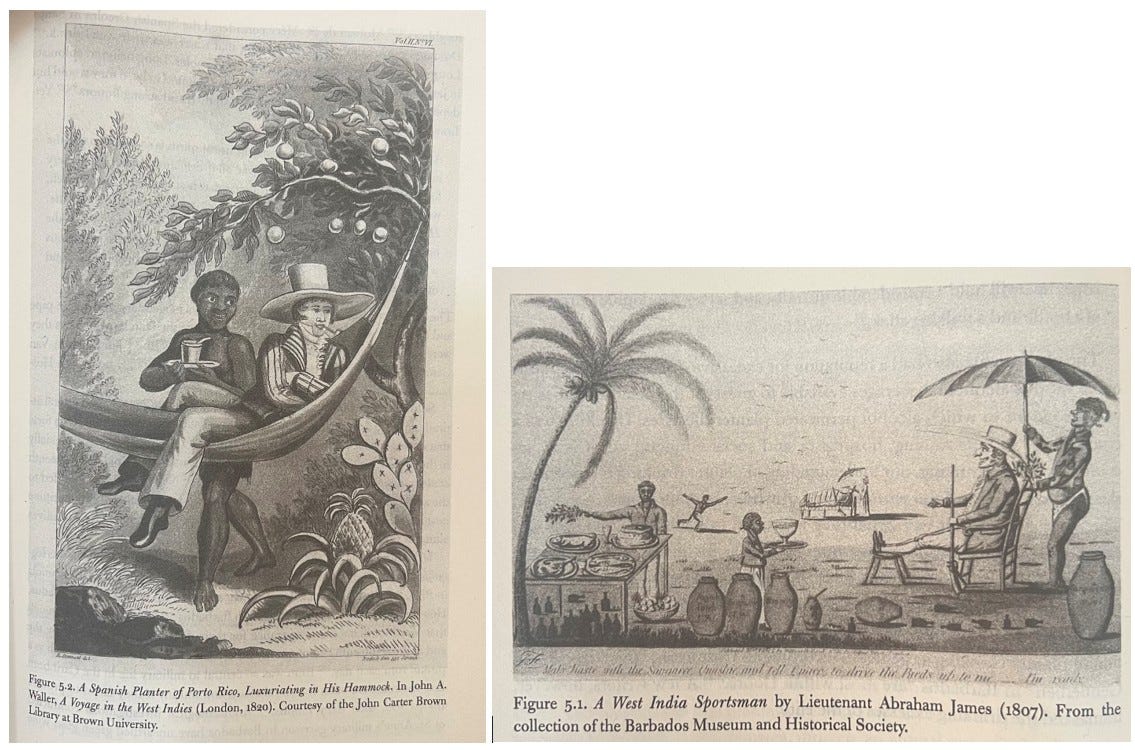
As a reminder, excessive drinking became routine, especially because of the rudimentary understanding of medicine and quality care. When people became sick, rum was seen as a way to properly regulate the hot & cold of body temperature. A way to bring someone back to equilibrium. For the planters who were suffering from their self-imposed isolation (mental strains) and then inevitable disease contraction in the “New World” (mosquitoes don’t play), rum became the panacea. A self-perpetuating cycle of sickness and volatility.
Rum was considered something of a cure-all in plantation medicine. It was a central ingredient in the treatment of toothaches, fevers, obstructions [amenorrhea], dropsy, gonorrhea, postpartum fatigue, colic, bellyaches, and other disorders.
Rum for toothaches and gonorrhea…medicine has come a long way partly because of these crude experimentations.

Smith makes note of carnival-predecessor celebrations and how planters encouraged them to provide a sense of relief to those they enslaved. But as we just discussed, they likely did it for themselves as well, needing respite from their own demons they battled with internally. We must always discount historical figures back down to their core, the inescapable fact that they were simply human beings. So, when I read that the planters allowed many of these celebrations to happen, I don’t think it was only for pure preventative measures (i.e., deter revolts, marronage, etc.). Planters needed it, too. But, most importantly – they cared most about their wallets. So, rum drinking in excess was mainly discouraged if it interfered with labor productivity on the plantation.
Bacchanalian celebrations characterized the slaves’ escapist performances, and the Caribbean planter found these symbolic expressions preferable to actual marronage, revolt, or other forms of resistance. Many planters even encouraged these temporary releases of pressure and supplied alcohol to their slaves…Bacchanalian celebrations occurred at Easter, crop-over, Christmas, and New Year...Plantation accounts frequently mention the distribution of rum to slaves for such celebrations.
Eventually, slavery was abolished in the Caribbean colonies.
1830s. Apprenticeship systems/low-wage labor replaced chattel slavery, which was effectively slavery in a different form based on its practicality. My fellow Americans, if this sounds historically familiar, you're not crazy. This Caribbean Apprenticeship system pre-dated, but is most closely related in profile to the Sharecropping era post-Civil War. A central character of the new systems were plantation-owned stores that became the de facto livelihood center for the formerly enslaved. In effect, those stores kept them tied to the plantation.
The establishment of plantation-owned stores and rum shops heightened the effectiveness of this system. Company stores and rum shops sold great amounts of rum to laborers, which created a large body of debt peons and ensured a stable workforce. Workers were compelled to return the next week or harvest in order to pay off their debts.
I also dropped this quote in my Worthy Park x Rum-Bar Silver article because while Rum-Bars are plentiful all around the Caribbean, as staples of countries and their drinking cultures, the “rum shop” doesn’t have the most glowing origin story. But neither does rum. Cheers.
In some parts of the Caribbean, planters developed a system of sharecropping known as métayer. Under this system, sharecroppers worked small parcels of plantation land in exchange for a portion of the produce. In 1843, sharecroppers in Tobago received half of all the sugar as well as a bottle of rum for every barrel of sugar their plots produced. In Grenada, rum was also shared between the plantation owner and métayer…
Temperance movements – what Smith calls “A Tropical Wave of Temperance” – washed over the Caribbean in the 1800s. Many newly emancipated slaves – fresh new recruits, if I’m being crude – joined the ranks of Baptists, Moravians, and Methodists who were primarily leading these movements. But movements, inherent in the name, are usually fluid and cyclical. We’re living through one of sorts now, with people increasingly wearing the ‘I don’t drink’ sticker proudly. And there is some evidence suggesting that per capita consumption of rum decreased in those societies where missionary/temperance initiatives were most effective. But the rum business endured because anything gone un-drunk at home was shipped out (Haiti and a few others being the exception).
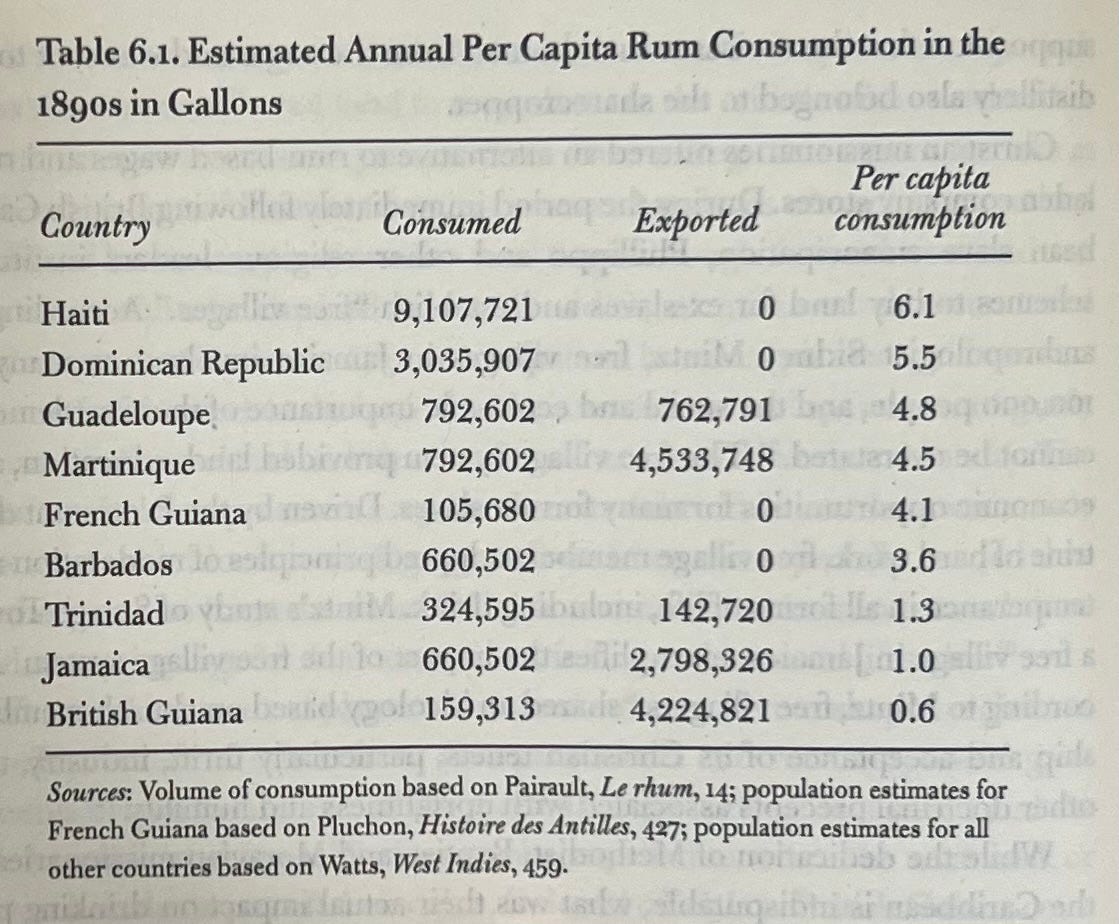
Although sugar production virtually vanished in Haiti, cane cultivation did not, and the demise of Haitian sugar making was a boon for local rum makers and consumers.
Despite the temperance movements, traditions – even today – have maintained alcohol/rum as a focal point of tributes. As you’ll see, rum is not simply a beverage. For many, it is an accessory to historical rituals.
Despite the rapid pace of social change in the modern Caribbean, African-oriented belief systems and ceremonies involving alcohol persist among other conservative social groups. Members of modern-day maroon societies in Suriname and Jamaica continue to perform rites that rely heavily on the use of rum. Anthropologists Richard and Sally Price have recorded the extensive use of rum at the burial wakes of Saramaka maroons in Suriname. Anthropologist Diana Vernon also describes, among the maroons of Suriname, the use of rum in concoctions that “wash” away evil spirits. In Jamaica, Windward maroons routinely pour libations and make offerings of rum to their ancestors.
With the abolition of slavery in the 1800s, East Indian contractors/migrants filled labor gaps.
Between 1845 and 1917, more than 230,000 East Indians entered British Guiana. By 1911, they were nearly half the population. By 1901, they comprise 140,000 of Trinidad’s population. As the most densely Indo-Caribbean countries, the callouts for Guyana and Trinidad are intentional. Their impact on the cultures is stamped in everything from food, celebrations, and customs. Here’s what the current makeup of those countries and their populations look like today –
Guyana is a diverse nation, 39.8% of the population is of East Indian origin, 30% Black African 19.9% multiracial, 10.5% Amerindian and 0.5% other, mostly Chinese and whites (most notably Dutch people, Portuguese and English). English (in the form of Guyanese Creole) is the most common language amongst Guyanese people in Guyana and its diaspora, while British English is taught in School, and used in Government and business. The religious breakdown of Guyanese people is: Hindu 28.4%, Pentecostal 16.9%, Roman Catholic 8.1%, Muslim 7.2%, Anglican 6.9%, Seventh-day Adventist 5%, other Christian denominations 20.5%, no religion 4.3%, Rastafarian 0.5%, Bahá’í 0.1%, other faiths 2.2%. – Embassy of Guyana to the Kingdom of Belgium
Note: Guyana has ~826,000 people
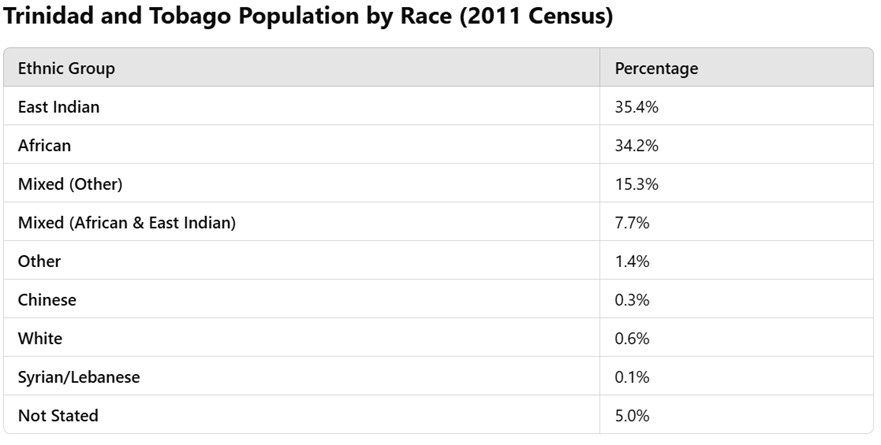
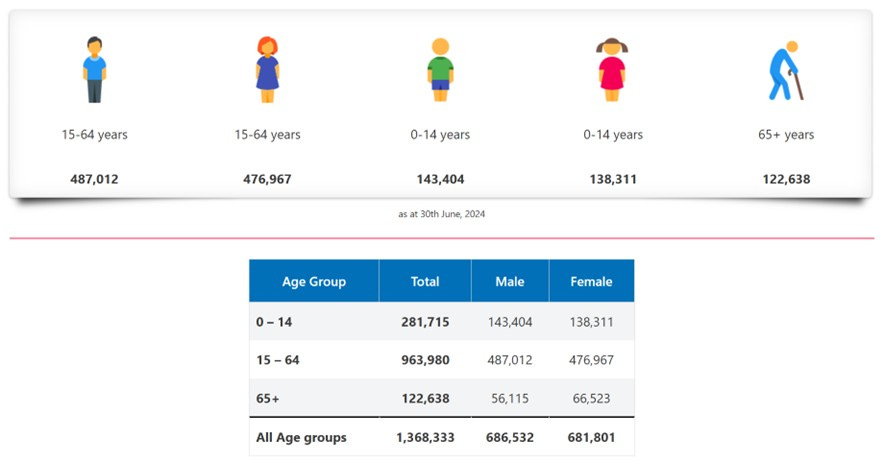
What do the South Richmond Hill and Flatbush massive have to do with rum? A lot. They brought with them their customs and drinking habits/rituals. They were not as impacted by the temperance movements, and in countries like India, where British rule was a fact of life, rum was not foreign to the newcomers. Smith asserts that “alcohol abuse has remained a greater problem in modern East Indian communities than in Afro-Caribbean communities.” I had a strong urge to put my Black and East-Indian (Trinidadian) friends in one chat, drop the question – who drinks more and do the Dave Chappelle.

The point here is not to determine who the bigger drunk is. It’s to show the influence of Asian migrants on Caribbean rum’s development. I’ll figure out the answer to the ‘drunkard question’ on my own time. Remember the rum shop trade <> and plantation-owned stores I talked about earlier? Many of the Asian migrants went into this trade, given preferential licensing and leeway to do so (by the European ruling class), and were used as a buffer class between African-descent and European-descent (I say descent because most would’ve been native-born at this time, give or take). The Portuguese as well were given (likely way more, on account of race) preferential treatment in these rum shop trades. The historical tie between rum and Portugal (Madeira) is on the nose here as far as thematic dot connecting goes. Note: (1) For more info on the history of Maderia/Portugal <> rum, check out my What is Rum Article (History). (2) Regarding the rum shop trade, I draw out the history mentioned above in my Rum-Bar Silver article because that product line pays homage to the rum bars dotting the island today. However, it’s important to know some of its origin story vs. simply what it represents today.
Yet, in Trinidad and British Guiana, the Portuguese initially dominated the alcohol trade. In the nineteenth century, the Portuguese, mainly from the Atlantic island of Madeira, migrated to the British Caribbean in large numbers…As with the Chinese, the Portuguese began as agricultural laborers, but many quickly opened retail shops and started selling rum…Whites in British Guiana may have encouraged the rise of the Portuguese shopkeepers in order to establish a “buffer class” between blacks and whites…Βy 1852, nearly 79 percent of all rum shop licenses in British Guiana belonged to Portuguese…By 1965…90 percent…
The fastest case study you will ever read:
When you go down the history of Angostura rum (Trinidad), you will inevitably read about the Fernandes family
Where is the Fernandes family from? You guessed it – Madeira, Portugal
Sheer irony? I think not. These things are explainable most of the time. Please don’t treat these historical links as overly remarkable
Photos for the more visually-inclined –
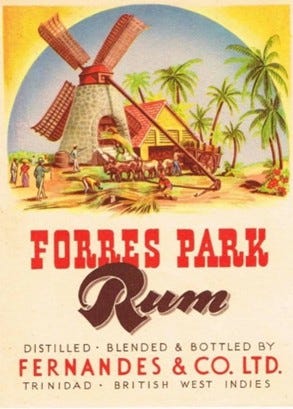
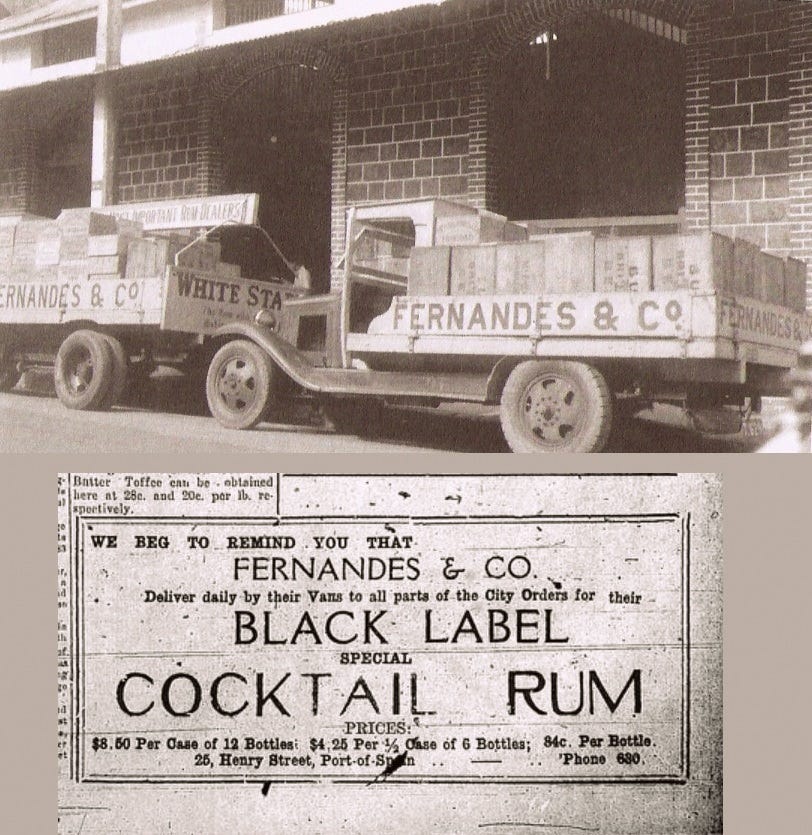
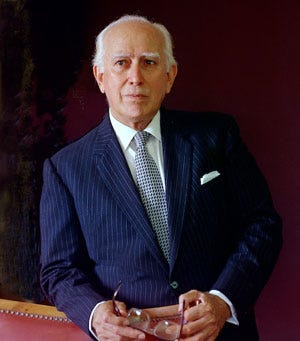
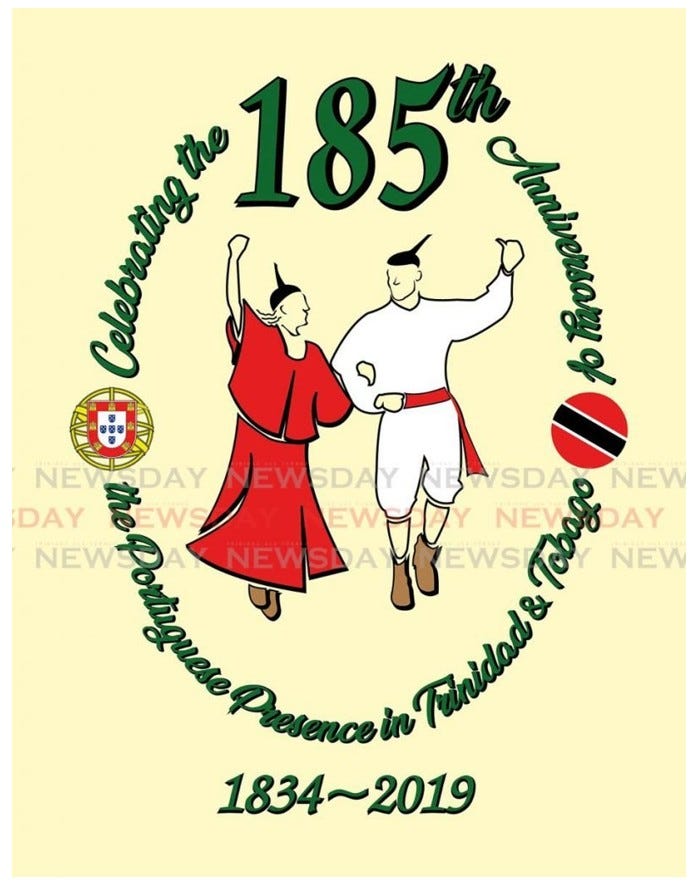
As we transition from the 1800s to the 1900s, rum production soars, partly out of a need for pure economic survival.
Through the 1800s, distilling hardware/technology was introduced, which aided in increasing rum production: the traditional column still (1801 – 1813), and Coffey-steam heated stills (1830s). Some – Jamaican producers, in particular – stuck to the pot still, and many more experimented with both. The introduction of more distillation equipment, coupled with the removal of the heavy hands of the French and Spanish crowns over its former and current holdings, resulted in a sharp increase in rum production (supply increases when constraints are removed). Very loose removal of the heavy hands, still a bit constrained. But also –
…by the late eighteenth century, the profitability of British Caribbean sugar was on the decline…soil exhaustion had reduced the productivity of sugar estates, especially in the older islands like Barbados…By the early nineteenth century, competition from sugar producers in new and fertile cane-growing regions, such as Mauritius and Demerara, threatened to flout sugar markets.
Another contributing factor to the decreasing profitability of British Caribbean sugar and rum was the British looking eastward as its holdings in the Americas continued to decrease in return on investment. The British Crown lowered duties (made equal) on Mauritian sugar (their Indian Ocean colony) in 1825 and did the same for Indian sugar in 1835. The beet sugar industries blossoming in Germany, Austria, France, and other parts of Europe made this strain on British Caribbean planters even stronger. Adding fuel to the fire: The Sugar Duties Act of 1846 allowed beet sugar to freely enter Britain. The U.S. and Canada became the only significant markets for Caribbean cane sugar (not so much rum). Uphill battle on the distilled spirits front in North America because whiskey consumption and nationalism had full grip on the society. So, Caribbean planters continued to look for continental buyers.
In 1876, an international exhibition in Philadelphia celebrated the high quality of Jamaican rum. Because of its distinctive taste, Jamaican rum was widely sought after in Germany where it was used to adulterate spirits made from German beet sugar.
Mid-1800s, French Caribbean rum got into the spotlight, primarily because species of fungus (Oïdium tuckerii and phylloxera) destroyed viticulture/vines across France and Europe. In 1854, Napoleon III suspended duties on French Caribbean rum imports to replenish alcohol supplies. The raw materials for French home-team spirits had to catch COVID for them to embrace their “other stuff.” This is what happens when you let up, though –
Revenues from rum helped stabilize the French Caribbean economy and save it from collapse after the drop in world sugar prices. Rum also kept many sugar estates solvent. The Martinican capital of St. Pierre was known as the rum capital of the world, and it was one of the wealthiest ports in the Caribbean. Between 1898 and 1900, revenues from rum exports were worth more than 25 million francs, and rum represented more than 40 percent of the value of rum and sugar exports.
Haven’t let go of that Agricole x AOC vice grip ever since them francs started franc’ing! Alright, I’ll leave the French alone. All in good fun. In truth, they are a powerhouse beverage nation. To say otherwise means you’re a hater. Will I stop picking on the French?

On the Spanish colonies' side of things, Cuba emerged as the darling sugar/rum producer in the 1800s –
Between 1789 and 1817, restrictions on Cuba’s trade with foreigners were progressively eliminated, and the increase in Cuban sugar making provided more raw materials for distilling. By 1830, Cuba was the world’s leading sugar producer, and by the end of the nineteenth century, Cuba was one of the largest rum producers.
My review of Havana Club Especial =)
By the end of the 19th century, Cuba was exporting rum to the U.S. (yes, you read that correctly). The Cuban rum industry faced very similar development trends as what happened in the British colonies at the time: 1870, Moret Law began gradual emancipation of slavery in Cuba à 1881, apprenticeship system, patronato à 125,000 Chinese laborers brought in to fill the labor gaps that resulted from emancipation.
That’s all. I have no witty remarks to close out this bit.

In the 1900s, Caribbean sugar and rum (but more so sugar) suffered from gluts in the market. Consolidation and factory centralization abounded, lots of small independent estates folded. Interestingly enough, the two world wars – WWI and WWII — benefited certain Caribbean sugar and rum producers who filled European gaps (i.e., Euro sugar beet market was disrupted) and American gaps (federal mandate to halt/lower whiskey production, so that they could contribute to the war effort). On the British side (still pre-independence for most under British rule), rum rationing was still very much alive and present in the Navy. The practice wasn’t terminated until 1970, so British colony rum producers benefited from the war. Off statement, I recognize that. Giving you what happened, though. You know who else benefitted from the war efforts – French Caribbean rum production…yup…okay, I’ll stop.
Throughout the 20th century, Puerto Rico eventually eclipsed Cuba in rum exports, particularly for rum shipped to the U.S. That’s not a very exciting fact, though, because P.R. is a territory of the U.S., so there was a higher incentive to import P.R. rum. To put numbers behind it: In 1936, 350,000 gallons of Puerto Rican rum was imported into the U.S., which represented more than a third of all U.S. rum imports. After this point, Puerto Rican rum regularly surpassed that of Cuban rum for U.S. imports, and that wasn’t going to slow down with the political tug-of-war that would characterize the Cold War curtain that dropped in the middle of the century. But also, P.R. was pumping stuff out because it was in their favor to do so –
…ensured that all internal taxes collected on articles manufactured in Puerto Rico were reverted to the island’s treasury. Those tax revenues came mainly from tobacco and rum. – 1904 x Foraker Act (Cover Over)
The 1917 Jones Act made Puerto Ricans citizens of the United States. Similar developments took place in the Virgin Islands –
Rum making also expanded in the Virgin Islands, which the United States purchased from Denmark in 1917. In 1940, the United States imported nearly 400,000 gallons of rum from the Virgin Islands.
Today, P.R. and (US)VI are the biggest beneficiaries of the above historical developments. There is a lot to unpack here, but it’s for another article. I’ll leave you with the below.
The act also transferred all revenues from rum excise taxes to Puerto Rico and the Virgin Islands, which were the biggest beneficiaries of CBI. The Cold War and the CBI were especially helpful to Puerto Rico. In 1959, the Bacardi family fled Cuba and reestablished operations in Puerto Rico. Since then, Bacardi has become a multinational corporation… – Caribbean Basin Initiative (CBI) x Ronald Reagan
Caribbean rum – rum, generally – is more than just a beverage.
(Caribbean) Rum found its way to our glasses via a storied and unpleasant development arc. The liquid was a product of imperial conquest, mass forced labor, and a brutal method of ensuring that forced labor + cultivation of cane would equal enough production to satisfy domestic and export thirst. So it usually goes with much of anything in the world today when you peel back the layers and realize that people were products of their time. They would be reasonably shocked to think that we believe them to be primitive in behavior and endeavors. Much like how the new century folk will look back at us one day and say the same.
Today, Caribbean rum represents a beverage that encourages socializing and a vibrancy of life in a way that no other spirit I’ve come across can authentically convey. The 'socializing and living life' sentiment is 100% dictated by the people the rum represents. From rum-shop chats to carnivals. From parties to dominoes being affectionately slammed on a table (followed by heavy shouts), rum is the liquid lubricant for much of this.
Anthropologist Peter Wilson…emphasizes the rum shops’ role as refuges of male fellowship and as places for the development and display of male identity…Anthropologist Gary Brana-Shute…Paramaribo, Suriname…describes rum shops as liminal spaces, where male camaraderie acts as a “shock absorber” for those who have fallen on hard times largely because of high unemployment rates in the region…sanctuaries where men can resolve the conflicts they encounter at work and home…The rum shops I [Smith] got to know on Suttle Street in Bridgetown…crews sat around tables and discussed political events, economic woes, and neighborhood gossip…“Come, let we fire one,” is the usual invitation to drink rum.
Is the usual Bajan invitation to drink rum. That invite, while only ever so slightly different across the islands, is still a good distinction because the rum you’ll be drinking…will be different.
And that, my friends, is the beauty of the liquid. All the talk above removes the central fact of why people drink it (beyond availability) – it’s damn good. Go fire one!
And remember,
in all that you do, please, don’t ever stop reading.
