


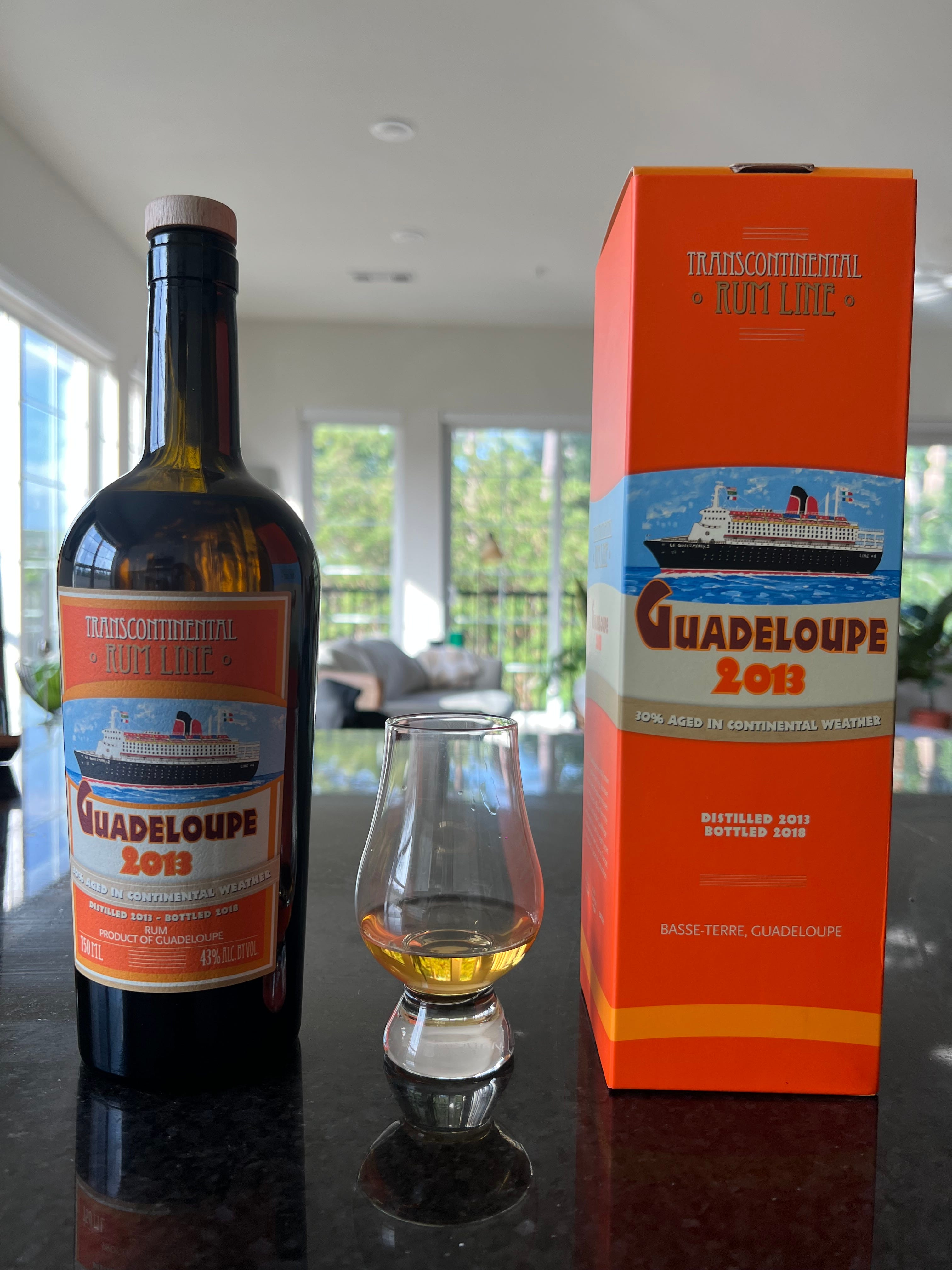
Sipping tips: When you pick this up, I implore you to chew your food before swallowing. Most spirits taste harsh if you down them immediately (shots): you’re blasting your palette and taste buds with high-proof alcohol. Take a small swig, let the liquid sit in your mouth, and hug every crevice for 4-5 seconds (open the taste buds). Down it. You’ll pick up all the flavors and truly know what the beverage tastes like. Once you do that 1-2 times, your palette is ready. Drink away. And to my NY’ers, I am sorry for all that wild language.
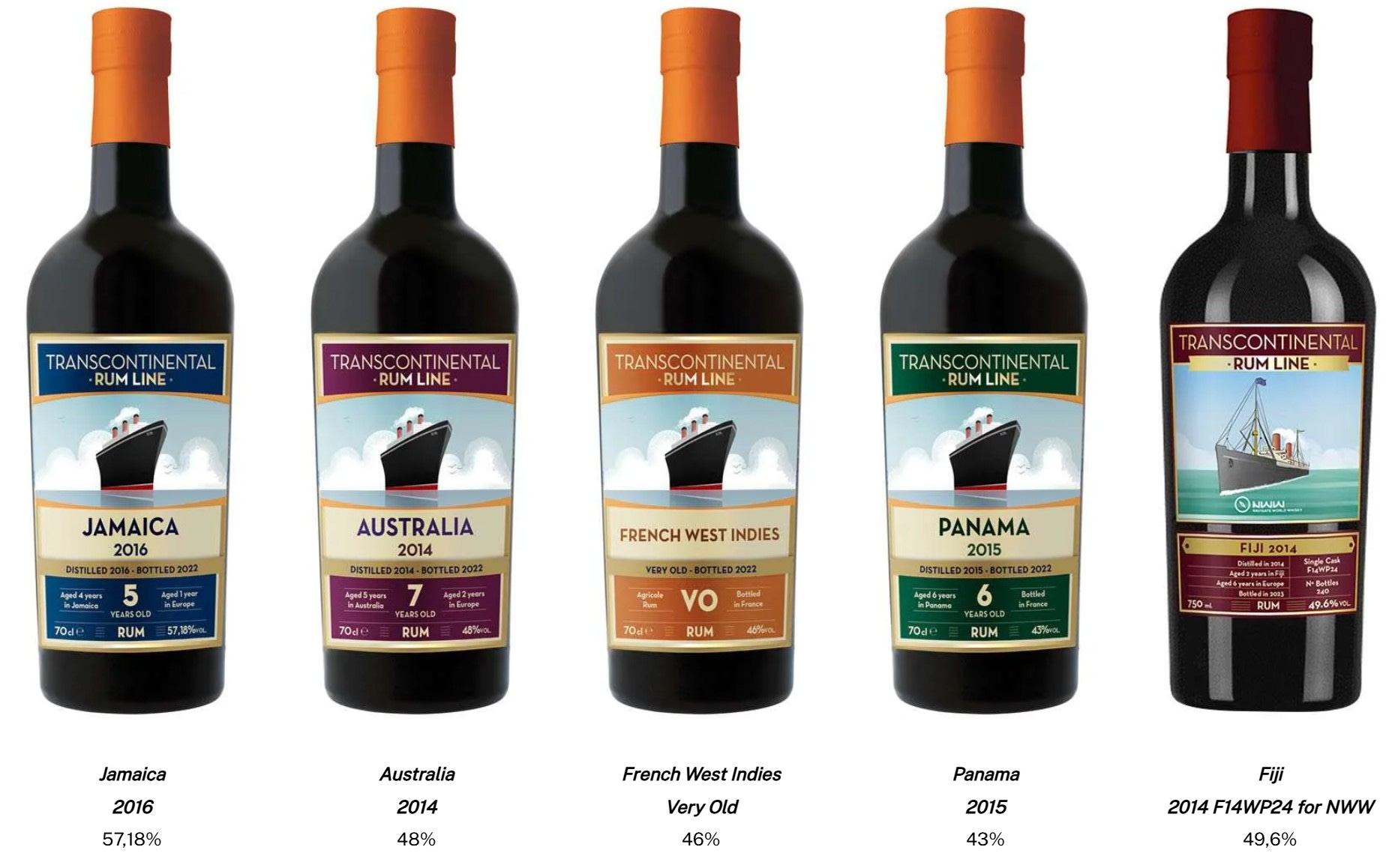
Who is the Transcontinental Rum Line (TCRL)? They are a division/project/sub-category under La Maison & Velier (LM&V). LM&V is a combined entity whose two branches trace their respective spirit journeys back to the mid-to-late 20th century, though they joined forces less than 10 years ago –
Established in 2017, La Maison & Velier was created to showcase the exclusive bottlings created and sourced by a team of passionate spirit lovers, headed by Luca Gargano of Velier (Italy) and Thierry Benitah of La Maison du Whisky (France). The company aims to share their combined expertise, discoveries, and unique perspective on fine spirits through a carefully curated brand portfolio.
So, TCRL is one of the many projects in their “curated brand portfolio,” which LM&V describes as such –
The Transcontinental Rum Line reflects the great diversity that can be found around the world of rum production. Inspired by the voyage of rum between the country of distillation and its ageing conditions, the founding principle of the range is transparency. No sugar or colouring is added and ageing conditions are clearly stated on every bottle.
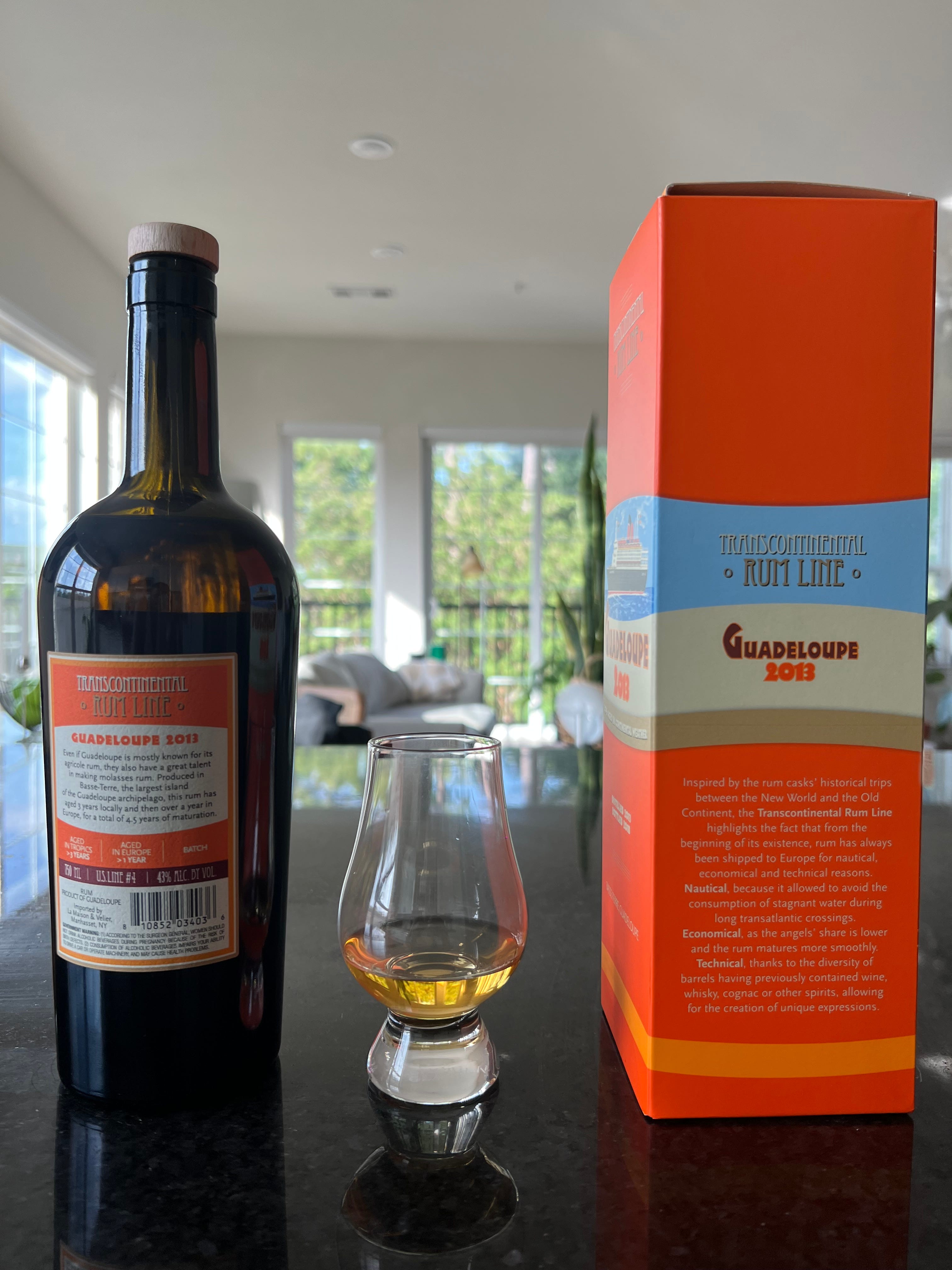
I like the verbiage on the back of the box the bottle came in, it’s more descriptive –
Inspired by the rum casks’ historical trips between the New World and Old World Continent, the Transcontinental Rum Line highlights the fact that from the beginning of its existence, rum has always been shipped to Europe for nautical, economical and technical reasons. Nautical, because it allowed to avoid the consumption of stagnant water during long transatlantic crossings. Economical, as the angels’ share is lower and the rum matures more smoothly. Technical, thanks to the diversity of barrels having previously contained wine, whisky, cognac or other spirits, allowing for the creation of unique expressions.
If you read my final piece on A Jamaican Plantation: The History of Worthy Park 1670 — 1970, the “voyage of rum between the country of distillation and its ageing conditions,” and “rum has always been shipped to Europe” sentiments are screaming at you right now. Remember my very brief coverage of the legal battle between National Rums of Jamaica and the Spirits Pool? Well, the NRJ side of the house maintains that there is a history of rum traveling to and from, and that is one of the many (profitable) reasons that we need to acknowledge that piece of Jamaica’s rum history vis-à-vis classifying a liquid as “Jamaican Rum.” TCRL is somewhat ironic in this regard, as Luca Gargano is well known as a faithful proponent of “tropical aging” and its implications for authenticity. In other words, TCRL’s objective is to take liquid that has been “tropical aged” and further age it “continentally” (France in this case). Does this still produce unique-tasting juice? For sure. Is it historically relevant/accurate? That is also true. And with that, it seems to me that TCRL is an attempt to showcase (in a modern-day sense) what can happen when you play on that history. However, I’m not so sure the LM&V camp would want to be a mascot/supporting argument for National Rums of Jamaica. Okay, whoa, back to business. My analytical brain was on autopilot —forgive me.
Where did I get TCRL’s Guadeloupe 2013? Houston, Texas, while visiting a good friend. Not for him, but for my own imbibing while in the souf. But we don’t show up to people’s place empty-handed, so I got my boy a solid bottle of Irish whiskey, Redbreast’s 12-year-old (cask strength).
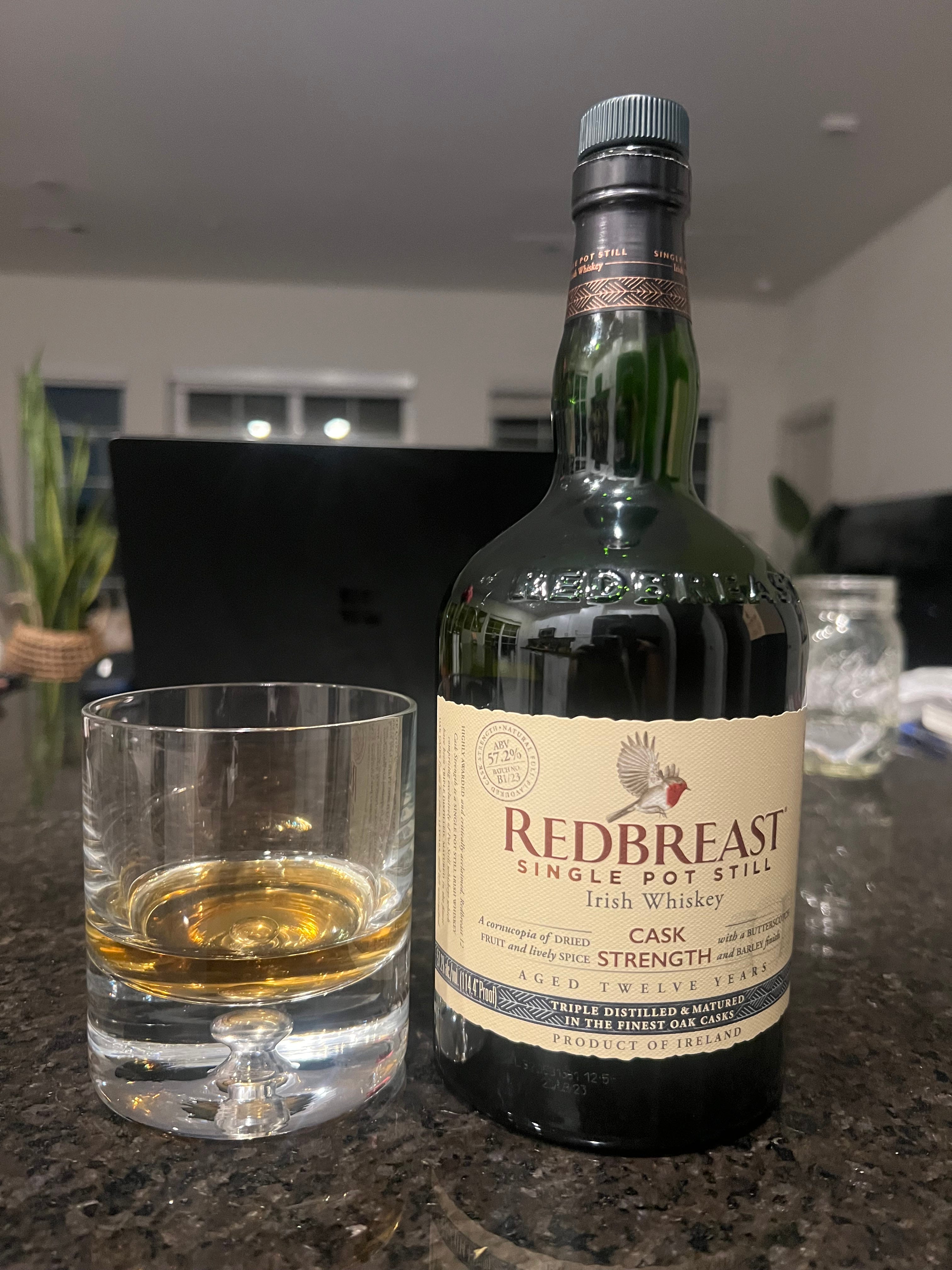
Because that pot still butterscotch love juice is one of my favorite whiskeys, I undoubtedly got a two-for-one: good rum and good whiskey. But we are not here to discuss the Irish. Our focus is Guadeloupe and France. Historical context: Guadeloupe became an overseas département of France in 1946. A “full region” of France in 1974. Culturally, I suppose we can draw an analogy that Guadeloupeans are to mainland France as Puerto Ricans are to mainland America.
Back to the rum, though we will get back to the French in Part B. It’s relevant, I promise.
Part A – Nothing but the feels.
If you close your eyes and take a whiff of the Guadeloupe 2013 in a glass, you will think that someone dropped a small splash of water in a Hampden rum. That sweet nail polish scent. Hampden’s Great House series has a younger French-speaking cousin we may not know about. The smell is sour, in a rummy aromatic way, which is to say that it is pleasant for the initiated. Gives you a very anticipatory lead-in.
The taste does not disappoint. Though thin, there is a surprising amount of flavor intensity for something at a slightly lower ABV (43%). That sour-like note comes through in the taste as well (again, pleasant). You should not give this a dash of any water to “bring out the other flavors,” as I think it would destroy the liquid’s taste.
I recommend this contained French cousin of what feels like a high-ish ester rum (based on the taste). The rum feels like a kid who left the Caribbean and got soft after acclimating to European (Continental) soil. We’ll discuss the technicality of that last sentence in Part B. The Guadeloupe 2013 is exciting and very different than what you will usually anticipate receiving from a Guadeloupe cane spirit product. For my rum people, this is a bit of an enigma. Let’s discuss why.
Disclaimer: deep thoughts on the rum have largely escaped me since I tried this back in May/June. It was decent enough that I would have it again. Maybe a pour vs. buying another bottle, given I haven’t tried other expressions from the TCRL range.
Part B – Historical, Technical.
Note: I will not split Historical and Technical for this portion because we are not reviewing liquid directly from a producer.
In the universe of rum, there is much fanfare for rhum Agricole (agricultural rum), that distinctive liquid from (only) fermented cane juice, which is the core legal specification (of many) required for a r(h)um to be classified as Agricole. I highlight legal because the French, in 1996, established their translation of a Protected Designation of Origin (PDO), which they refer to as an Appellation d’Origine Contrôlée (AOC). To clarify, this was established for Martinique, though there are similar, but less stringent, rules for the manufacture of Guadeloupean rhums to fall under this agricultural rum classification. Other overseas departments of France, like Réunion Island, also claim the Rhum Agricole classification/protection. To confuse you a little bit more, Portugal’s Madeira Island has a Geographical Indication, which allows it also to lay claim to the term “agricultural rum” (as of 2011).
The further breakdown of the above—and pulling out the nuances around protections vs. designations vs. other -tions—would require a few more articles, which isn’t the goal of this piece. The primary context I want to establish is that the French, as they’ve done with a variety of brandies (Cognac, Armagnac, Calvados, etc.), have made clear that they own the term “agricultural rum.” I don’t care much to debate that; I only want to provide context for breaking apart something not necessarily rooted in French-ness, but instead done out of necessity and survival. A liquid storm of sorts that landed the French in a position of exercising protectionism in a historically apt manner.
I’ll explain in a fly-by linear fashion –
Haitians gained independence (early 19th century), causing France to lose its most valuable sugar colony.
Beet sugar explodes onto the market, which the French adopt, furthering the precarity of sugar plantations across French islands (most of which are SIGNIFICANTLY smaller than Haiti).
If sugar is failing, rum can be a viable substitute to prevent the unprofitable white gold from going to waste.
However, if you can’t sell your molasses on the global market as a viable competitor, you make use of your cane in some other way.
It was this survival alternative (i.e., taking cane juice and distilling rum) that the French islands have now, by way of the Continental dictate, codified.
As the 19th century wore on, the importance of cane sugar in France declined. Plantations across the Caribbean closed and the costly process of refining sugar in the French colonies was no longer viable for many. With less molasses available to ferment, distillers watched their business dwindle. That was until they began distilling the fermented juice from crushed sugar cane – a solution commonly attributed to Homère Clément, whose namesake distillery prospers in Martinique to this day. Incidentally, the continuous column stills that helped define this new style of rum – similar to those used in Armagnac – are another innovation funded by Napoleon. – The Whisky Exchange
And then, French mainland beverages were severely impacted by an insect that wiped out their go-tos. And just like that, cane juice rhums became a critical stopgap –
Rhum agricole continued to evolve through the late-19th and into the 20th centuries. When the dreaded phylloxera blight all but wiped out production of cognac and armagnac, agricole aged in oak became a popular digestif back in mainland France. During the First World War it was issued to French troops who would have erstwhile enjoyed a brandy with their rations and created an enduring affection for this unique style of rum that resonated through the generations. – The Whisky Exchange
So, when I see (what feels like) a pejorative term of “rhum industrielle” to describe molasses-based rums relative to cane juice rums…well, I don’t really pay much attention to the chatter because taste preferences are subjective. The only issue I take with the distinction, speaking to the French here, is that you must remember, it wasn’t always this way. These are not my feelings, fortunately, just what the history books have written in them. Because from the 1600s to the late 1700s, rum (everywhere) was primarily made from molasses rather than cane juice. Not to say cane juice went unused, that’s probably not entirely accurate. But molasses reigned supreme, even in the French-controlled territories.
1770 –
Thus Guadeloupe produced 3.5 gallons of molasses per hundredweight of gross muscovado and two gallons per hundredweight of finished white sugar for a total of 1,591,000 gallons. Wastage at 2-1/2% and internal consumption at 1.5 gallons per inhabitant left 1,347,000 gallons of molasses to be disposed of as best they could. Of this the planters exported 700,000 gallons, approximately 11% (75,000 gallons) of the export went to France. Another 575,000 gallons were sold to the North Americans or almost 40 hogsheads of molasses on each of the 126 ships. The remaining 50,000 gallons went to other customers. This left 647,000 gallons to be distilled into rum. – Rum and the American Revolution
The planters of Guadeloupe received back from their stills 100 gallons of rum for every 103 gallons of molasses sent there. In 1770 they had as a result 629,000 gallons of rum of which to dispose. Five percent leaked away. The planters, the free Negroes and the island’s slaves drank 558,000 gallons. The rest, only 56,000 gallons, was exported. – Rum and the American Revolution
Hey, look, the same is true of strict-rules Martinique –
The remaining molasses, 839,000 gallons, the islanders converted into rum at the standard French West Indian rate of 103 gallons of molasses per 100 gallons of rum. Martinique distilled 914,000 gallons of rum in 1770. – Rum and the American Revolution
What am I getting on about with all this information? Well, to bring us back to the center, TCRL’s Guadeloupe 2013 falls under the umbrella of “industrial rum” because it was produced from molasses. There’s no hiding this fact when you taste it. Dead giveaway.
Which takes us nicely to the more technical side of the house. Won’t go into too much detail, just enough to give you a sense of the what and the why.
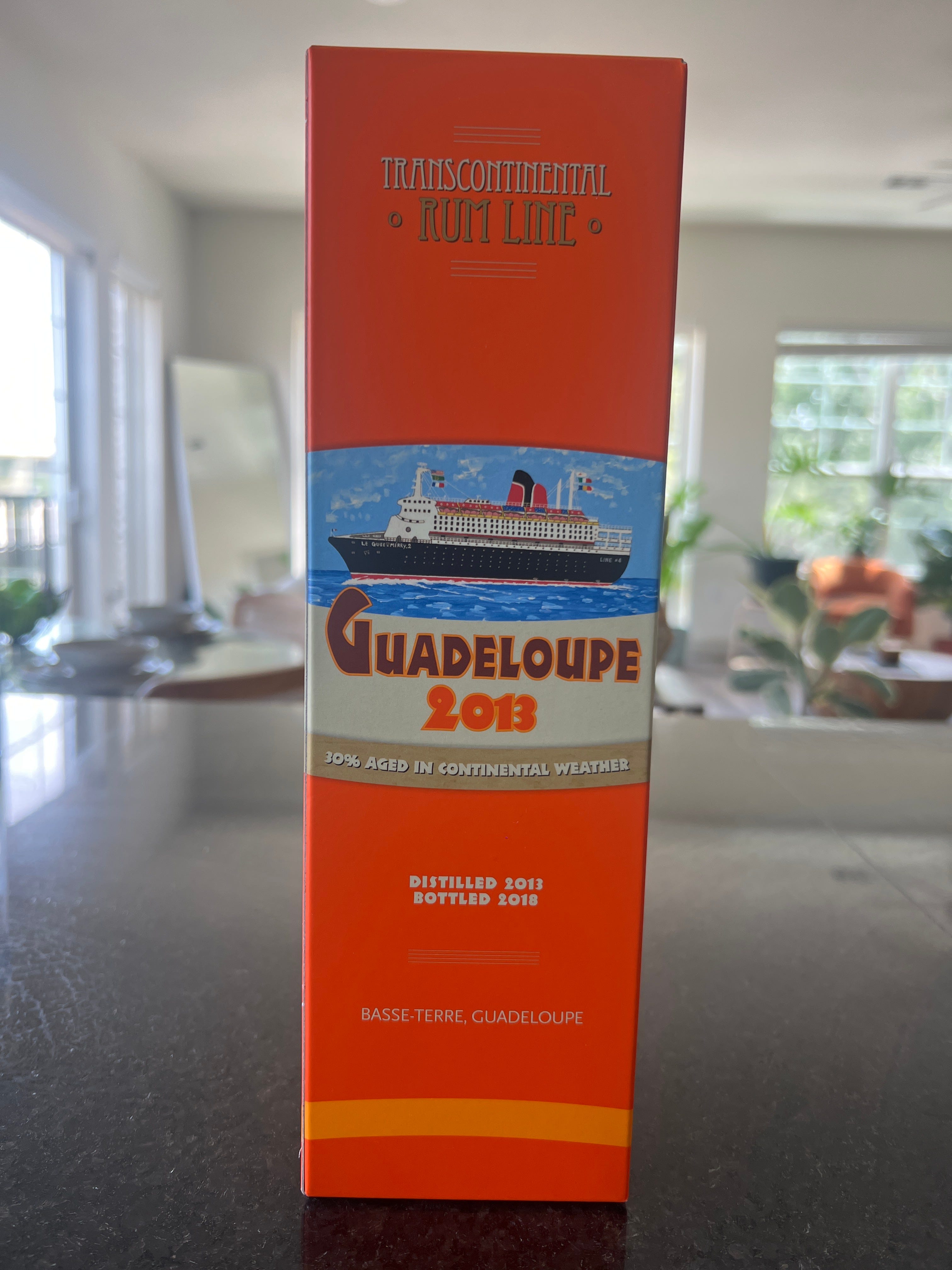
On the front of the bottle, we have –
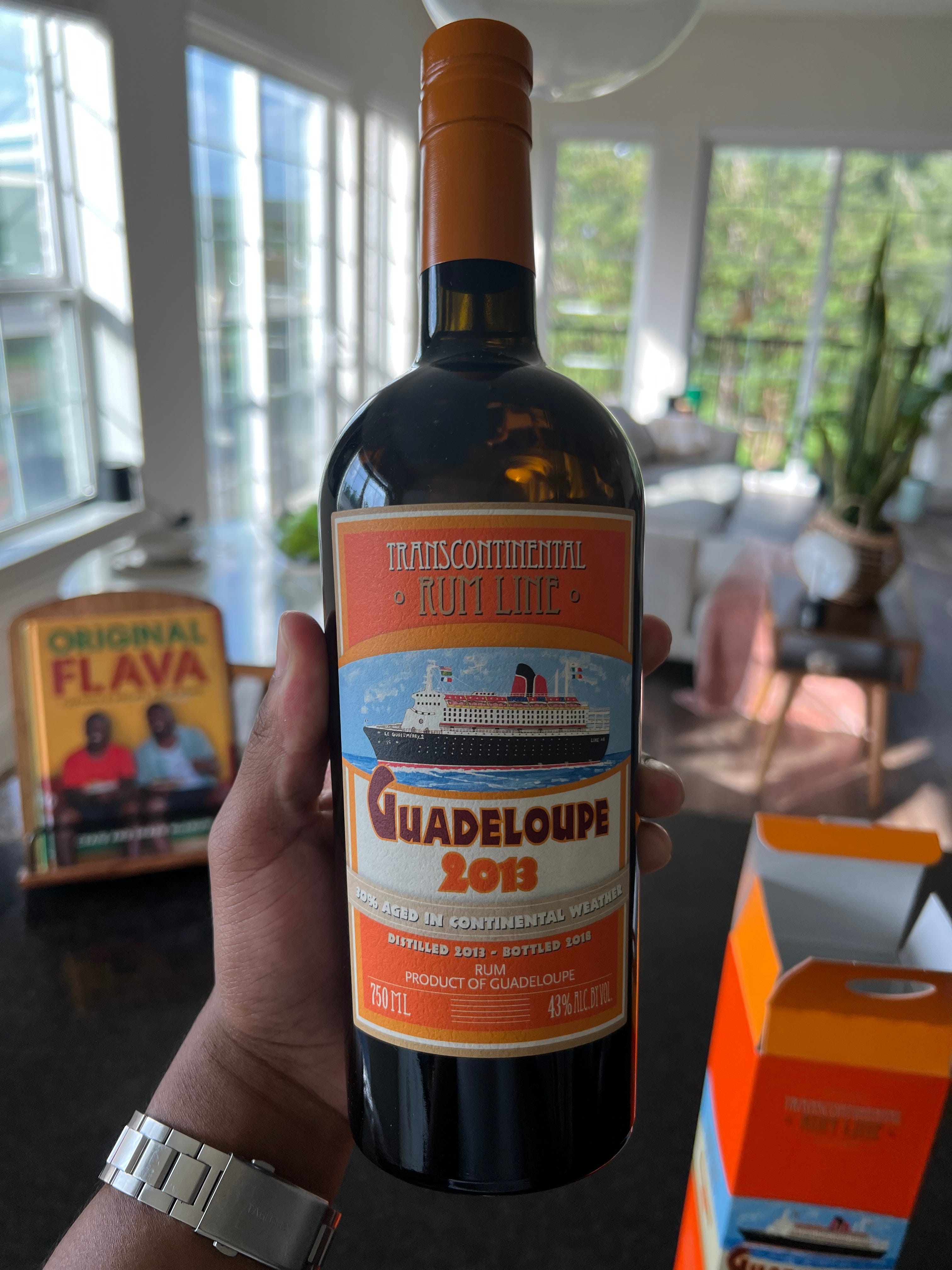
Distilled in 2013
Bottled in 2018
43% ABV
30% aged in continental weather
That last bit on aging is addressed on the back of the bottle –
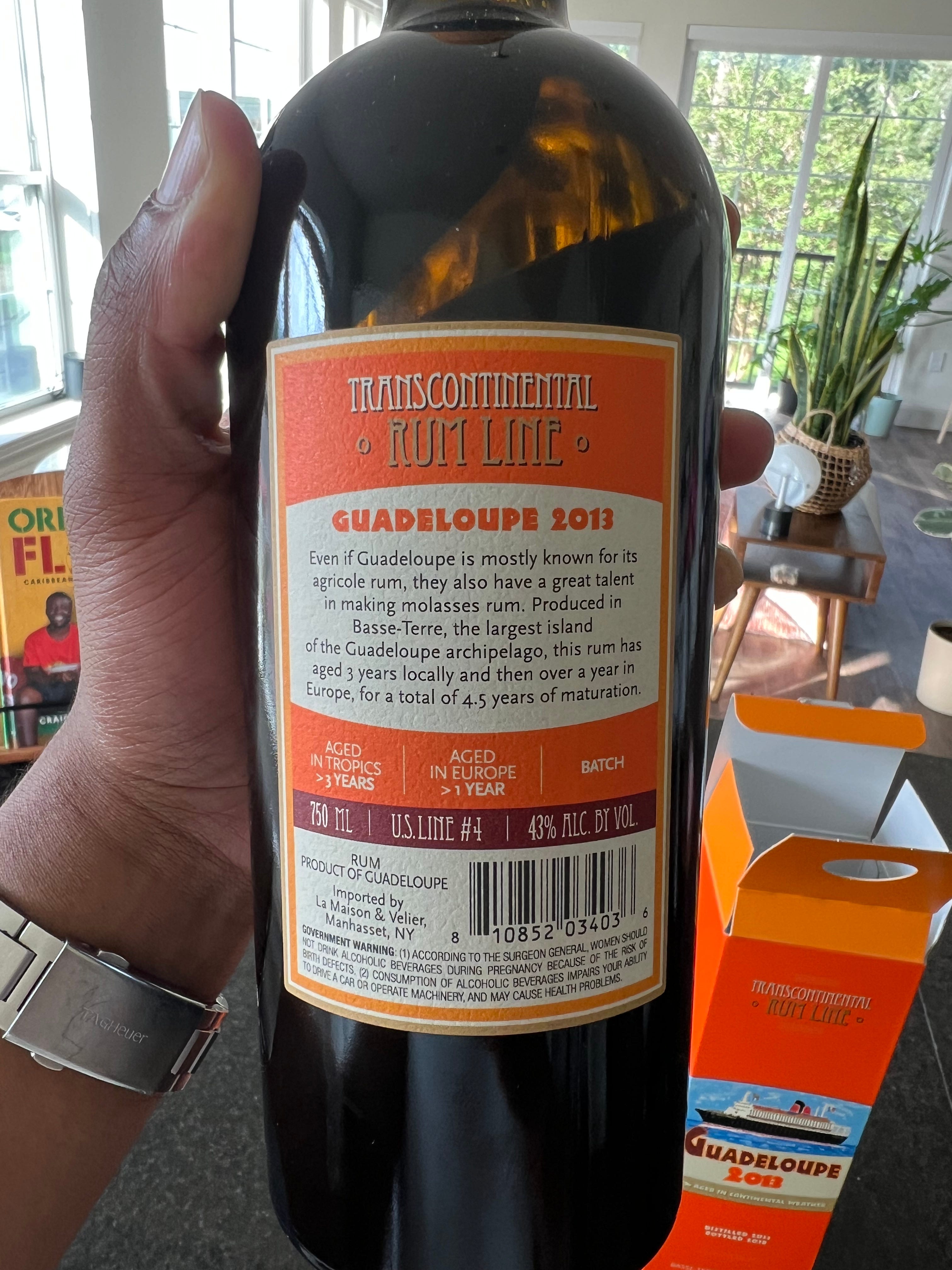
Aged for 3 years in Guadeloupe and “over a year in Europe”
Total aging of ~4.5 years
For the nerdier among us, it says “Batch” distillation, but that could be a column or pot. If Guadeloupe is producing majority Agricole rhums, and therefore using creole coffee stills…wait, are creole coffee stills continuous or batch? Man, I don’t know. Someone keep me honest.
Basse-Terre is the largest island of Guadeloupe, where it was produced. Who is the producer? According to Excellence Rhum, the juice comes from “Bonne Mère artisanal distillery.” Note: go to DBM’s website, it’ll make you want to visit Guadeloupe immediately.
The only thing I think I would have added, but it is probably against the regulations that France has in place, is that the unaged distillate was likely a Grand Arôme (large aroma); That heavy aroma is some of what I discussed in Part A, with respect to its relative closeness to some of Hampden’s juice.
A special shout out to the liquor store in Houston (blanking on the name) that had this at a reduced price, likely because it was on the shelf for a while. Which means I’ll also shout out the residents of Houston for not purchasing/allowing me to secure the bottle at (what I would consider) a bargain price. Muchas gracias!
Another quick shout out to H-Town.
Who knew that Houston had so many establishments with great rum?
Shout out to Anvil Bar, solid inventory. Went twice, no photos.
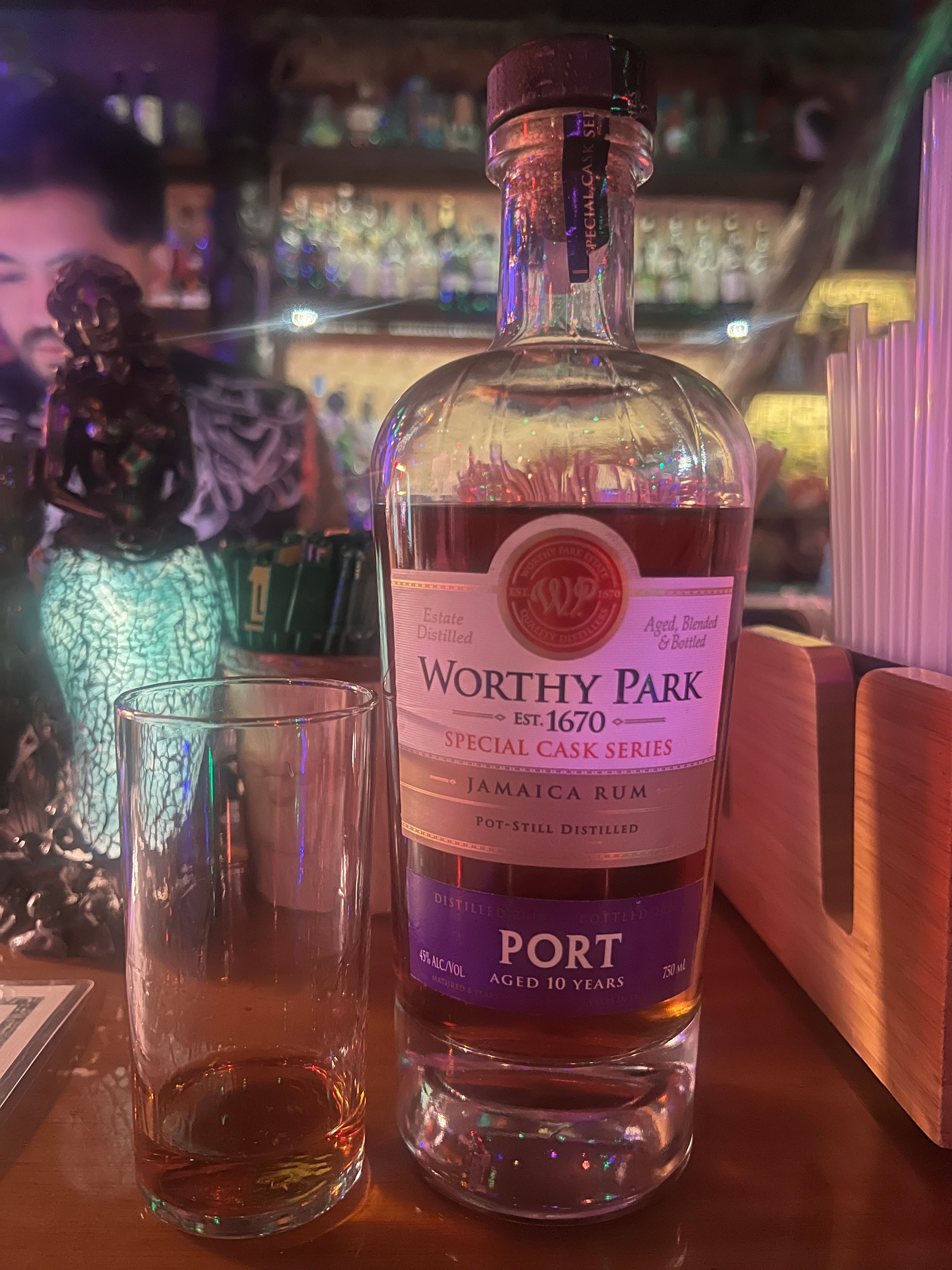
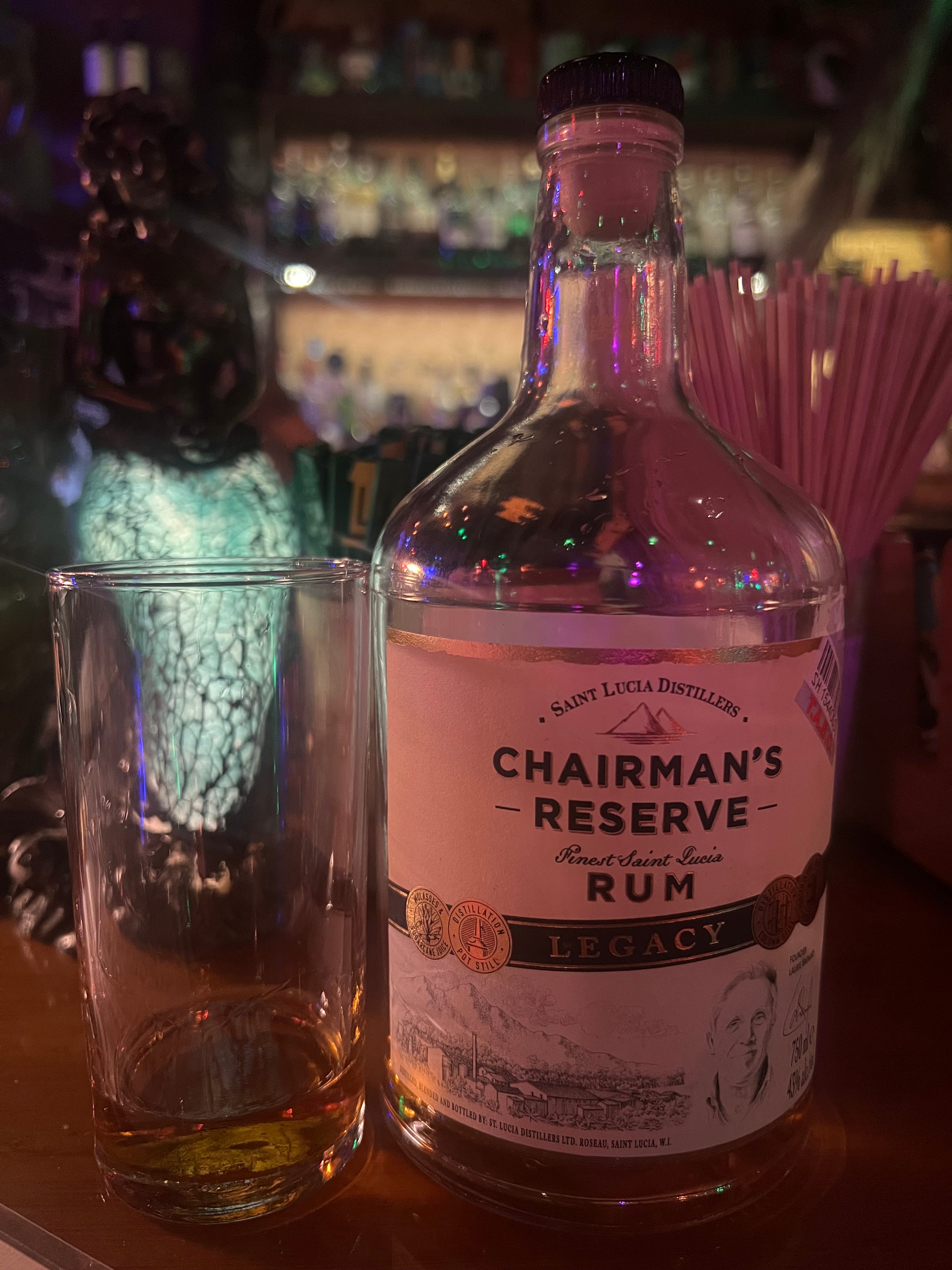
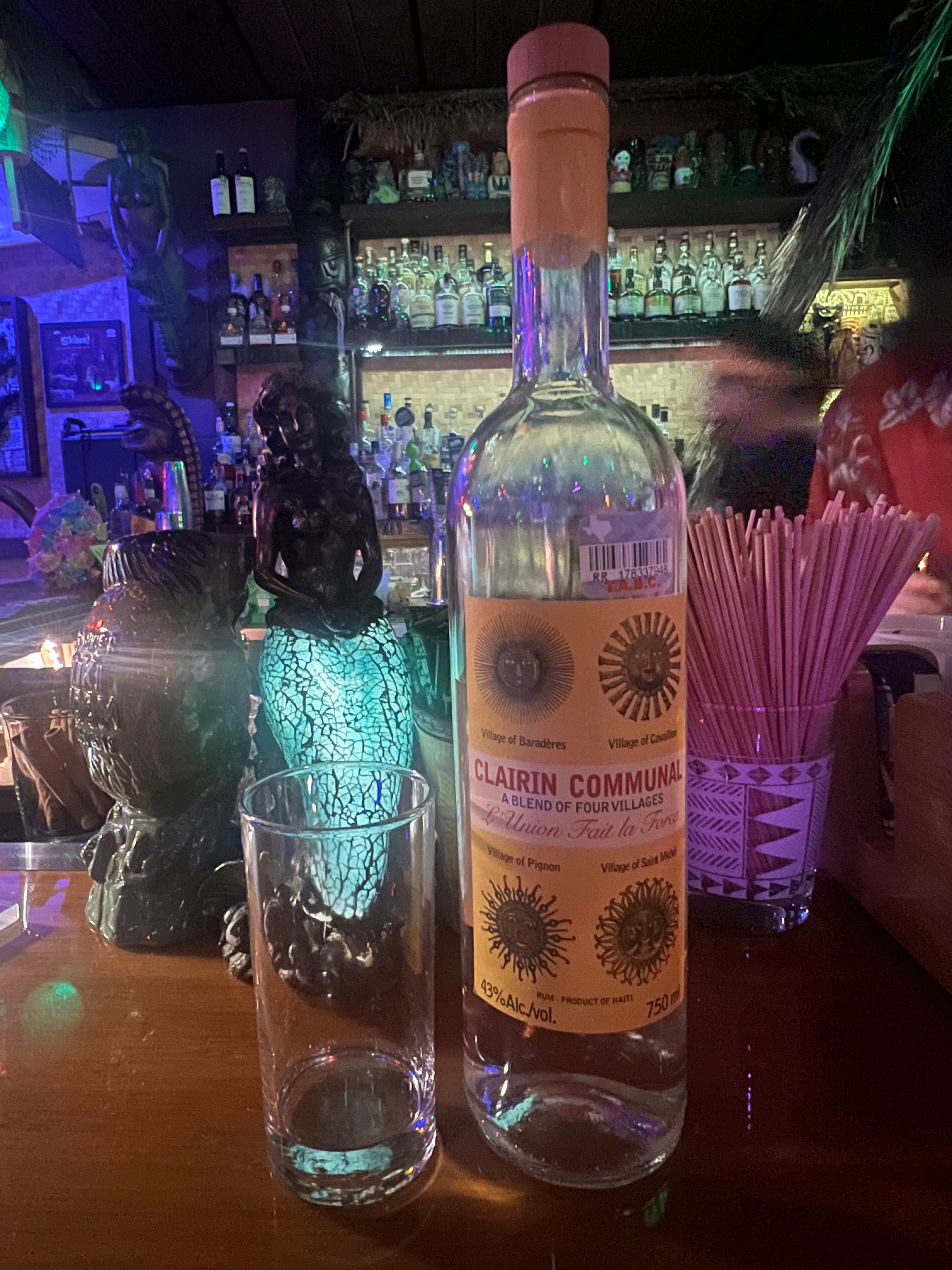
And then there was Lei Low. Heavy emphasis on Tiki drinks, not really my thing. What I did appreciate was them giving me half pours so that I could try more (didn’t mean for that to rhyme). The damage that night, excuse the dark imagery –
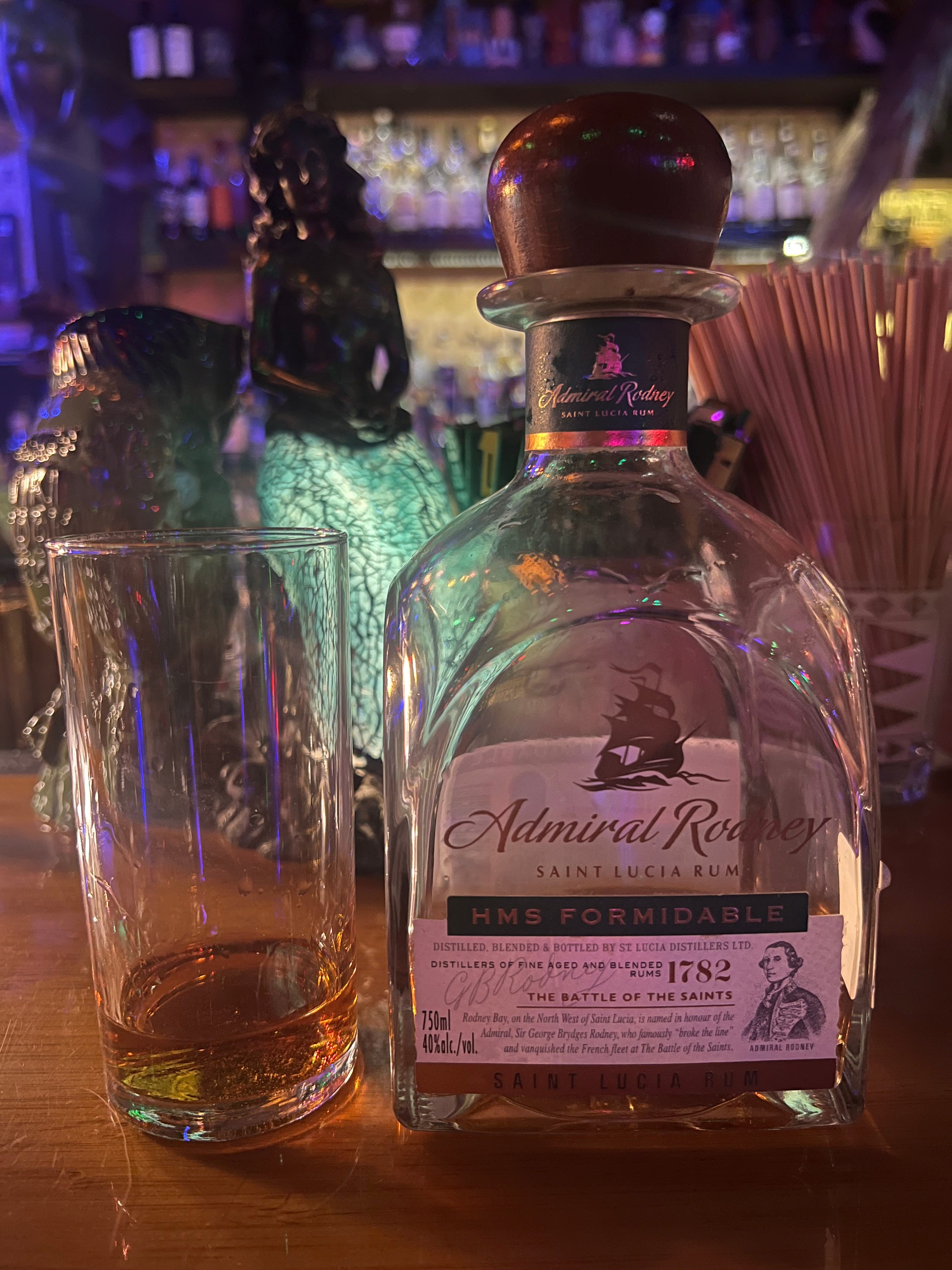
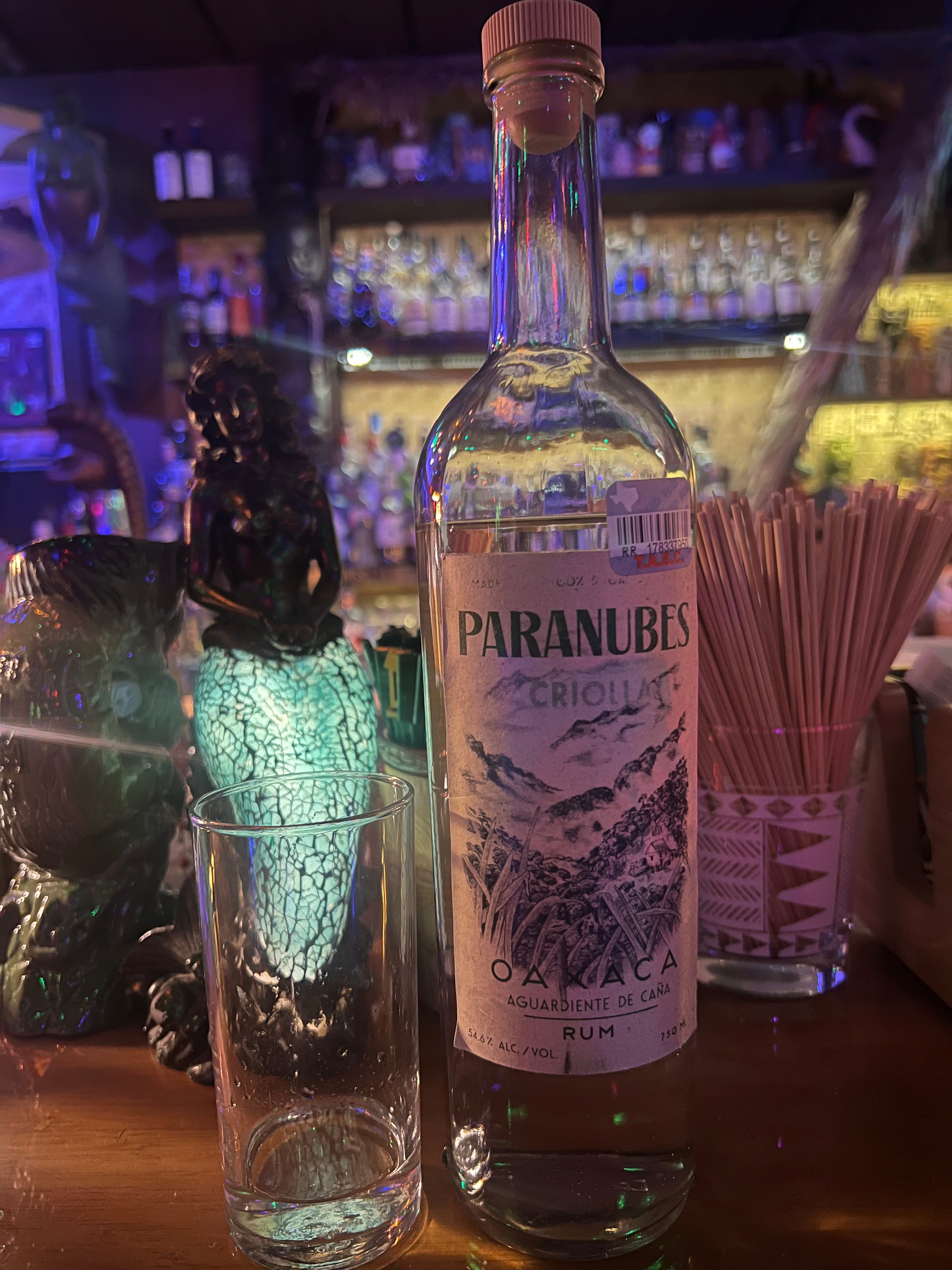
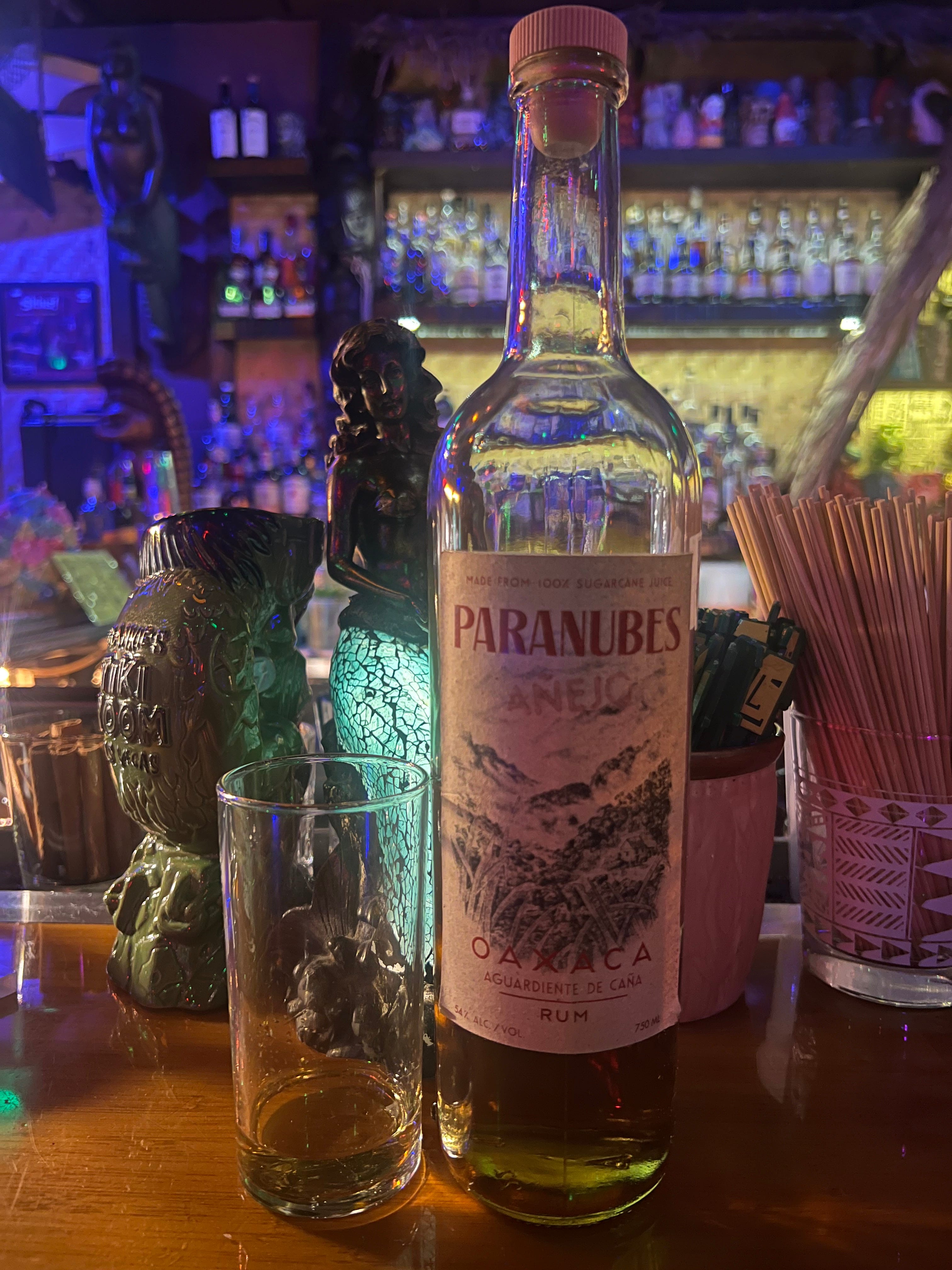
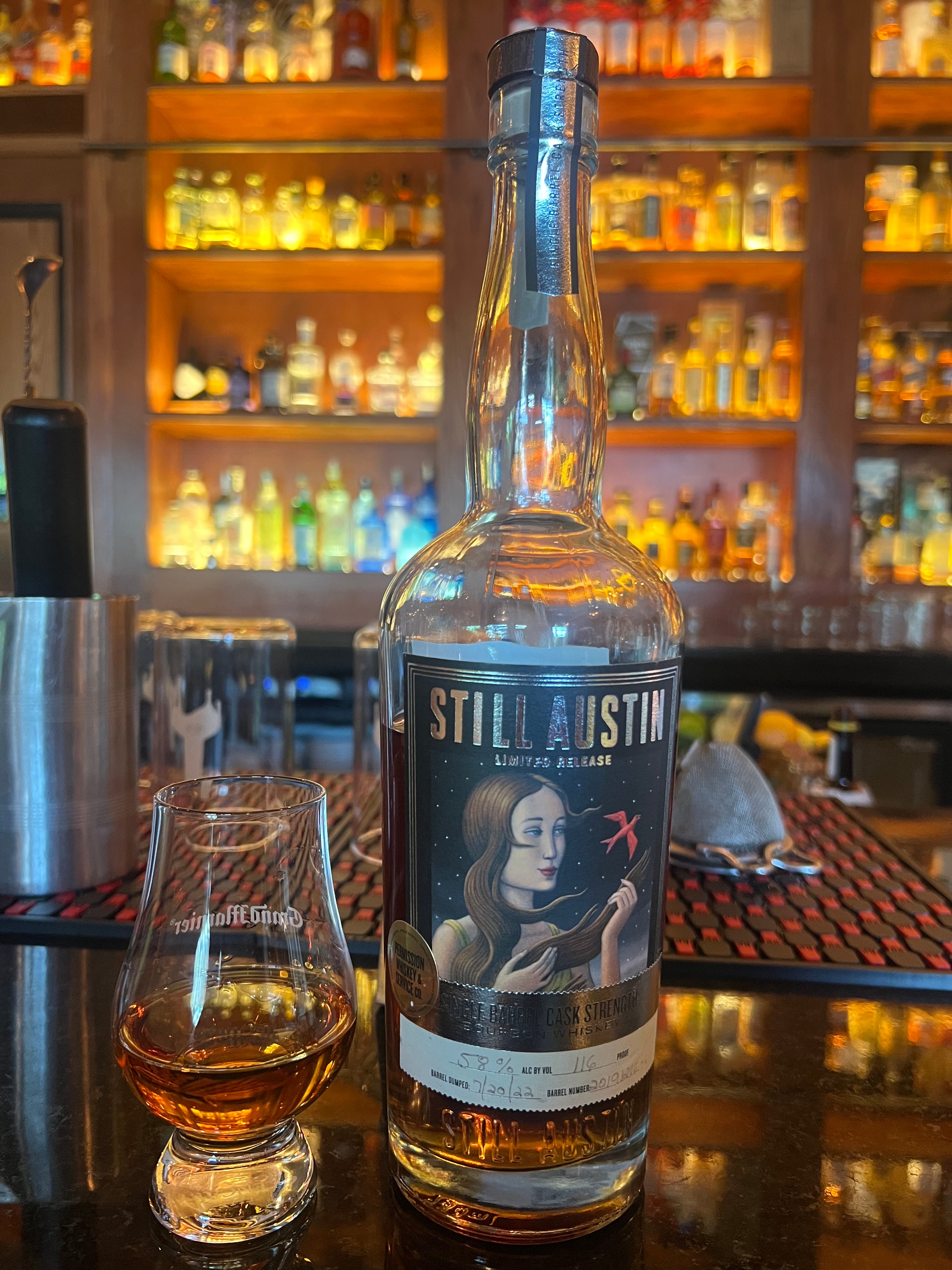
I also had some good glasses of whiskey while out in H-town (beyond Redbreast). The below is courtesy of Permission Whiskey.
To steal back the spotlight, the star of the show remains
Till next time.
I left Houston and drove to Louisiana. Spent a night in Baton Rouge before I made my way to New Orleans. While in Baton Rouge, I shared the Guadeloupe 2013 with two strangers. Yes, I traveled with it. But only because my friend wasn’t a big fan of the juice, so I chose to bring it along for the ride. Anywho—the strangers loved the rum, they thought it was like nothing they had ever tasted. And I also had to explain what Guadeloupe was. Confusion further abounded when I tried to explain why France was in the mix.
I moved on to New Orleans, my final stop before heading back east. While on my rum pilgrimage to what I will don the (SHOULD BE) holy grail land of American rum, I left the bottle with a fellow rum lover, who happens to also be a producer. I will leave it at that. Because the next time I type up an article, the foray will be into American/Louisiana cane & rum land. For now, give it up to TCRL for this bottling. Was a pleasantly good sip. Leave it in Guadeloupe next time. Teasing.
I’m out.
Cheers and #rumresponsibly
