



Sipping tips: When you pick these up, I implore you to chew your food before swallowing. Most spirits taste harsh if you down them immediately (shots): you’re blasting your palette and taste buds with high-proof alcohol. Take a small swig, let the liquid sit in your mouth, and hug every crevice for 4-5 seconds (open the taste buds). Down it. You’ll pick up all the flavors and truly know what the beverage tastes like. Once you do that 1-2 times, your palette is ready. Drink away. And to my NY’ers, I am sorry for all that wild language.
The last rotation was December 2025: Ten to One’s Oloroso Sherry Cask Select, Alambique Serrano’s Cañada, and Rumcast’s Guyana VSG & Mauritius MLM0.
As you read through, bear this in mind –
Freshly distilled spirits should dazzle the tongue and clearly reveal their source material. For connoisseurs, a well-made spirit should not require aging to be enjoyable. – Matt Pietrek, Modern Caribbean Rum: A Contemporary Guide to the Region’s Essential Spirit
Note: I’m on page 200 something of the 800+. It is well worth the time spent. I encourage everyone to grab a copy of Rum Wonk’s (text)book.
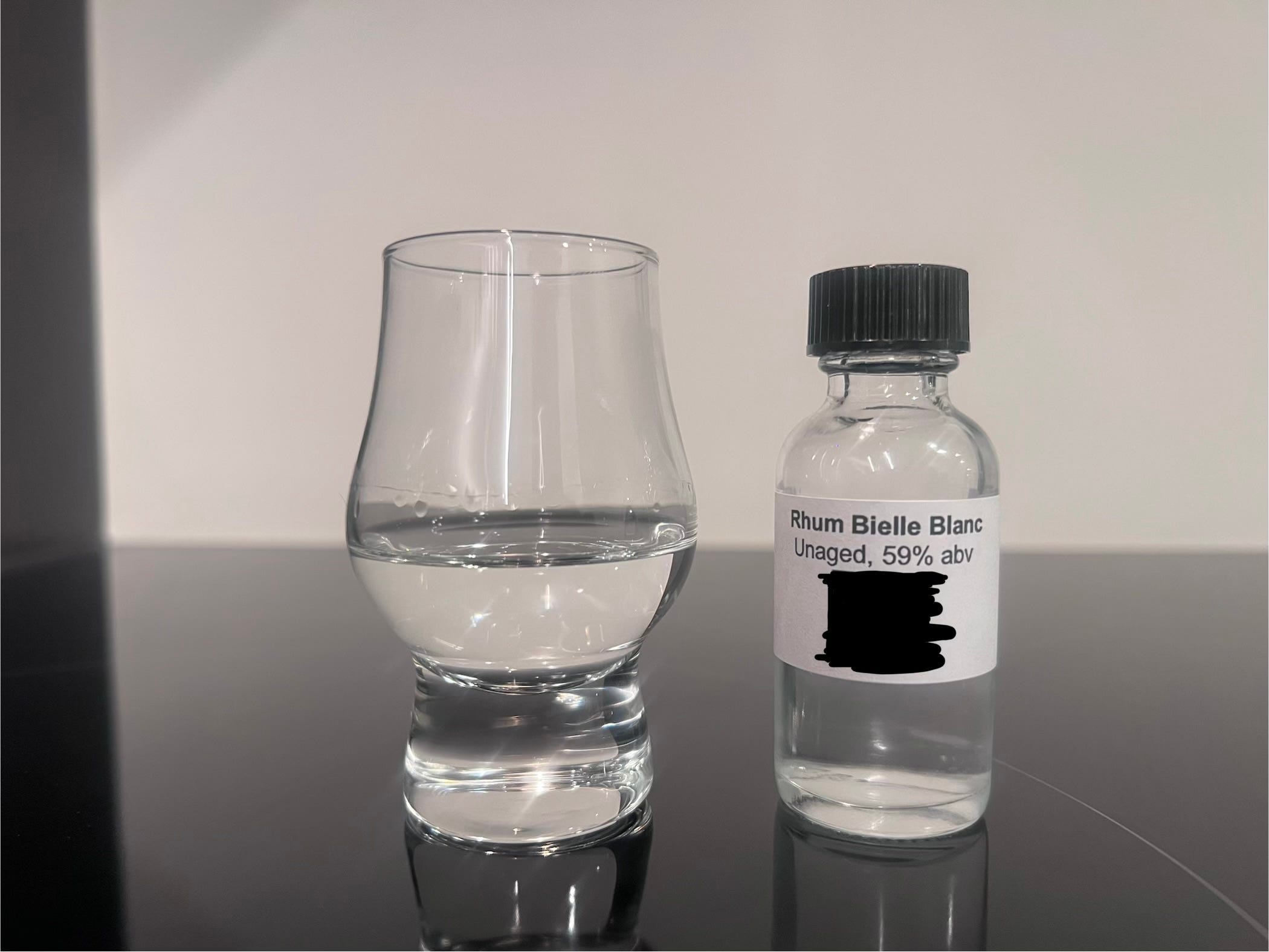
Rhum Bielle x Blanc.
Rhum Bielle hails from Marie-Galante. Where is Marie-Galante, you ask? It is an island off the coast of its mother island, Guadeloupe. An island’s island, if you will -
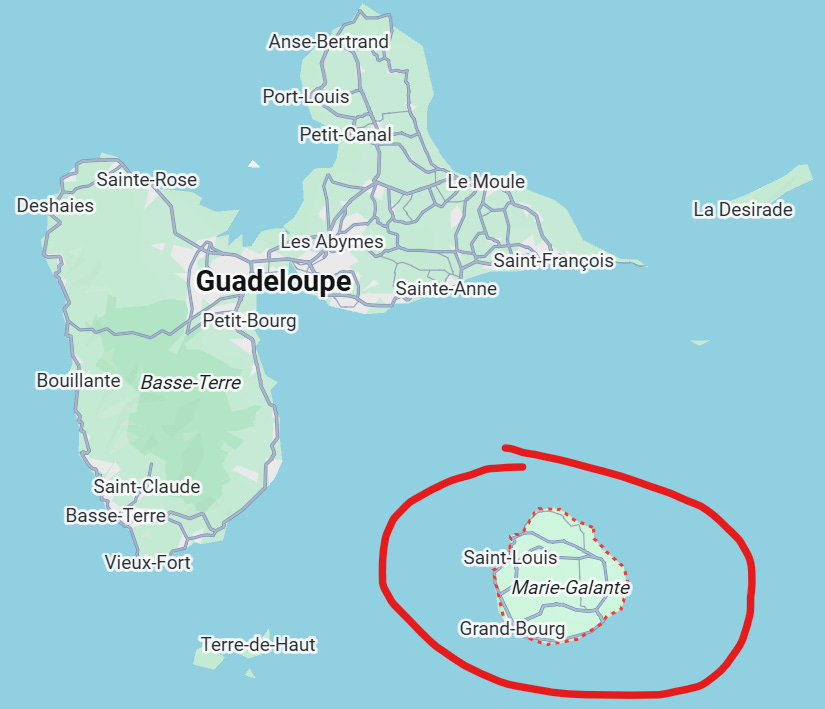
Guadeloupe is an overseas department of France with a population of nearly 375,000. Marie-Galante is much smaller and makes up about 10,000 — 11,000 of that 375K figure. And one thing that every rum purist knows is that M-G can make some rum, boy!
Take the unaged Blanc pictured above. Unlike most places that start their baseline products at 40% ABV, Bielle makes clear that on the island, “white rum is consumed at 59% ABV.” I LIKE THAT! 118 proof seems to be a tradition that other producers follow as well. Not in the historical mood this go round (I’m human, cut me some slack), so I’ll leap right to the distillate.
If grass had a creamy aroma, it would be called Bielle. Wet leaf smell leaves you with a (good) stink of nature’s sweet scents. I probably sat and smelled the liquid in the glass longer than I have most rums. Oh, my bad - r(h)ums. Smells like it could be a note in a lemon drop candy.
First touch is peppery and dry, with a lingering kick from the ABV. Per usual, given my Jamaican-skewed palate, the cane juice tempers the roar of the liquid. Without sounding offensive to my still and cask-strength fist pumpers, it becomes easy to drink (for me personally). There’s a marshmellow-y vanilla note that comes through on subsequent sips. Akin to a minty smoke.
All in all, this is just damn good. Point-blanc!

Easy one to add to the list if you can find it. As someone who has tasted a decent chunk of cane juice r(h)ums but still considers themself a learner-in-progress, Bielle Blanc is an easy, easy one to recommend. I wonder what their VSOP-equivalent tastes like. In due time.
Company: Rhum Bielle
Worthy Park x 9th Floor Cane Juice WPE.
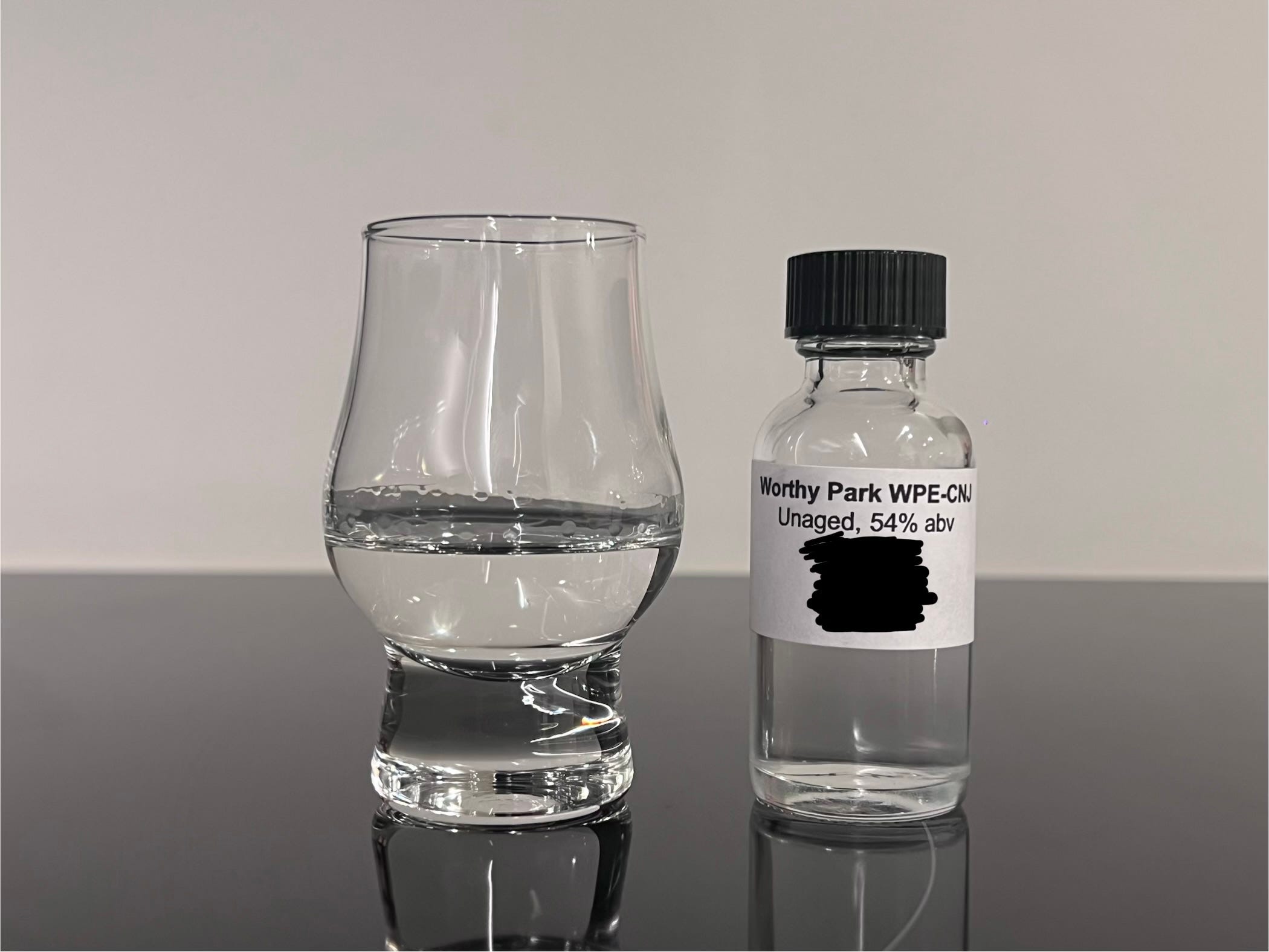
I will leave my personal ‘what are Jamaicans doing cane juice rums for’ to the side, notwithstanding Worthy Park’s existing use of cane juice in its overproof product. More fairly, I’ll tip my hat to Worthy Park giving the people (i.e., rum nerd community) what they want. I can respect that. However, if the average Jamaican tasted this, they would be confused, to put it mildly. Alright, moving on.
The aroma is ripe as if something is rotting in grass (don’t mean this in a bad way); if you chew up cane, leave it in vinegar, and put a rag in the stew - I’m not making this any better - and wring it out, this is what you get on the nose. Alright, let me go all the way with it: almost has a ram goat (renk) stench. And if you don’t know what that smells like, it’s probably for the best. Big up the family in St. Bess.
The taste is surprisingly pleasant. A little more heat than the Bielle, but nothing remotely close to the 63% ABV unaged (molasses) juice that floats all over the island. Has an olive and banana combination to it, which is usually tough for me: I try to give olives a chance - every color, every size - and it always makes me go, “NOPE.” That’s where I landed on the taste after many small sips.
To borrow the words of Ian Burrell, this could be a session rum, though I am sure we would exchange lots of patois-laden banter about this expression. The community loves it, job accomplished.
Company: Worthy Park
Rhum Clément x Blanc Agricole
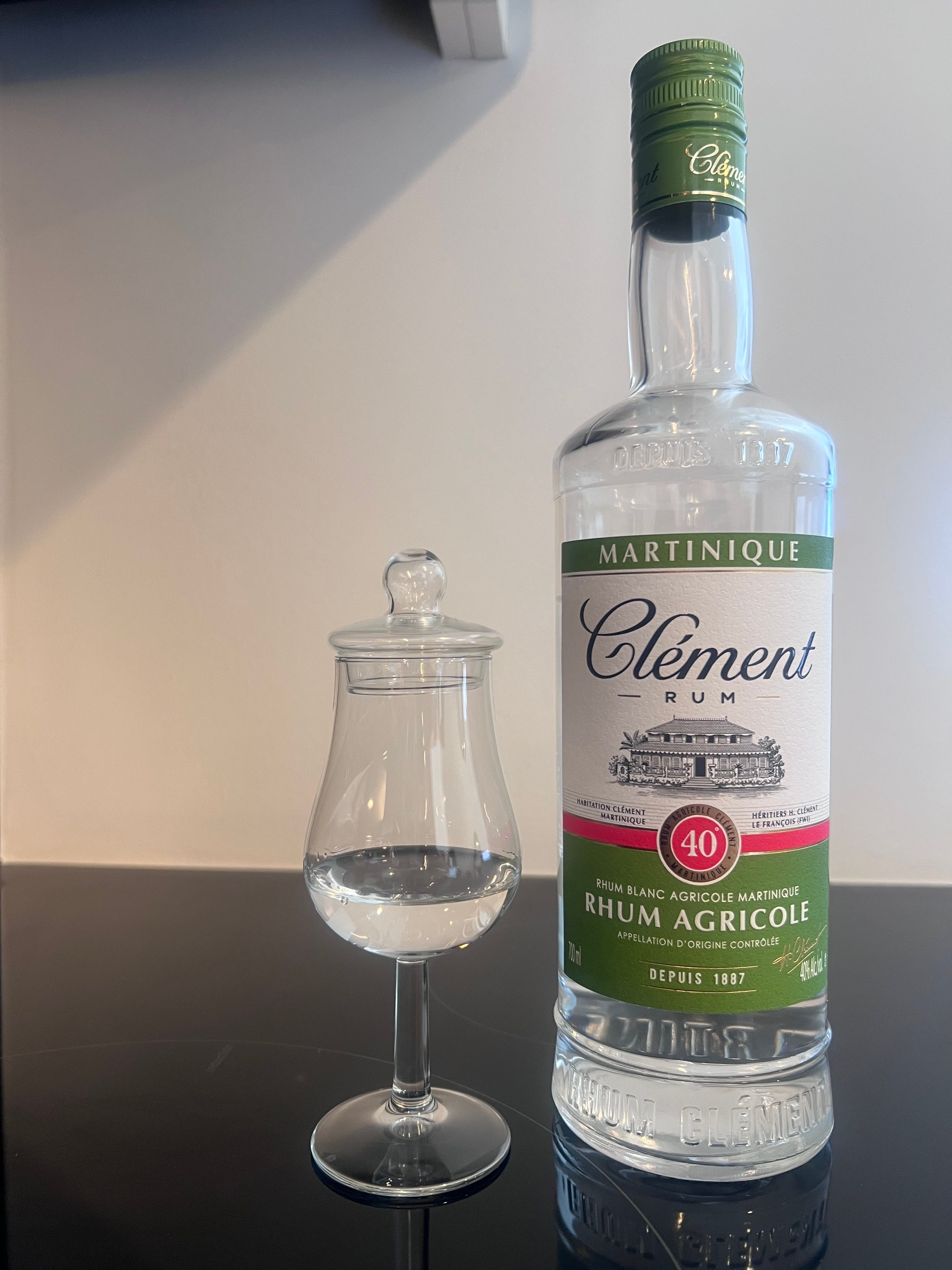
Let’s hop back over to another French overseas department, Martinique. The 80-proof Rhum Clément Blanc adheres to the strict criteria of the island’s Appellation d’Origine Contrôlée (AOC), and you get that immediately when you smell the liquid. The grassy/vegetal requirement pulls on your nose hairs immediately, even at the much lower proof than their Guadeloupean cousins.
Funny enough - and since I always make things about Jamaica anyway - this has a green, JA plum smell. This lovely fruit right here (the unripe one, not the red) -
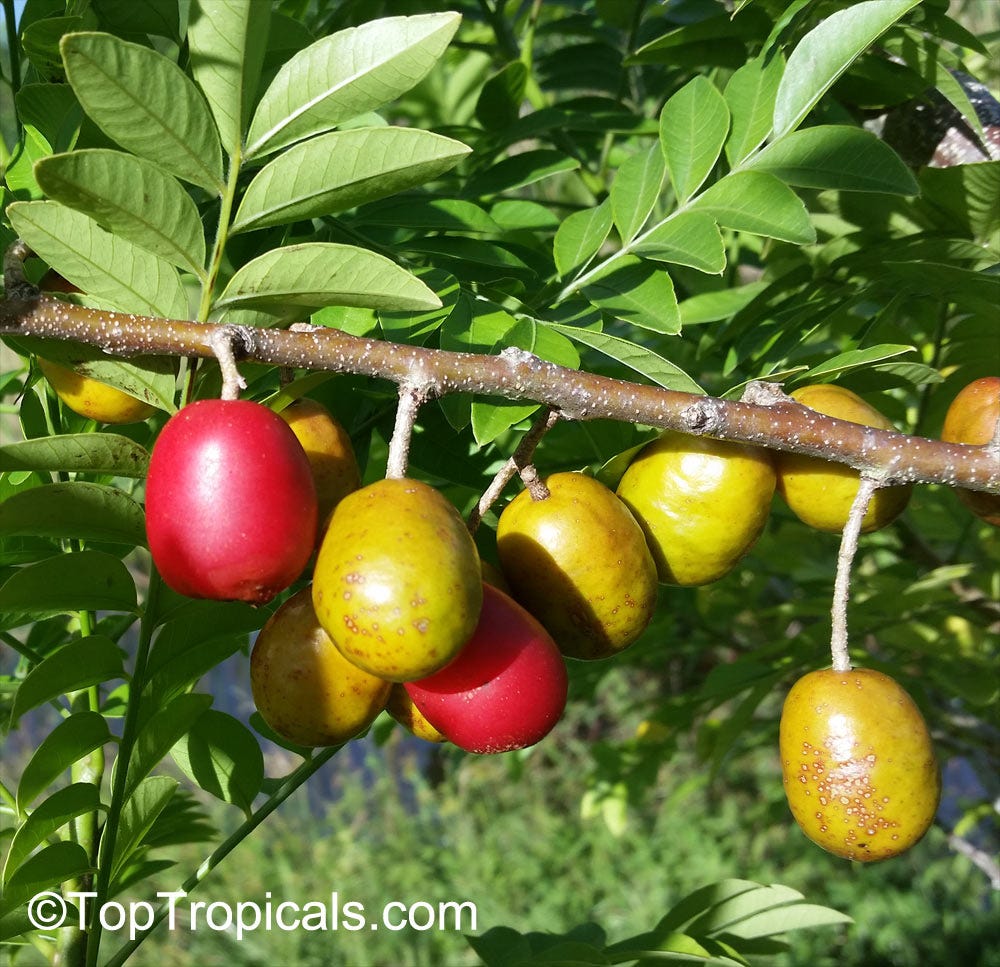
Going back to the quote at the beginning, the source material - cane juice - shines in this expression. Truly, how do chemists/distillers work with these products when you can literally sit down and smell this thing all day long?
On the palate, the taste fades quickly. And this is to be expected, since the company recommends using it in cocktails. You’ll get the typical tastes of grassy, citrus-y rhum. Semi-briny notes will linger on the tongue for a bit. I’d be interested to see how much more expressive this is at 50% and 55% ABV, which they also make. All in all, a good introduction to Martinique Agricoles. If you’ve never had one, your taste buds will be shocked in the best way possible. To this day, I am still getting used to these expressions.
Not a colorful sipping experience by any means. But that’s not what this is for. I just grabbed another one for a friend’s game night gathering later tonight. If you want to surprise a room of self-proclaimed drinkers with some liquid good-ness that won’t completely offend, this is a good one. Be prepared to explain yourself, that’s all.
Company: Rhum Clément
Clairin (Kléren) x Le Rocher
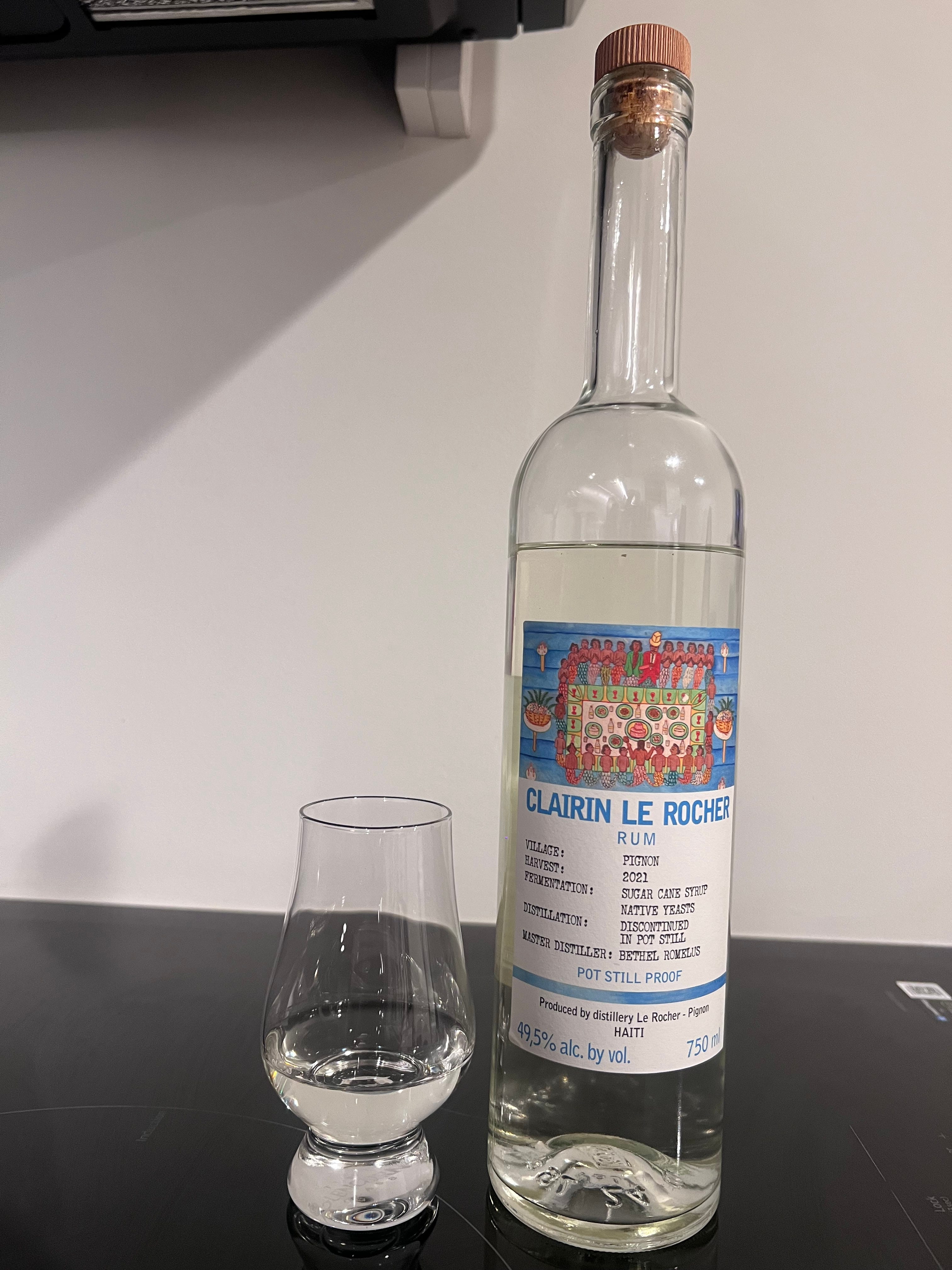
I mean, come on! This stuff makes me do this EVERY SINGLE TIME -

Every rum I covered before this was made with cane juice. Le Rocher was produced with cane syrup. What takes this up a notch further is that dunder (vinasse en français or vindage per the proprieter), the previous nutrient-dense residue left in the hardware from the last batch that cooked, is added to the cane syrup during fermentation. Without going into further detail, the takeaway is that this process imparts much more flavor to the rum wash before the low-ABV juice is put into the still and cranked up to 49.5% ABV on the bottle. All in all, you can taste and smell the beauty of this product.
Smoky on the nose, immediately! It’s as if smoked meat were stuffed with raisins, which Haitians wouldn’t do because they can actually cook up a storm. I put up Jamaicans, Haitians, and Trinidadians against any other 3 across the world. You get more and more on subsequent nosings: sour oranges, vinegar, and green apples, all held together by a gluey paste. If honey were smoked, it would be called Le Rocher.
There is an elegance to this heady rum that keeps you perked up because of the smoky character. People often use the terminology “rustic” to describe Clairins, and I think that comes through with this expression. I have a bias for fermentation-forward rums (i.e., a maniacal focus on yeast’s impact, length of fermentation, what’s added to that initial process to impart unique flavors, EVERYTHING JAMAICA STANDS FOR, etc.). And because of that, Le Rocher sits well with me. To all my Zoes, what a beautiful heritage product you have.
Company (highlighting a few notable producers whose products are available globally): The Spirit of Haiti
Le Rocher, specifically -
Handcrafted.
Let me know your thoughts if you get around to any of these rums.
Cheers and #rumresponsibly
