



Hip Hop and Dancehall to address the question.
Let’s start with three examples.
#1
As I mentioned in my previous article, AZ said the following in his notable track, Sugar Hill –

Why scotch? We’ll get there in a second. For people who need an excuse to hear the track/part I’m referencing, here you go –
#2
(I will translate in a bit, promise) Masicka x Tyrant: “Claat di matic like ah mi earthstrong, check mi birth paper, mi come from di dirt fam…guns and mi car dem ah German…di bourbon ah sip slow mi ah di surgeon”
For the visual/auditory folks –
Why bourbon? We’ll see!
#3 (My biases are showing here because, as correctly stated, the “city of the vibe” is on full display with this example. Shout out the town, Uptown, BX)
“Bottles gon fly, chase her or the Casa…After the spot, it’s straight to the casa…She know what she doin, climbed up the roster…Straight to my top five”
Why the fun play on the word Casa [Casamigos]? This is obvious, because it’s the drink that’s “in” right now, for certain communities at least, alongside “Zul or 42” [Casa Azul or Don Julio 1942] as Sheff G said in his track Everything Lit. Here, a neat summary is that some men drink socially to avoid women, while these fellas drink with them in mind. But why those specific spirits? We will talk about it soon.
Last time for my visual/auditory folks –
So, what’s going on here? And what does this have to do with why we drink what we drink? Ultimately, what the gents above were doing is, first and foremost, rhyming and flexing a little bit, from a lifestyle point of view. Let’s just get that out the way. I am not a betting man, but I am willing to throw everything in the pot to wager that Masicka drinks more rum than he does American whiskey. But earthstrong (urt-strong), dirt fam (fah-m), German (Jer-mahn), and Bourbon (bur-bahn)…man, that was tiring…all rhyme…and shows that he’s got it like that, given the rags-to-riches storyline.
What the artists did was speak to that which is a combination of 1) aspirational/motivational, 2) status-signaling, 3) eh, for the ladies-signaling (I don’t know a better way to describe that), and 4) most importantly, telling you what tribe they are a part of/what their current status is. I will get back to this later, but #4 is a fundamental definer of why we drink what we drink: our tribe does it, so do we.
Put differently, AZ is one of the kings of speaking prosperity into existence. Often done from a place of deep maturation (reminder: I dove into a lot of this in my AZ article). Because of that, outside of needing to rhyme the word scotch with window-watch out the Marriott, and coupes and yachts, AZ ultimately chose Scotch because we’ve been marketed to that Scotch equals some combination of an “old man drink,” a drink of maturity and distinction, what you drink when you’re trying to show that you drink quality, etc. And the Scots have leaned into this tremendously because they have a long heritage story to tell. AZ picked up that narrative, digested and regurgitated it. Now look, AZ might actually like Scotch. But I’m talking averages here: it’s more likely that my analysis is correct, but I am open to being wrong.
Who remembers the drink below? I can assure you that if Sheff G was of age when this was out, his line would have been “Nuv or 42.” Why? Because it was the gyal-dem favorite back in the day.
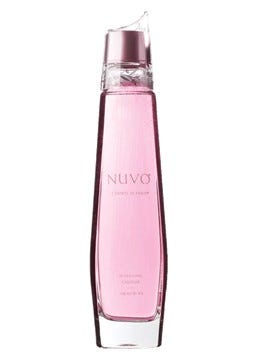
Ain’t no shame in the “you ain’t that special” game.
This will fit neatly into the And Then Some and Rum sections of the publication, serving as a nice bridge between the last set of articles and what’s to come after #Interlude 3 (i.e., diving back into books and rum). Please do not interpret any of what I am about to write as a stain on your individuality or how special you are. You’re very special. Yes you are (*pinches cheeks*), so special you are. Okay, my bad.
But seriously – much of why we drink what we drink, and do what we do (broadly), is essentially a culmination of 1) where and how we were brought up, 2) who we learned from (not in a strict, household sense, could be strangers you observed), and 3) your exposure to things over time. On #3, this is what evolves your drink preference or, for those who are a bit more parochial (not in a negative sense, more matter of fact based on where you live), keeps your preferences the same.
Like most human behaviors, we segment off into tribal practices. Alcoholic beverage choice can be a factor in how that tribe identifies, seeing some beverages as representative of the tribe or not. If I asked what alcoholic beverage French nationals drink (I’m not picking on the French again, I promise) versus what drink you think is most prominently featured in college fraternity houses across the U.S., you immediately formed a short list of answers. That’s not an accident. You should’ve also said that college kids don’t drink before 21.

Simply put, if you think you’re absolved from the consequences of history’s developments and their ramifications on your life today, then you’re living in a today-is-the-only-thing-that-matters mindset. It’s akin to believing that marketing doesn’t work on you. That subtle and/or overt reminders, carefully placed, over a sustained duration of time, have zero impact on your purchasing decisions. Money is not (typically) allocated and spent on industries if things don’t work or haven’t proven themselves (note: Advertising industry is worth $1 trilly).
As much as I wave, very proudly, the “I don’t do what everyone else does” flag, I know that I’m not as unique as my American exceptionalist brain would have me believe. The Jamaican side of my brain says otherwise. The NY side of my brain agrees with the Jamaican side.
Look, these three things are not accidents:
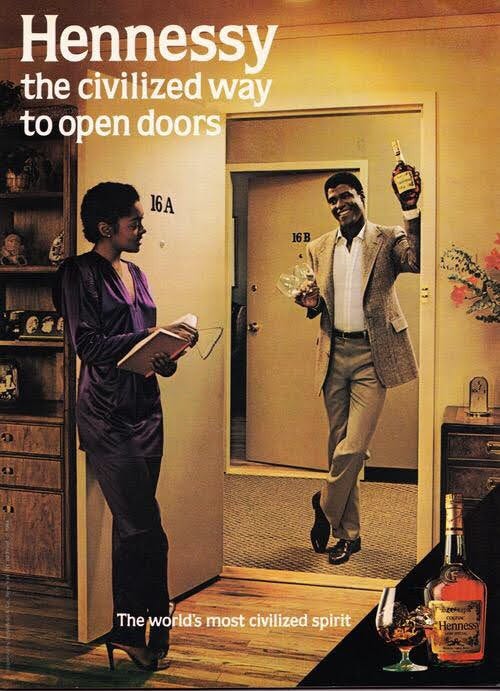
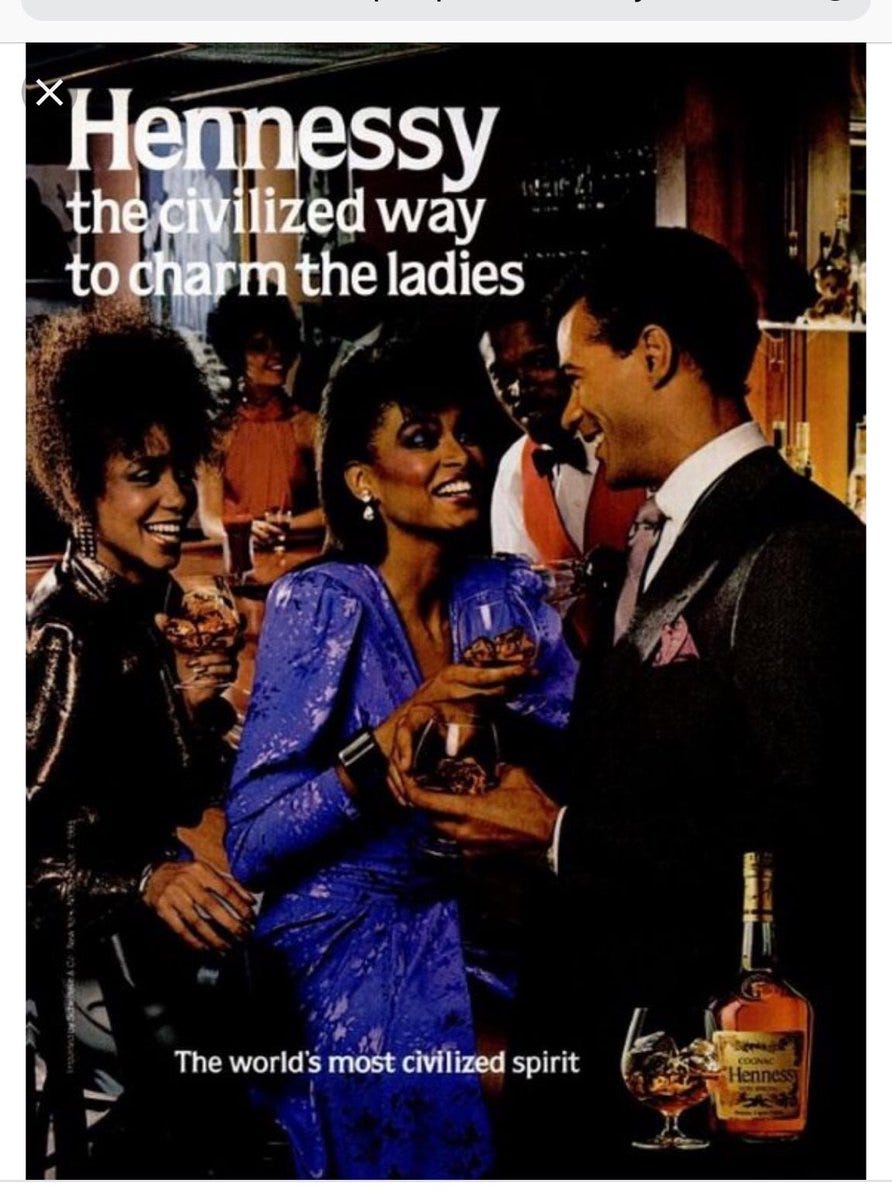

You’ll never see photos of me younger than this where the Henn-dawg is prominently featured because…we can’t drink before 21.
Friends’ faces covered for anonymity, rules are rules.
Early 20s, I will never drink this way again…but times were had.
Think about the ads you saw and then think about this song –
Brands, when they’ve identified their core consumer base, intelligently lean in. Or at least they should recognize that it would be strategically prudent to do so. Pocket protection. And typically, those brands become tribal staples. It is only through time and sustained presence (infiltration) that things evolve into culture, notwithstanding geographically driven factors. As I’ve mentioned in prior articles, when profitable or cheap to produce/consume, depending on whose standpoint we’re speaking from, it’s amazing how those things, really just born out of practicality, evolve into stamps of culture.
So, hands off to the French for a job well done on the Cognac front. While I’ll never turn my nose up at Hennessey in the way many of my tequila-converted-friends now do (TRAITORS!), if I am going to have a dram, I now prefer this brand –
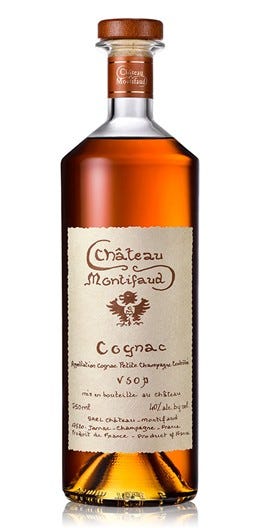
Exposure and an interest in spirits encouraged my exploration. It’s the only way I got to something like a Chateau Montifaud. My old love of cognac (Hennessy, specifically) was driven by a bunch of socio-cultural factors: the manly thing to do, what was around/popular among those older than me (in NYC at least, rum reigned supreme in Jamaica), etc. Given the name of my publication, it won’t take too long to understand what my #1 preference is. But good-tasting spirits are good-tasting spirits, and I’ll never talk down to a fine cup of something with flavor density.
Example (me to my boy) –

Let’s continue to explore the “whys” driving what alcoholic beverages we consume.
Back to basics.
The real reason we drink what we drink is availability. It’s silly how straightforward this is, but, especially for people who grew up in the U.S., we (not me) underestimate that we generally have everything at our disposal to purchase because it’s a fact of (economic) life that everyone in the world will, if possible, send their goods to the U.S.
Why? Because the average income in the U.S. is significant (comparatively). In many parts of the world where the income is lower, the availability of drinks there is much more scarce, and you’ll notice a patriotic inertia among residents to consume their homegrown “stuff” because it’s cheaper (more practicality than patriotism, to be fair).
As it relates to whiskey, we’re not really hurting for options. But when we turn to rum, it’s a matter of fact that many European nations (for instance) have a much broader pick of premium rums than do Americans for reasons that I won’t dive into in this piece…
…okay, one sneak peek –
…rum also faced the rise of U.S. whiskey drinking and a growing U.S. nationalism, which equated Caribbean rum, especially from the British colonies, with colonial dependence. – Caribbean Rum
The point is, we drink what’s around. In the U.S., what’s around is a lot. But for another country that is lower on the GDP scale, you might have a short list of items, unless you go to a resort and they have limited stock of “the good stuff.”
However, keep in mind that what’s available has not always looked the same (and could change). For instance, when the U.S. required liquor producers to stop distilling/contribute to war efforts –
In the 1930s, whiskey, gin, brandy were the primary distilled spirits consumed in the United States, and rum represented only about 0.5 percent of spirits consumed. By the end of World War II, U.S. imports of Caribbean rum surpassed all other categories of imported distilled spirits, including Scotch and Irish whiskies. – Caribbean Rum
Before we transition, I’ll show you a historical (like, very historical) example where availability of beverages would’ve been curtailed, primarily because of imperialistic/mercantilist(ic) jockeying –
French North America also received its share of rum. In the late seventeenth century, French colonial administrator Jean-Baptiste Colbert implemented mercantilist trade policies known as the exclusif. The policies restricted French Caribbean trade with foreigners and sought to encourage direct trade between the French Caribbean and French provinces in Canada and Louisiana. French Canadians had lumber, fish, tar, and provisions that were much needed on Caribbean sugar plantations. In order to stimulate trade and facilitate a self-contained empire, Colbert’s policies reduced import duties on rum entering French Canadian port. As early as 1685, French Caribbean rum made its way to the northern French colonies. – Caribbean Rum
I know, reading anything in the context of Louisiana being a non-US territory feels a little odd, right?
The Spanish did it, too. Note: think about this in the context of today’s tariffs – old-school playbooks
The Real Cédula of June 8, 1693, prohibited rum making in all the Spanish colonies. However, the constant reiteration of the prohibition suggests that officials were unable to control illicit distilling…The Real Cédula of August 10, 1714 reiterated the Real Cédula of June 8, 1693 [following the War of the Spanish Succession (1701–1714)]…The ban exemplified mercantilist thinking in eighteenth-century Spain and was evidently aimed at increasing exports of metropolitan wine and brandy to the Spanish American colonies. – Caribbean Rum
This isn’t meant to be a history lesson, I promise. It’s important, though, to understand how the powers that be have used their might to control what was produced/available. This throwing-your-weight-around has not ceased because we’re in the apogee of the consumer era. It just looks different, a bit more covert to the uninitiated, plain as vodka to the industry insiders.
Historically speaking, it is a fact that we buy mainly because of stories and narratives tied to brand associations.
A perfect example of historical truth turned folklore snowballing into a story that people buy and consume.
Captain (Sir Henry) Morgan. Yes, he’s an actual person.
First off, he’s Welsh. Not sure where everyone thinks he’s from.
Second, he was a pirate turned plantation owner & Lieutenant Governor of Jamaica.
Third, and really what’s most true about Captain Morgan, in my opinion, is that he was likely one of the most highly regarded tools ensuring British hegemony remained strong in the Caribbean. That’s why he was ultimately rewarded with land and high status. From raiding Spanish settlements to de facto privateering expeditions and protecting the British domain, Morgan was a coveted pirate. A necessary evil, if you will.
Among the most famous Caribbean pirates was Captain Henry Morgan, who in the mid-seventeenth century challenged Spanish control of the Caribbean and helped consolidate British colonization. Morgan’s reputation for excessive drinking was legendary, and it eventually led to his demise. – Caribbean Rum
So, when you see a bottle of Captain Morgan being consumed, you phone me and let me know the location so that I can never be in that vicinity. Jokes aside, what you’re really drinking is an accurate, but also satirized, narrative about his insanely successful piracy expeditions in favor of the British Crown. This narrative, really a sustained marketing scheme, has been so successful that movies, costumes, themed parties, and even bar establishments carry the mantle of this story. But my “Third” explanation above is really who Captain Morgan is.
And to get in my America-bag for a second, CAPTAIN MORGAN IS OWNED BY A BRITISH COMPANY! This has got to be the craziest Uno reverse card I’ve ever seen because, in Britain, they have access to some of the best rums around. But they’ve flooded American bars with good old pirate man, keeping the American consumer giddy-headed about what good rum actually is. I was disappointed to see, during the Super Bowl, that Captain Morgan turned Bourbon Street in Louisiana into “Rum Street.” Louisiana has one of the richest rum histories of anywhere in the U.S. It’s a little lazy. But I understand how big wallets, political power (in the business sense), and influence work. To the heaviest wallet usually go the spoils…and decision making…etc.

Alright, done ranting. I want to clarify: I don’t mind if you drink what you want to drink, taste is subjective, and it’s your right to choose. But in a world of abundance, I advocate for knowing what you’re drinking. That’s all.
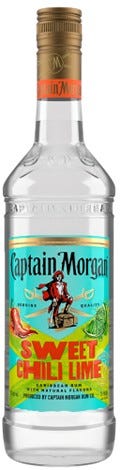
Let me also share “it’s not just me” historical data points and business context.
When England went to war with France and the Netherlands in 1665, [governor Thomas] Modyford conducted a private war against Spain, sending the privateer Captain Henry Morgan on a series of daring raids. Between 1665 and 1671, Morgan sacked several Spanish towns around the Caribbean basin, bringing his loot back to Port Royal [Jamaica], which soon ranked as the most heavily fortified town in the English territories. – Tacky’s Revolt
Henry Morgan became “a substantial sugar planter and slave owner, taking his place among the island’s emerging planter elite.” – Tacky’s Revolt
First post after #Interlude 3 will be a review of Tacky’s Revolt!
Today, Captain Morgan serves as something of a mascot to the rum industry, thanks to the continuing success of Captain Morgan rum, which accounts for about one-third of the billion-dollar premium rum market in the United States. It was introduced in 1945 on Jamaica, where the Seagram Company decided to market a high-end rum made by blending rums from other distillers. In the fall of 1949, Captain Morgan rum was imported for the first time to the United States amid great marketing hullabaloo; in New York, it was touted in newspaper ads with an illustration of a statuesque pirate wearing a malicious grin in front of the Manhattan skyline, as if about to set out in search of Wall Street bankers to hang by the testicles. The brand caught on. In 1953, Seagram acquired its own rum distillery in Jamaica to supply the growing demand. Captain Morgan rum was then a light rum designed for mixing. (“Lighter, cleaner,” boasted the first ads, “especially designed for the American taste.”) When Americans drifted off in favor of even lighter white wine spritzers and light beer in the 1980s, Seagram set about tinkering with the brand, adding spices and flavorings and reinventing Captain Morgan as a spiced rum. Today, it’s produced and sold by Diageo, the world’s largest producer of liquor. – And A Bottle of Rum
Review of And A Bottle of Rum coming…at some point.
Again, just understand what you’re drinking and where it comes from.

One of the most important social determinants driving why we drink what we drink is – tribe.
The only unfortunate truth about being tribal with your drinks is that a good core of people, for most of their lives, have no idea what they actually like to consume, or won’t really ever go on that journey. They’re more of an automatic drinker, indulging in what their tribe drinks because it feels like the right thing to do. Drinking with no defined objective. If you’re just “trying to get there” (wherever “there” may be), alcohol is going to fold you up every single time. Slippery slope.
To offer an analogous example of people doing tribe things: many who are wealth-aspirants begin to collect art and fine wine because…you guessed it…fine wine and art collecting are some of the many examples that define the wealthy tribe.
It’s why we begin to correlate characteristics such as sophistication and wine, blue-collar and industrially-produced beer, Caribbean and rum, etc. None of these things are hard and fast rules, but sustained storytelling and a gravitation by groups of people to certain beverages make us eventually conclude these things as belonging to specific tribes of people. Sprinkle in marketing pull and push tactics and you have a perfect storm of “this is us” beverages. Just remember, things aren’t fixed. Developments over time shape realities into what we comprehend them to be at any point in time.
The Mesopotamians regarded the consumption of bread and beer as one of the things that distinguished them from savages and made them fully human. Interestingly, this belief seems to echo beer’s association with a settled, orderly lifestyle, rather than the haphazard existence of hunter-gatherers in prehistoric times. – A History of the World in 6 Glasses
Examples of the malleability of beverages are plenty, trust me. For instance, a “settled, orderly lifestyle” is very different than what, say, Modelo advertises in this commercial –
Different cultures and their drinking habits, along with their “native” beverages, also shape what liquids people gravitate to. Point here is that when drinking is viewed through a tribalistic lens, it’s easier to understand why people drink what they do. Most people don’t question this paradigm, choosing to instead go along with whatever liquid is flowing in their circles at the time. But take a step back and look at the non-exhaustive groups of people below, and ask yourself what beverage(s) and drinking styles come to mind when you see their names:
Irish
French
Scottish
Rwandan
South African
Japanese
Australian
Jokes for context:
But see, Scottish people calm down a bit once they’ve met a standup (Jamaican) contender –
Note: I don’t participate in ‘puff out my chest’ drinking expeditions, my head just started pounding even thinking about this. I drink for taste, depth, appreciation, conversation, and all the (productive/social) -iations.
The contrary of all discussed above deserves equal attention.
I’m fortunate to have largely grown up around alcohol consumers who did not abuse the beverages. On the contrary, my primary examples are people who loved and socialized more fervently with those around them when libations were in the mix. Voice volumes go to searingly high levels, dominoes get slapped down loudly, friendly jeering gets turned up a notch, blaring laughter abounds, and good ol’ deep connecting peaks. But I also have close confidants whose early lives, primarily because of their patriarch, were made miserable and shockingly unpredictable because of booze abuse.
So, a sincere nod and heartfelt showing of understanding to those whose lives were made worse by alcohol. And relatedly, a nod to those who do not drink for whatever reasons continue to suit you best, be it health, personal productivity, etc. For my friends who continue to drink basura bevvys, you can always link me for a recommendation.
No more of this –
I hope to see people moderately scale down their drinking vs. going cold turkey abstinence. Let me be clear – drinking alcohol isn’t good for you. I’m not dense to this fact. So, if you tell me that you’re aiming for an all-around healthier lifestyle and that’s why you don’t drink, we’re good. Emphasis on the all-around because just cutting out liquor, if you have a lot of unhealthy habits, is a small band-aid on a long set of wounds.
My friends who usually go from drinking to absolutely no drinking, just be mindful of what you’re truly trying to address. Self-control is a common issue, for instance.
→ If drinking too much is the issue, then set limits for yourself (2, 1oz pours)
→ If drinking bad liquor is the issue, only go for premium (keep the 2, 1oz pours). Your wallet will force you to not drink a lot if you go high-premium
→ If you find no purpose in it, find a wine/whisk(e)y/rum/craft beer club and use it as a reason to socialize. Study the history of the beverages. Use the beverages to guide your travels. There’s a lot of depth and richness in the liquids.
Many also don’t drink (today, especially) because others don’t drink. There’s a temperance movement of sorts that is characteristic of the younger generation that I’m not mad at. Drinkers and non-drinkers alike, don’t be offended, but these decisions are often not unique. In other words, your decision to/not to drink is often driven by human-to-human covert and overt pressures to get on board. Again, to…ding ding ding…let people know what tribe you’re a part of. Whatever decision you make, I’m an advocate for having sat with yourself and reasoned it out, while also being open to change. Don’t just get in the boat and float.
This article could be much longer, dissecting hyphenated cultures within cultures, and hyphenated beverages within beverage categories.
And the whys and why-nots. But I ain’t got that kind of time and capacity. I’d love to see a slew of articles that take up the baton and carry it on for specific groups of people. A never-ending ethnography.
In the meantime, I’ll grab a drink and #rumresponsibly

As a drinks blogger I now constantly seek out new expressions to taste & review.
I long ago gave up the tribalness & virtue signaling, although somewhat still subject to availability & henceforth historical legacy of the country I’m in.
Living in Ireland Jameson & Guinness have an almost monopolistic control over the domestic market & are very good at promoting a global tribe - you only need to look at the highly successful Split The G campaign.
This can often obscure the many other drinks brands that are out there.
Rum is only a small part of the Irish scene & the history of Ireland’s participation in the Slave Trade - both as slaves & owners - has yet to be explored fully.
A very thought provoking article.