



In my last piece (And A Bottle of Rum), I highlighted Curtis’s coverage of New England’s role (or lack thereof) in the Triangle Trade, the vicious and interconnected transatlantic bartering of humans and goods between the West African Coast (primarily), the “New World” (Caribbean/American Colonies), and Europe. The author’s gut-check for readers, to caution giving New England too much undue credit, which sounds a little twisted, was the following –
The smooth-running and sinister New England Triangle Trade is, in large part, an overblown myth. For starters, no New England traders are known to have completed a single circuit of that triangle. Historian Clifford Shipton spent years of sifting through hundreds of New England shipping records, yet couldn’t recall “a single example of a ship engaged in such a triangular trade.” — Wayne Curtis, And A Bottle of Rum
Note: Different Clifford. Both historians. Both sons of Massachusetts. Both wrote extensively about the history of the state and the New England region (mainly colonial history).
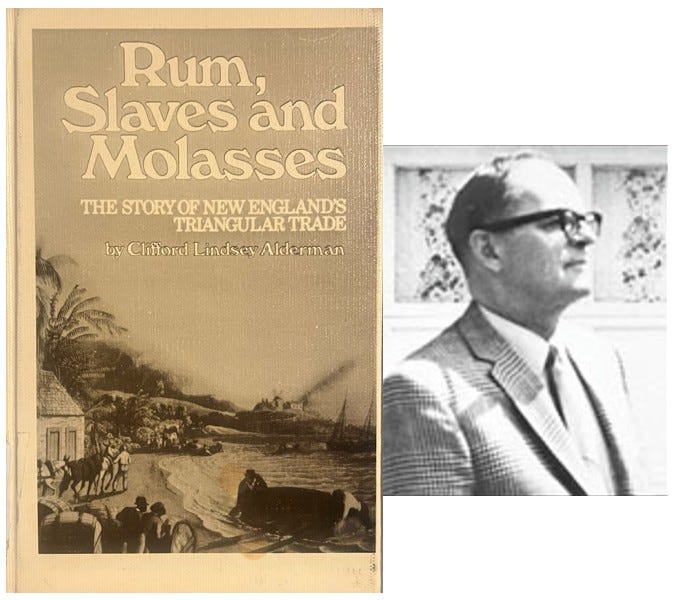
As you can imagine, picking up Alderman’s book got me excited. I knew reading Rum, Slaves, and Molasses would be a nice academic exercise in rounding out my learning on New England & the Triangle Trade by getting the information from all sides. I wonder if Curtis interacted with Alderman’s work at all.
Let’s get into it.
The book and the man.
I consider myself lucky to have found a hard copy of this book. Used and all. Rum, Slaves and Molasses was published in 1972. The copy I have was once the possession of Quinney School Library –
I looked up Quinney and first landed on the University of Utah’s S.J. Quinney College of Law. That sort of makes sense. The book is centered on a very adult-oriented topic. But then I looked at the back of the book –
This Quinney “was Wisconsin’s first public school teacher and a member of Wisconsin’s Stockbridge-Munsee Band of Mohicans.” I could not locate the middle school, only an elementary school, donning Electa Quinney’s name. However, I think it is safe to assume that the school was (or is) in Wisconsin. Thank you, Electa Quinney Middle School, for allowing me to retrieve a copy of this book that was once in your library. You cannot have it back.
Alderman’s book being in a middle school library makes a lot of sense, in retrospect, because he has a deep inventory of work (especially non-fiction) that he wrote for a young(er) adult audience. Middle School isn’t young adult, to be clear. There was also, I assume, much less of an urge/desire to conceal information around race and history during the time of this book’s publishing. An “era of aggressions-aggressions,” if I may quote Zadie Smith for a second, versus one of passivity. Middle School is a little crazy for this book, but you get my drift.
In most cases, I summarize the authors' bios, but The University of Southern Mississippi did a fantastic job. Here’s my CTRL + c, CTRL + p –
Clifford Lindsey Alderman, born in 1902 in Springfield, Massachusetts, graduated from the United States Naval Academy at Annapolis in 1924. He did graduate work in chemical engineering at the Massachusetts Institute of Technology, but spent only a short time in chemistry and engineering fields. He served on the staffs of naval units at Columbia University, Holy Cross College and Millsaps College during World War II, eventually commanding an officer training school at Middlebury College in Vermont. After the war, he worked as an editor and did public relations for shipping and foreign trade industries.
An avid student of American history, Alderman wrote historical novels for adults, and both fiction and nonfiction for young adults. He wrote under his full name, Clifford Lindsey Alderman, as a sentimental tribute to his mother, whose maiden name was Lindsey. Alderman believed that his mother could have become a fine novelist in her own right were it not for her family responsibilities and untimely death at a relatively young age. He also believed that his own interest in the American colonial and Revolutionary periods was a natural occurrence since he was a direct descendant of John and Priscilla Alden and had two ancestors who fought in the American Revolution.
Alderman believed in the importance of visiting the places of which he wrote. He and his wife, Mildred, traveled extensively in their native New England, and took repeated research trips to Canada, England, Ireland, France, and the Caribbean.
The Aldermans lived most of their married life in Seaford, New York, close enough to Manhattan for him to do weekly research at the New York Public Library. The beauty and warmth of Florida appealed to them by their retirement years, however, and they moved to an adult community in Pinellas Park, Florida in the mid-1970s. Cliff Alderman died in 1988 at the age of 86. – U of Southern Mississippi, de Grummond Children’s Literature Collection, Clifford Lindsey Alderman Papers
Alderman’s sentiment on the consequences of a racially-charged history vis-à-vis the Triangle Trade and the transatlantic world is a simple but powerful one –
The story of the New England Triangular Trade is a shameful tale of greed and inhumanity. It is not a pretty story, but one that should be told because its repercussions are still being felt today. The Legacy that it left—of anger, conflict, and mistrust between blacks and whites, both in this country and abroad—remains a major problem to be solved before there can be equality and freedom for all throughout the world.
Let’s explore Alderman’s work.
Bristol, Rhode Island.
Note: Alderman covers the mid-1700s to about the early 1800s in this work, with a few references existing outside the range.
We start with a central figure, Captain Jim deWolf. When you learn that Alderman dabbled in both fiction (historical) and non-fiction, you have to remind yourself to double-check the names/facts of what he’s laid out. deWolf was a real person, “engaged in extensive commercial ventures, principally trading in slaves, with Cuba and other West Indian islands.” (source: Biographical Director of the United States Congress). Check.
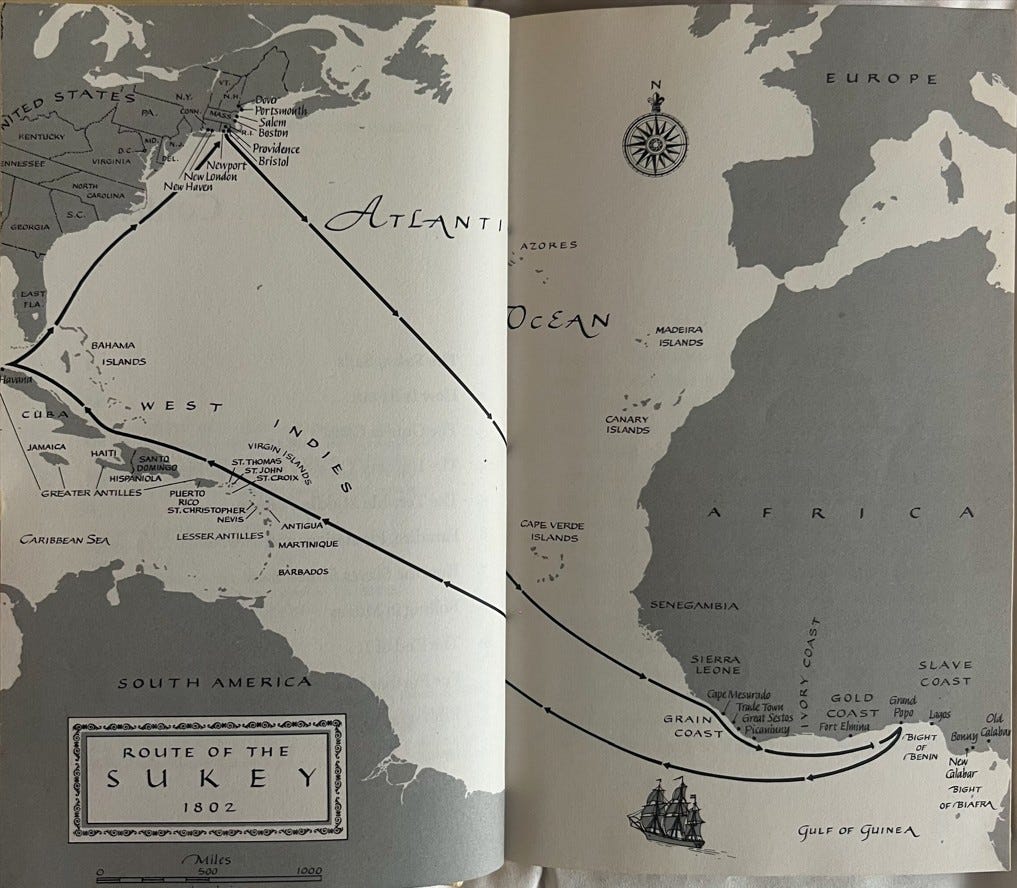
Alderman also centers deWolf’s cargo boat, the Sukey, which I believe is a fictitious name, unclear. In any case, the Sukey is essential to the story because it is the principal vessel that would leave Bristol for the Caribbean, where the deWolfs “owned plantations.” The Sukey served as a home base ship for “the evil trade in which they were engaged.”
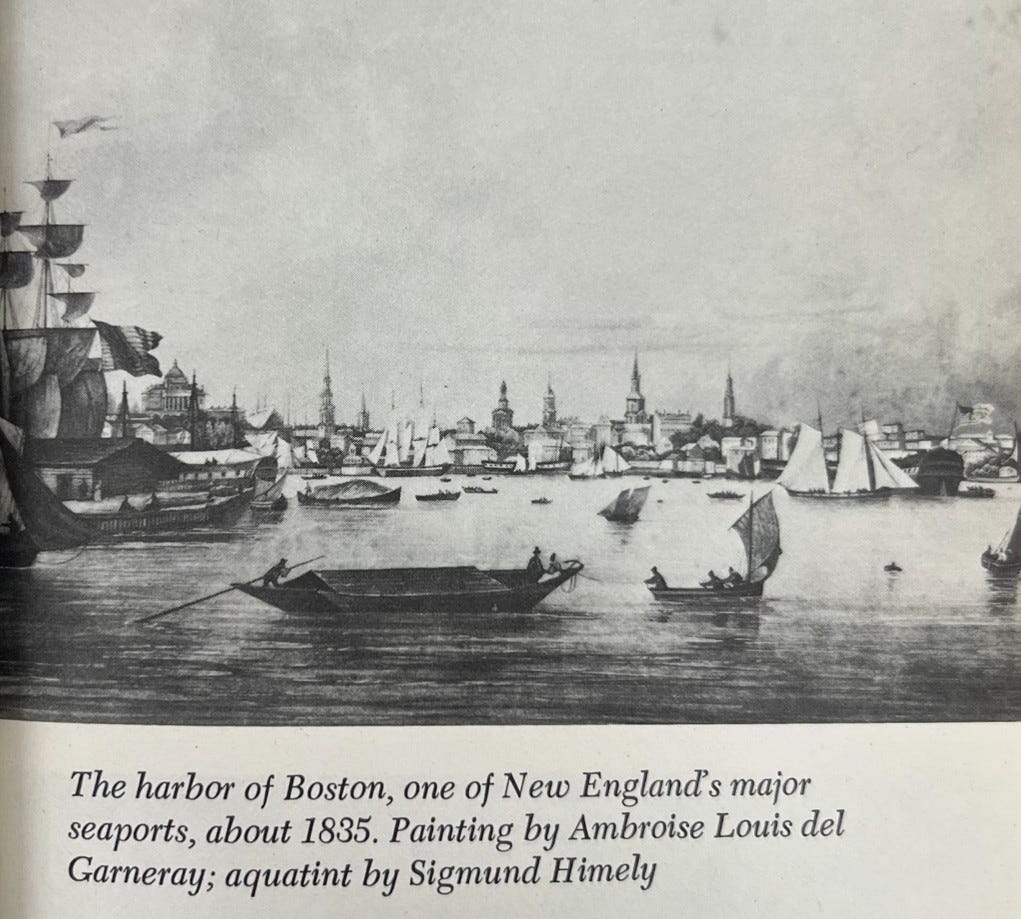
The deWolfs owned a distillery on Thames Street (Rhode Island), so they had a strong interest in the flow of people and goods across the Atlantic. Their activities would have presumably looked something like this:
→ The rum from their distillery was loaded on carts and brought aboard the Sukey.
→ Hogsheads of other goods were loaded onto the boat, which sailed to the coast of West Africa.
In West Africa, she [Sukey] would work her way down the Guinea Coast, probably finding it necessary to stop at port after port as she exchanged her trade goods and precious rum for even more precious black slaves, and perhaps also for gold dust, ivory, ebony and other African products.
Once the Sukey reached the Guinea Coast of West Africa and the trade goods were disposed of, the ‘tween decks would be used for an entirely different purpose.
→ That “different purpose” is the loading of human beings (Africans) on the ship to endure the Middle Passage.
→ The Sukey would then make its way back to the Americas, delivering humans for payments (of various extensions, I imagine).
If what Alderman outlined is verifiably true, then he would be ruling out Curtis’s notion that “no New England traders are known to have completed a single circuit of that triangle.” Also, if there are “ship-people” among us, Alderman pays a great level of detail to the outfitting – “bilge, ‘tween decks, the cabin, or officers’ quarters” – of the vessel.
The Sukey had to have set sail post-1787 (pre-1800s) because its voyage was illegal: as of 1787, the Rhode Island State Assembly strictly forbade slave trading, “though everybody knew perfectly well that it was.” Laws on the books, especially during this period, were treated as suggestions for influential families like the deWolfs. More importantly, and I think this is a critical learning, slave trading was an industry of massive proportions/consequences for Rhode Island (and New England more broadly). Many depended on it for their survival, which made restrictions largely unenforceable –
There were the Bristol sailmakers and carpenters, the caulkers who sealed the wooden ships’ joints…the ship chandlers who sold provisions…and the owners and workers of the ropewalks that made cordage—the great number of ropes used in holding, hoisting, lowering and controlling the sails of a ship. And there were many more who depended upon the Bristol shipowners for profit and wages.
The perilous voyage the Sukey initiated was therefore eagerly awaited by those who benefited from its residuals.
New World-ers, old school machinations.
New England colonists engaged in what they knew to be true. And for this time, riches obtained through violent exploitation, capture, and trade likely felt par for the course. For centuries, Europeans had known war, capture, and expulsion (or absorption). Alderman leans into the fact of slavery being an old industry, one that Europeans, and later New-Europeans (Englanders), mimicked in pursuit of profit –
Slavery is as old as the earlier records of history…Every race, at one time or another, has had slaves. Slaves were used to build the famous pyramids of Egypt, which took nearly two thousand years, from about 4750 to 3000 B.C. The ancient Romans captured and enslaved many thousands of their enemies during their conquest of all the Mediterranean, most of Europe and part of Asia. The ancient Greeks had slaves. So did the warlike Carib Indians, who inhabited the long chain of small West Indian islands called today the Windward and Leeward groups of the Lesser Antilles. They often raided the four big islands of the Greater Antilles—today Puerto Rico, Hispaniola (Haiti and the Dominican Republic), Cuba and Jamaica—where the Arawak Indians lived.
To the above, I would add Africa. For instance, “Mali[’s] Golden Era” in the 14th century: Mansa Mūsā’s opulent entry into Egypt prompted many historians to dub him the wealthiest man of the time. A core feature of his entourage was his slaves –
…accompanied by a sixty-thousand-person delegation, including twelve thousand slaves, each of whom reputedly carried a wand like fan of gold weighing four pounds. Mūsā’s senior wife, Ināri Kunāte, is said to have been catered to by five hundred maids and personal slaves devoted to her needs alone. Camels and horses carried hundreds of pounds of gold dust. – Howard French, Born in Blackness: Africa, Africans, and the Making of the Modern World, 1471 to the Second World War
Alderman provides a strategic overview (timeline) regarding slavery and its implications for the New World and New England. Everything from the Portuguese kicking things off with the capture of islands like “the Cape Verdes [and] Madeiras” in the early-to-mid-1400s, and the Spanish following up thereafter. In this outline, we also witness the voyage/transport of sugarcane from these Portuguese-controlled islands to the Americas.
Christopher Columbus is believed to have brought sugar cane to Hispaniola on his second voyage.
And with the transport of agricultural goods followed the transport of human beings. Fast-forward to Rhode Island/New England. They largely depended on sea trade and fishing for their livelihood (initially). With their fishing enterprise, the New Englanders were able to trade for other goods needed, such as dried fish, beef, pork, flour, bread, lumber, products made of wood, “particularly the staves, hoops and heads from which hogshead could be made for molasses.” Lots of local trading within the colonies initially, though they also traded with the Caribbean for molasses, tropical fruit, etc.
But New England would not hold off from engaging in the slave trade once they realized the profit potential, which is what families like the deWolfs chased. It was only a matter of time, not to mention the region’s default inclusion by way of being a former British colony –
The first American slave ship show in the records was the Rainbow, which sailed from Boston for Africa in 1645.
Once New England placed itself in the mix, their industries boomed from the profits generated from its involvement in the slave trade. Fisheries expanded. Textiles and lumber industries grew. Turning back the dial was not to come until much later. Once the wealth was already generated. Alderman makes a misstep, by my estimation, in classifying early New England rum as of a superior quality than the Caribbean’s, since most historical records (opinions) show otherwise. But as a child of New England, I understand that he may have felt pride in the assertion –
French brandy had been in the greatest demand there, but New England rum, produced at low cost and far better than that made in the Sugar Islands, just about put the brandy trade out of business. And the wretched, captive black people brought high prices in the Caribbean, where molasses was cheap.
The (human) source of the riches generated.
Guinea Coast. Sukey, Captain Almy, and crew would set sail for her land.
After braving bad weather, food shortage, ship damage, and whatever precarities came with this type of journey –
…the ships would go on to the African coast and begin the long, slow progress along the shore of the Gulf of Guinea. There stood many trading posts or “factories,” as they were called on the Grain Coast (today the Republic of Liberia), Ivory Coast (now the Ivory Coast Republic), Gold Coast (now Ghana) and the Slave Coast (including the modern republics of Togo, Dahomey and the Federation of Nigeria.
To musically reiterate, Dave, take it away –
Black is people namin’ your countries on what they trade most
Coast of Ivory, Gold Coast, and the Grain Coast
But most importantly to show how deep all this pain goes
West Africa, Benin, they called it slave coast
Once on the coast, most enslavers could not pull in close to shore unless they already had “factories” and forts set up.
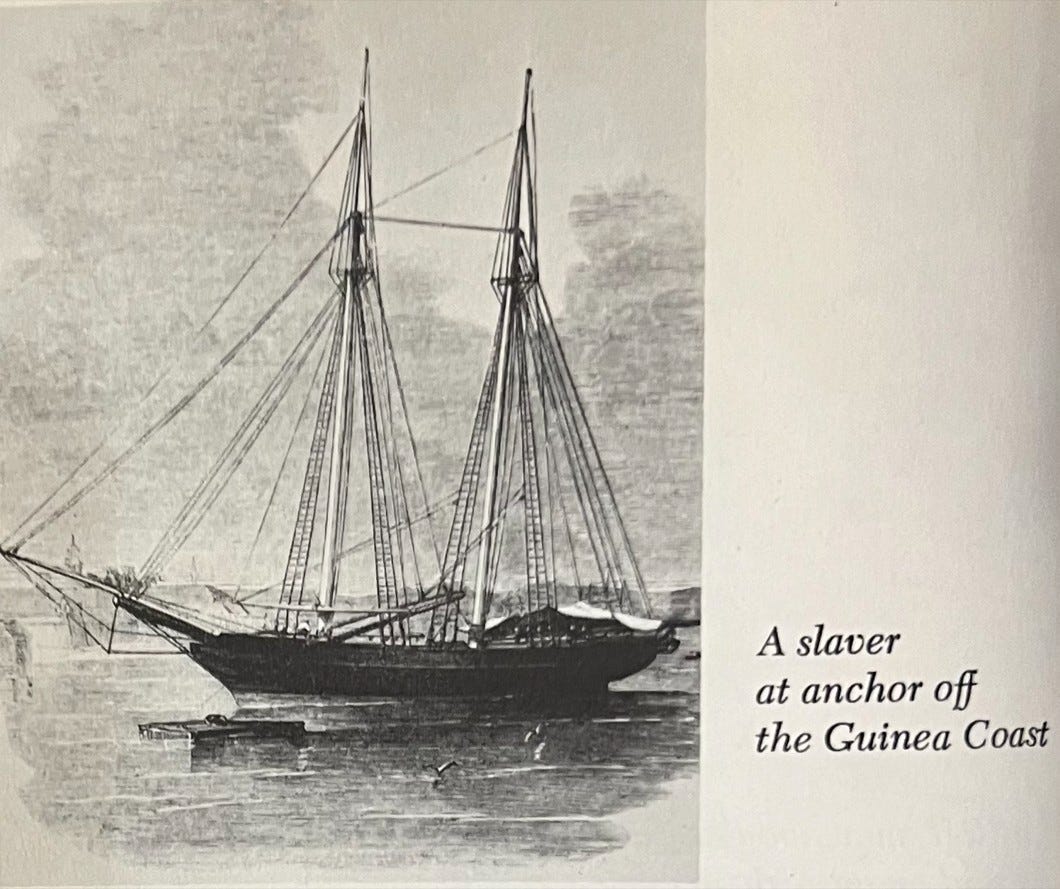
Payment to the Africans for favors and allowance to come in closer to shore was commonplace. Often, there were middlemen (or factors) who came out in small boats to meet ships like the Sukey.
A dash was a kind of gift, a tip or bribe, usually a bottle of rum or perhaps a musket. Slaver captains never failed to dash a factor. Otherwise the trader might cheat the slaver or save his better slaves for the next ship.
Hogsheads of rum…were always in demand.
This is the moment where, if you have any literature/resources on Africans and rum, you send it to me asap. Please and thank you.
Factor examined the goods/dash. If satisfied, the Sukey would have been brought to shore and on to the factory for trading. There were Baracoons, holdings or stockades for those brought in from the interior, lining fortified and non-fortified “factories.” Weeks of negotiations often took place, since each side would inevitably aim to get one over on the other in the transaction(s). For those aboard the Sukey, their concerns were monetary and practical (i.e., whether their journey would be worth it based on who/what they brought back). They would presumably pay a lot of attention to their “cargo” –
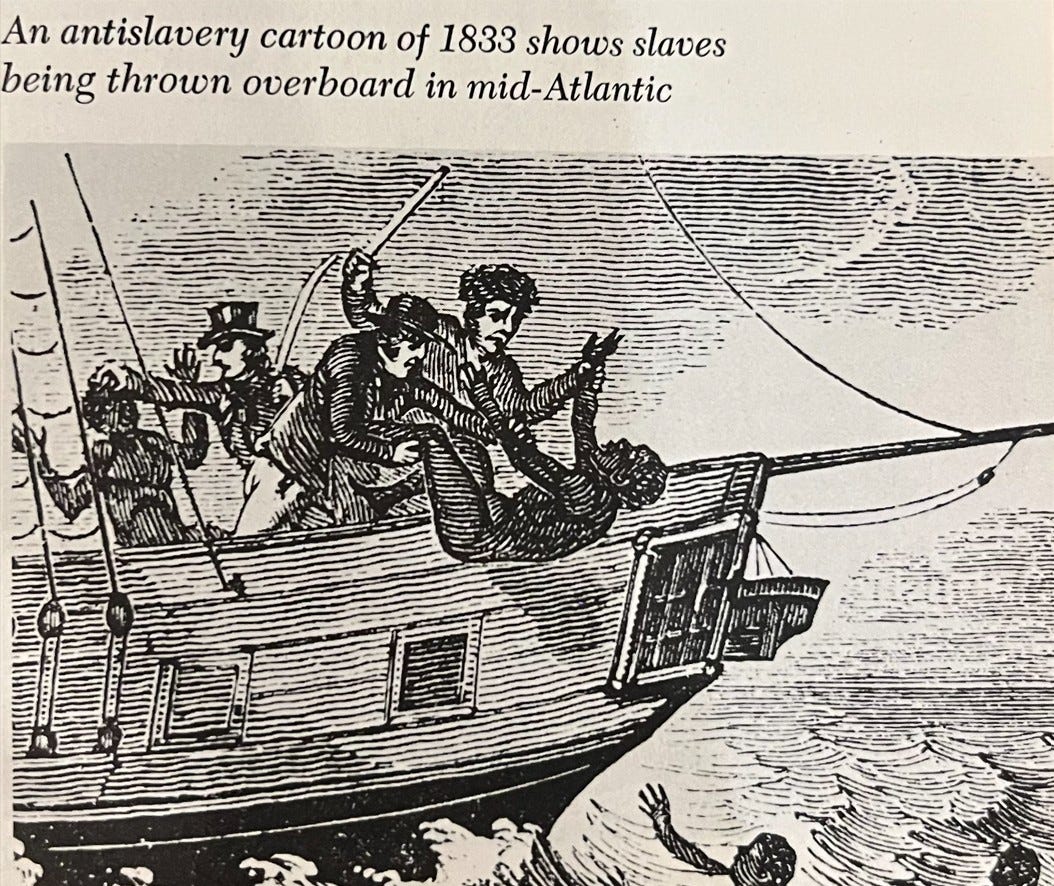
One diseased slave might infect everyone aboard a ship and slaves who came down with such an illness at sea were almost always thrown overboard.
So, when all was said and done (trading wrapped), the Sukey headed back to familiar waters –
At last, after five months that seemed to all more like five years, the Sukey, with 120 slaves, left the African coast and sailed westward over the Middle Passage for Cuba.
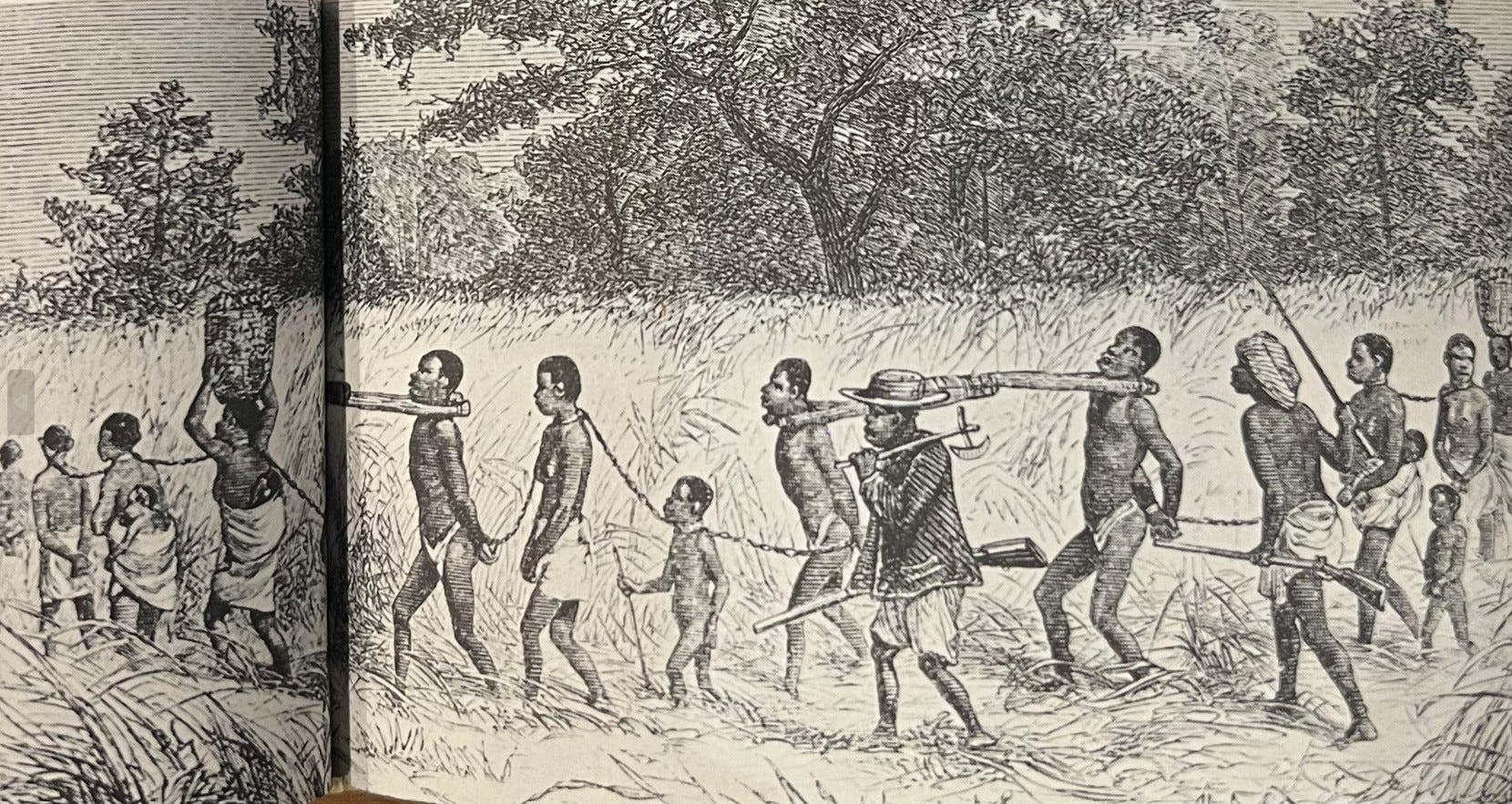
From interior to the coast.
Long Before Europeans first came to West Africa in the fifteenth century, powerful, rich black empires existed there.
And it was these rich (often military) empires that captured and provided humans for trade with the hungry, floating ships off the coast. This is an age of very little (if any) shared identity among Europeans and Africans. Someone’s Portuguese took precedence over their being European, in the same way that someone from the Mandingo empire (today, Mali) would have identified as such rather than African.
As Alderman aptly outlines, empires inevitably rise and fall. Greeks. Romans. British.
And so it happened with Ghana, as well as other West African empires.
A glimpse of the various African empires –
Ghana was first replaced in the eleventh century by the empire of the Mandingos, called Mali. The Mandingos founded Timbuktu, but were replaced in turn by the Songhai Empire. In 1590 the Moors of North Africa crossed the Sahara Desert, overthrew the Songhai and captured Timbuktu. Located on the long Niger River, which flows southeastward into the Gulf of Guinea, the city was a natural trading center. Under the Moors it became rich and famous. The Moors brought with them their culture and the Mohammedan religion. They founded a university at Timbuktu that became known throughout the world its faculty of scholars, whose knowledge rivaled that of the foremost scholars of Europe.
The might of these empires depended on trading. Pre-Europeans, that trade would have been conducted based on proximity (i.e., within the borders of what we today classify as Africa). The location of empires dictated the trade they were most likely engaged in. It was only natural that those closer to the coast/water would be the first point of contact for those coming to trade in humans. Also, on/near the coasts were notable towns and cities, which helped lubricate the trading –
Near the coast were a number of towns as large as some important European cities. West Africans had their own imaginative style of architecture. They could weave cloth into beautiful patterns and colors. They raised great herds of cattle, sheep and goats. They could smelt iron and work it into useful tools and utensils. They worked in brass, too, and were expert sculptors and wood-carvers. Examples of African craftsmanship are among the prized possessions of museums the world over. Also important was their music, which West Africans slaves brought with them to the West Indies and the American colonies. Much of our jazz and other forms of modern American music developed from it.
The Gold Coast was considered to have the “most prized slaves,” many being of “the Ashanti Kingdom.” They were also known to be a proud, independent people, prone to military action, which is understandable given that part of their reality was defending against routine capture/conquer attempts. Notably, many Ashanti people – otherwise referred to as Coromantees – would rebel and commit suicide vs. submit to capture. They were known to be the source leader(s) that led many of the slave wars in the Caribbean. I cover this in depth in my write-up on Tacky’s Revolt. To cement the (reputation) point –
“There was never a rascal or coward of that nation…no man deserved a Coromantee that would not treat him as a friend rather than a slave.” – A governor of the Leeward Islands in the 18th century
The Sukey would have been abreast of these stereotypes/realities and accounted for them in their calculations of who they brought aboard, how much they could sell them for, and how tight security needed to be aboard the ship. Interestingly enough, there was probably an odd cohesion among the traders and those they traded with. While many of the New World-ers had aspirations of building out vast enterprises, they were often engaging with groups of people that were already schooled in these enterprises, of which slave labor was integral –
The Mandingos were justly famous; some owned vast plantations like the white planters of the West Indies, and like these white planters they had many slaves.
All in all, the warring tribes/empires of the African coast vied for power, and much of that instability fueled the transatlantic slave trade. The more demand for slaves there was, which certainly increased as the decades carried on, the more incentive “rulers of the interior kingdoms” had to enact war on their neighbors. All would be strategically aided by the New World-ers when they realized they could pad their wallets by sowing dysfunction, since it would yield them slaves. Providing Africans with muskets and gunpowder became a valuable trading proposition –
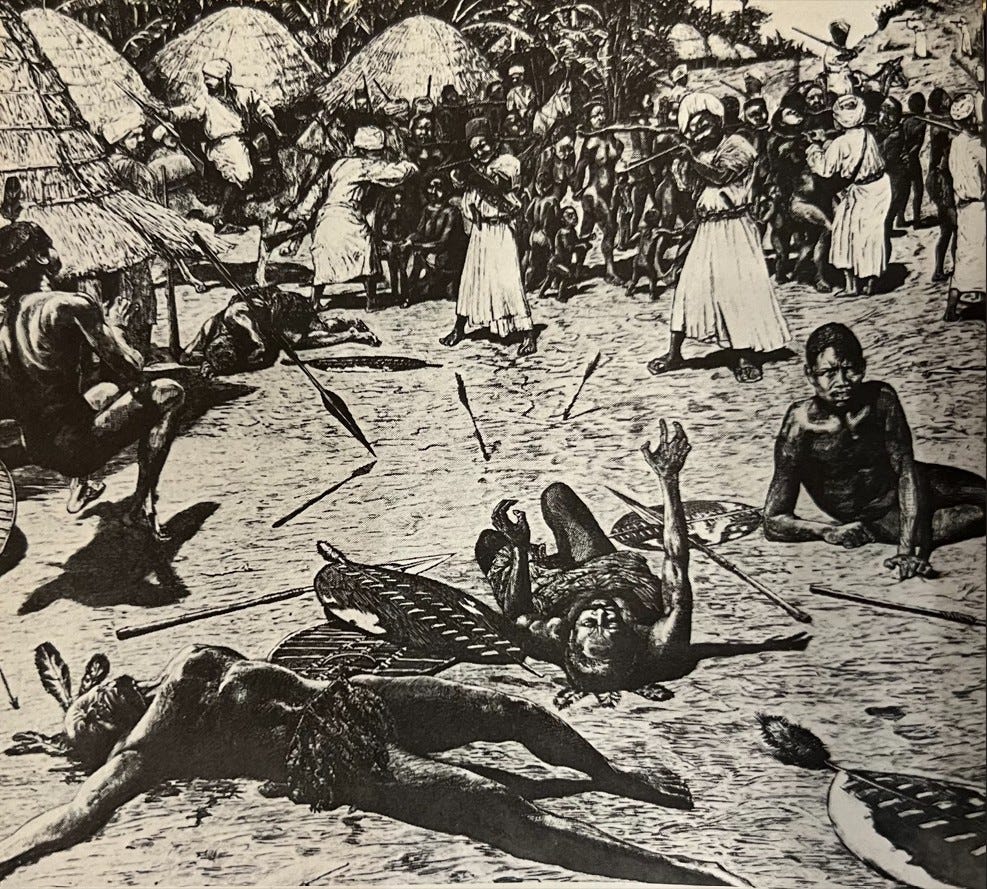
However –
Most prized of all, however, was rum, which the white man had introduced into Africa…A slave-owner whose wits were befuddled by strong rum could be cheated more easily.
A little bit of exaggeration, in my opinion, but the point is made.
Where’s the Sukey?
Deadly waters, high hopes on the return.
According to Alderman, not much is known of Sukey’s voyage across the Atlantic (Middle Passage), but she reached Havana with most of the captives alive. A lucky occurrence in those times, given the all-around scarcity –
The Middle Passage could last as long as three months. At such times everyone aboard was on short rations of food and was allowed as little as a cupful of water a day…
For those captured, needless to say, their journey was particularly miserable, unkempt, and unsanitary. The captains of the Sukey had hard, cold economics at the top of their frontal, so the Africans were subjected to requirements that fit those aspirations –
The slaves were made to exercise every day by jumping up and down, or at least many days to keep them healthy and strong it was believed.
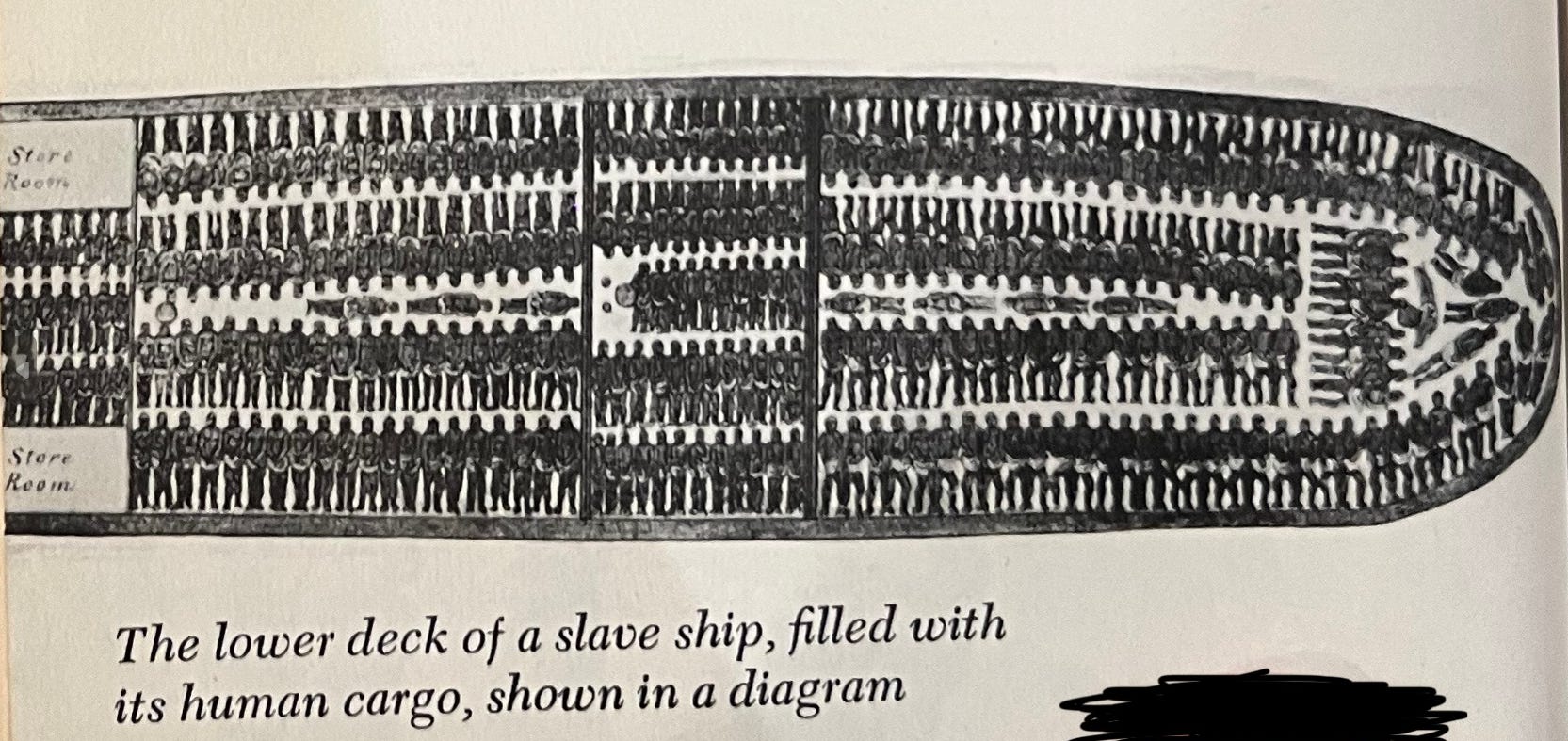
As you can imagine, this took its toll, and those captured responded (rebelled) accordingly –
Some went insane. Some suffocated…some slaves committed suicide…Some found ways to cut their throats. Others refused to eat.
Remember the discussion of privates/privateers in my piece on And A Bottle of Rum? Those assets of colonizing nations (privateers, mostly) were a thorn in the side of New Englanders in the human trading business. During times of war, which were very frequent in those times, this was particularly the case –
During the Seven Years’ War (called the French and Indian War in the American Colonies) from 1756 to 1763, 15 per cent of the slave ships sailing out of Newport, Rhode Island were captured by these French marauders. Insurance rates for the vessels…zoomed up by 25 per cent. But the trade went on.
Eventually, the Sukey landed in Havana, Cuba, where Captain Jim deWolf “owned sugar plantations and grinding mills.” He and his crew could load up on molasses (cheaply) while there, despite it being a Spanish territory, before heading back to Bristol, Rhode Island. Based on my readings, this would seem to be a colonial-era practice: get the raw materials (molasses) from the cheapest source possible, import or smuggle them in, and make the rum. Since this was post-1776, the deWolfs presumably did no smuggling, though privateers were likely on the prowl. Undoubtedly, the British would not be kind to deWolf and his crew in their waters.
The extent of the deWolf’s plantation operations is not immediately clear. But I suppose we can use our imagination, given the state of slavery and sugarcane in the Caribbean. For now, illustrations –
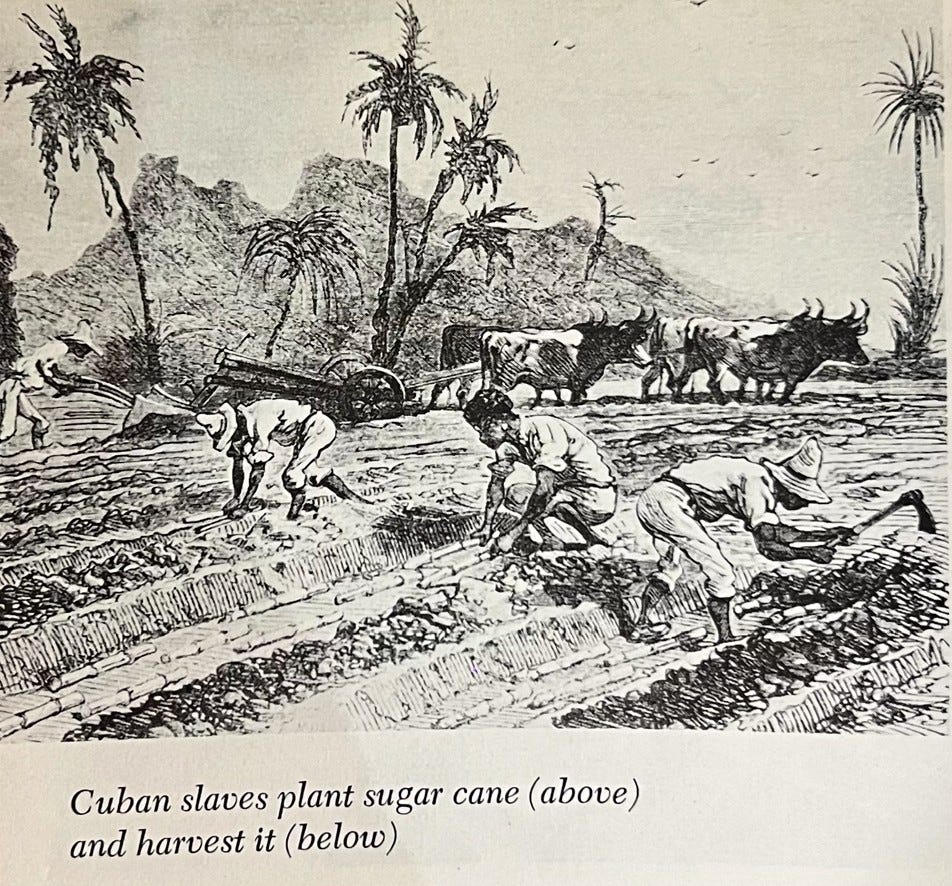
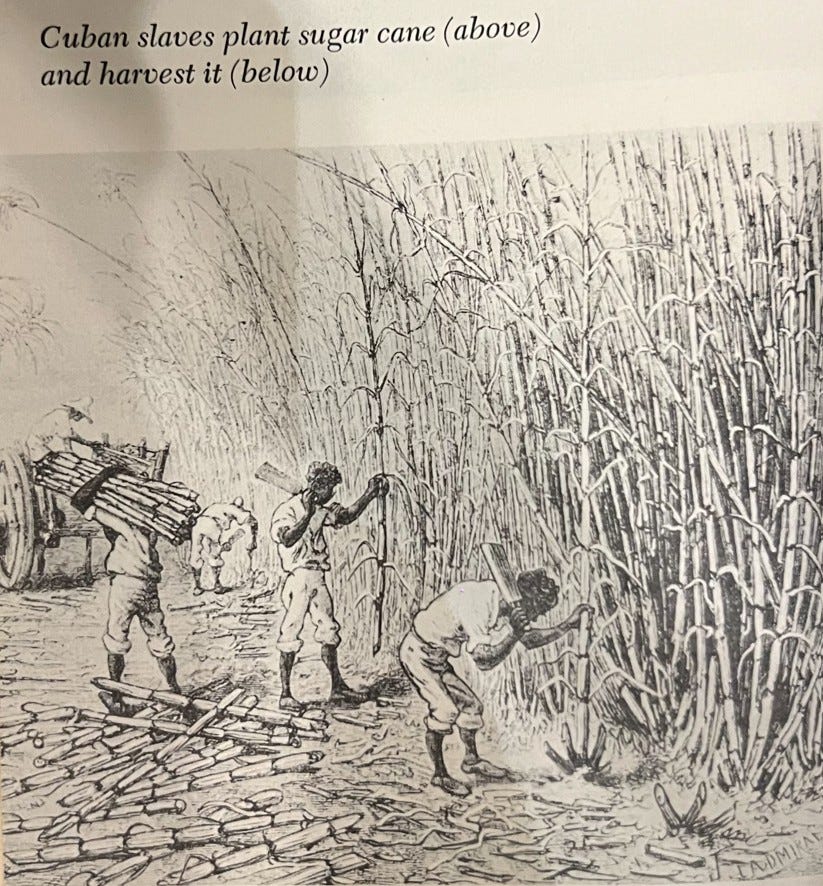
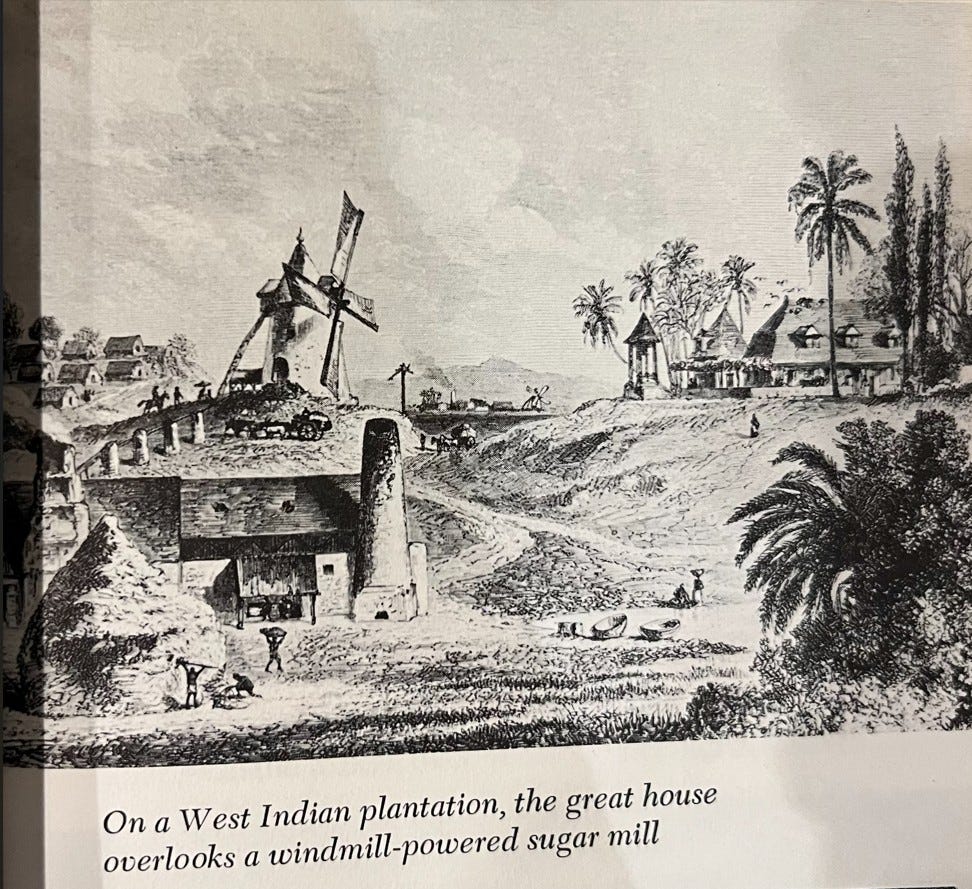
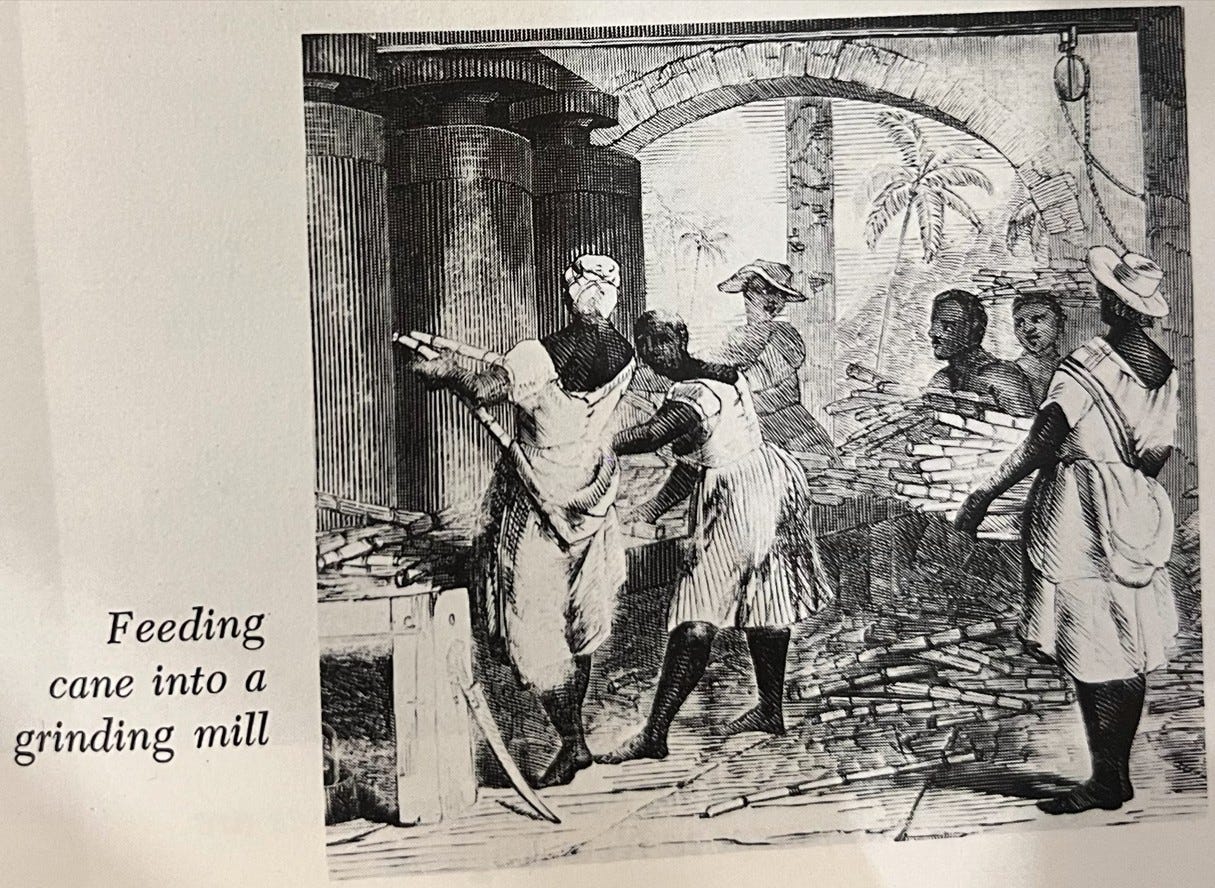
Although I did not take a lot of notes on plantation staffing/operations (i.e., overseers, gangs, absentee owners, “great gangs,” mills, punishments, etc.) because of my familiarity from prior readings, I couldn’t help but wonder – this is described with chilling precision, how was this book in a middle school?! Alderman even went in-depth on domestic/personal servants, and how that fluctuated depending on a family’s wealth. Imagine a middle schooler reading this and telling mommy about what they learned in school that day –
A slave who tried to poison his master would be pinched three times with red-hot tongs and then broken on the wheel, which meant he would be stretched across a wheel and tied to it while all his bones were broken by a man with an iron crowbar. A slave who threatened and struck a white person was pinched and hanged if the white person demanded it; otherwise his right hand was chopped off.
Jamaican slaves who rebelled or those who struck a white man twice were condemned to be burned [set on fire].
For what it’s worth, Alderman does give airtime to the wars/rebellions of the enslaved in the Caribbean, as a continuation of laying out what happened post-Middle Passage. He highlights the full spectrum: everything from the bidding centers where people auctioned and purchased enslaved Africans, to inevitable wars/rebellions by those who could not bear being subject to captivity and the harshness of plantation life. Despite all of this –
…the Triangular Trade continued to flourish and gold clinked wearily into the coffers of New England merchants and shipowners in their countinghouses.
Back in Rhode Island.
Not the warmest welcome home for Captain Jim deWolf, initially at least. In 1791, he was charged in Rhode Island by a Federal grand jury for throwing an enslaved woman overboard because she had smallpox. Evidence to support the antislavery cartoon’s depictions. Reminder that the Rhode Island legislature passed a law prohibiting the slave trade in 1787. Jim deWolf fled/hid for four years until the case was dropped. He then returned “to his evil business and [remained] a rich slave ship owner.”
The man with the heaviest wallet was in the people’s favor. The church, too. Why? Because the deWolf family contributions bankrolled the Bristol Congregational Church and paid out the Parson’s salary, per the author.
Besides, in those days the slave trade was considered perfectly respectable.
More than that, New Englanders, and Rhode Islanders (specifically), would not have jeopardized the prosperity their towns/cities had achieved on the back of slave trading. A minority may have classified it as evil, but even they would likely have been in the affirmative camp if it ensured wealth for their state –
A walk though the commercial district of any of the five principal New England slave trading seaports in the latter part of the eighteenth century would have revealed much about the prosperity trade had brought to the town.
Alderman portrays these port towns as centered around wharves. Waterfronts. Recording houses. Merchants dressed in fine cloth, selling goods from their warehouses (i.e., molasses for sale to be made into rum, in particular). Cabinet makers. Joiners. Furniture for the rich. Silversmiths. You get the point. Given that much of this activity occurred during the pre-/post-Independence years, Alderman is careful to note when the colonists would have paid the “British tax.”
But as we are talking about rum, here is a glimpse of what things were like back then in New England –
In 1761 Newport had twenty-two distilleries turning out rum at top speed, as well as three sugar refineries. Other New England ports had as many distilleries or more. While rum was a favorite alcoholic drink of New Englanders, they could never have consumed more than a fraction of the Kill-Devil all the distilleries produced. Much of it must have been sold or traded elsewhere.
According to Alderman (and his sources), in 1763, Massachusetts had 63 distilleries in and around Boston and Salem, “making rum with all possible speed.” As we know, New England’s propensity to be associated with slavery began to diminish. But at that juncture, many had already made their riches in the slave trade. The deed was done. For instance, Peter Faneuil, whose Hall “still stands in Boston’s Dock Square.”
Eventually, the risk of punishment (i.e., the legal and financial costs of remaining in the slave trade) was too high. Merchants “began to look elsewhere for profit—to the China tea trade, the California trade and whaling over the seven seas.” Reputationally, the risk was too high as the court of public opinion began to “turn against slavery and the slave trade.”
The show continued until it didn’t.
Just because slave trading became unpopular does not mean that the New Englanders completely abstained. For merchants, economics was the priority by any means necessary. The drying up of the waters (dollars) was mainly due to the unprofitability of remaining in the trade.
In other words, while Britain ended its slave trade in 1806–1807 (on the books), and the U.S. in 1808, many New Englanders still looked to Cuba as a last-ditch effort to reap some benefits. Hence, deWolfs and their Cuban plantations. Slavery was not abolished in Cuba until the late 19th century, and slave trading activity remained active a few years after America’s Civil War.
Our tale ends here as well. Despite the length of this piece, Alderman’s book isn’t but more than 120 pages or so. One of my faster reads this year, but no less substantial than the others—whole lot of depth.
A fascinating piece of history, though unfortunate given the human cost/toll. But as the author noted, New England’s Triangle Trade “is not a pretty story, but one that should be told.”
I hope it is at least clear that there is a deep bed of history associated with America/New England and rum. That much is clear.
Peace.
