


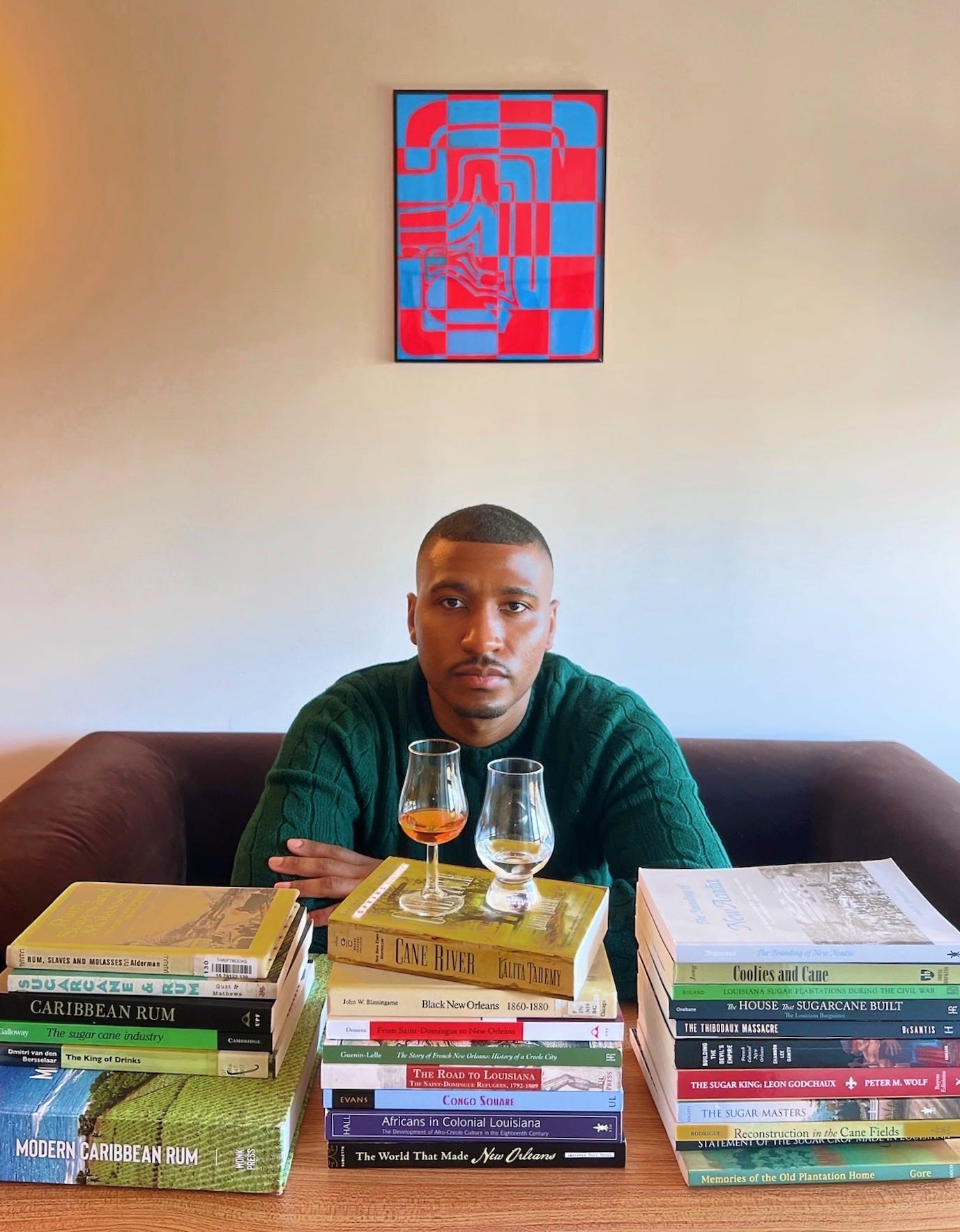
In Donna McGee Onebane’s The House That Sugarcane Built: The Louisiana Burguières, the author draws this conclusion about people & colonial Louisiana/New Orleans –
Despite the diverse population, the French nationals left the most enduring mark on the culture.
While this statement may understandably invite disagreements from some, I think it is fair to frame the sentiment in a ‘that was inevitable’ framework. Which is to say: if the French colonized Louisiana, one would expect that social foundation to be demonstrably francophone. An indisputable floor (not meant negatively), with healthy debate left open on the “most enduring” characterization.
Personally, I get wary of absolute statements about historical developments, especially those regarding culture. Culture shapeshifts over long periods of time, vacuuming inputs to create contemporary profiles that inevitably vary for the denizens of the period(s) in question. One could say that culture is a sort of never-ending creolization process.
To borrow language from the first author on the lineup, culture is dynamic, socially acquired knowledge, constantly on the developmental train. In a second, I’ll share historical context to what those familiar with Louisiana (today) may consider a ‘water is wet’ sentiment. Namely, that African culture is deeply woven into the fabric of the state, especially so of its loudest-microphone city, New Orleans. An example centering language and food, two of the many pillars undergirding culture, is gombo, a shortened/creolized word for okra (in a few African languages). Gombo (today, Gumbo) is known as a staple Louisiana dish with a medley of African & European (French/Spanish) influences.
Language, to bring it all home –
“Bouki fait gombo, lapin mangé li.” — “Hyena makes the gombo; rabbit eats it.” Louisiana Creole proverb from Lafcadio Hearn, Gombo Zhèbes: A Little Dictionary of Creole Proverbs
Here’s a little primer, courtesy of the author, on Louisiana Creole’s development, and the players involved –
The cultural impact of the Africans brought to Louisiana during the French slave trade is engraved upon the very structure of language as well as in the history of its use. The Louisiana creole language was created by the African slaves brought to Louisiana and by their creole children. It belongs to a special language group, the Atlantic Creoles, which are languages created by African slaves brought to the Americas. These languages are markedly similar in grammatical structure, in pronunciation, and in literal translations of African idioms, though the vocabulary is largely that of the language of the respective European colonizers…The vocabulary of Louisiana Creole is overwhelmingly French in origin, but its grammatical structure is largely African.
Okay, on to what you came here for, the books (and rum, I hope)!
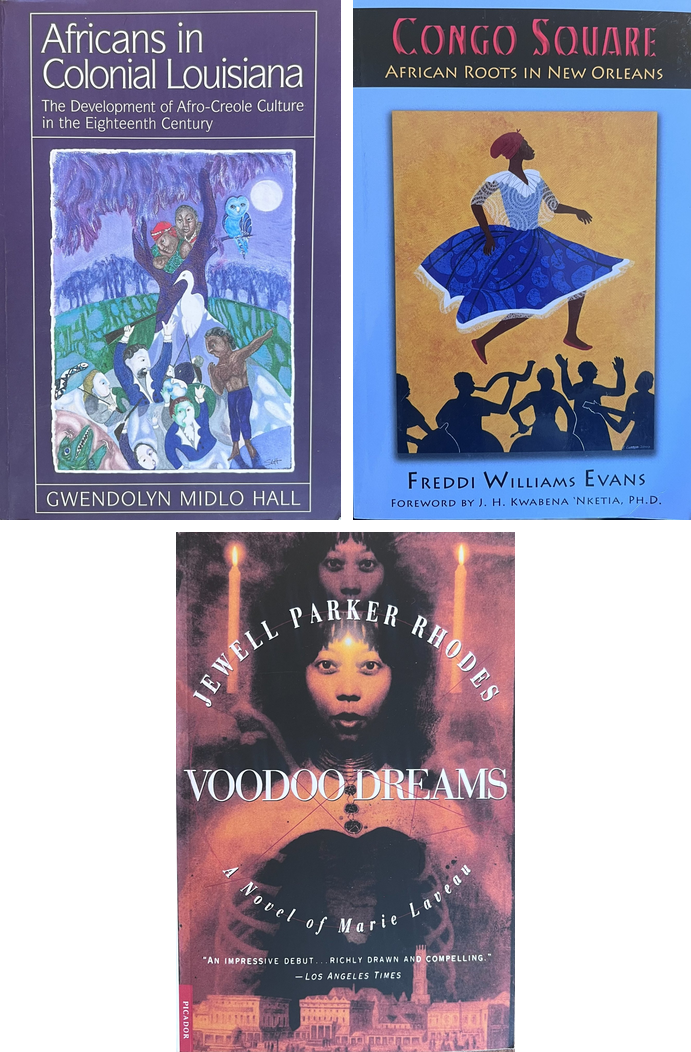
Africans in Colonial Louisiana: The Development of Afro-Creole Culture in the Eighteenth Century
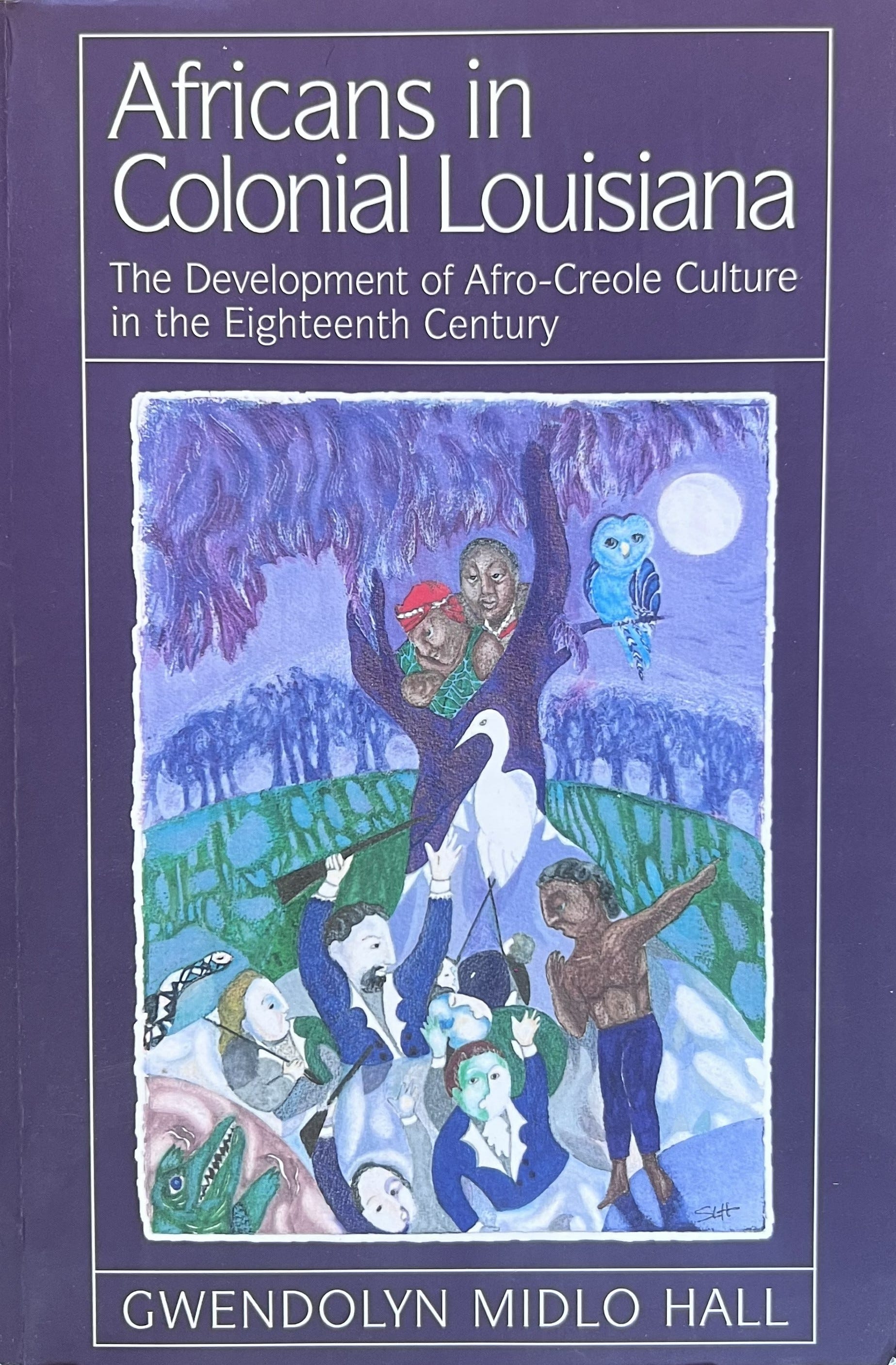
It is fair to say that Hall’s book, published in 1992, is an uncontested staple for subsequent authors who sought deeply researched understandings of how African profiles evolved from Louisiana’s earliest days. In other readings, I noticed countless references to Africans in Colonial Louisiana. I suppose I walked the path that many of those scholars journeyed (as a non-academic). Selfishly, Africans in Colonial Louisiana also got me to some of the earliest references to my chief concern: rum. And that is where we’ll start.
High praise for the best bev en l’universe.
We are in the year 1752. There is a drunk French soldier/colonist, Pochinet, harassing and chasing enslaved people. That soldier was ultimately sentenced and tried. Because if there is one thing that the French colonial administrations did not tolerate (if you didn’t rank high enough), it was interference with growing their precarious colony, of which enslaved people were a vital input. Contrary to popular tellings –
When soldiers and other poor whites attacked and injured slaves, they were prosecuted as criminals.
Add drunkenness to the mix, a trait deemed immoral within the context of a religious-morals-are-supreme Catholic society, and you have a situation where the soldier was doomed. What does this have to do with rum? Well, that is what he was drinking (emphasis mine) –
The colonial officials were less charitable and sentenced Pochinet to forced labor on the galleys, commenting upon “the excesses with which Guildive is distributed at the taverns here: a drink which ruins the soldier entirely and throws him into a rage.” — Source: Michel to the Ministry of the Colonies, September 20, 1752
Reminder: Guildive is the French(iphied) version of the Bajan term “kill-devil,” which was an early moniker for rum. Today, Haitian Clairin producers still use the term Guildive.
Given the above timeline (i.e., circa sugarcane’s introduction to Louisiana), I would guess that the colonists imported the spirit from the French-controlled Caribbean, likely Martinique and/or Saint Domingue. That’s example one.
Example deux is one of the more intriguing because it outlines pivotal figures responsible for the commercialization of cane in Louisiana (i.e., developing a technique to combat the shorter growing season). But also, a keyword that usually goes un-discussed jumped off the page (emphasis mine) –
[Joseph] Dubreuil [de Villars] played a major role in the early sugar industry. In this case, there is documentation of the introduction of the crop from the French West Indies. The Jesuits introduced sugarcane from St. Domingue in 1751 when a troop ship stopped off there on its way to Louisiana. They shipped to their brethren in Louisiana a quantity of cane and a number of blacks acquainted with the culture and manufacture of sugar. The first sugarcane was planted on the Jesuit estate north of New Orleans, but it was Dubreuil who experimented with the adaption of sugarcane to Louisiana. He developed the technique of covering the cane so that it would not freeze over the winter, and he established the first sugar mill. Although Etienne de Boré has been credited with commercializing sugar production in Louisiana in 1795, as early as 1763 Boré contracted with one Baudon to remain on his estate for three years to operate his sugar mill and distillery and to teach two of Boré’s slaves how to do so.
de Bore is an oft-quoted figure in Louisiana’s cane history, understandably. But this was my first time encountering his “distillery” being discussed. An educated guess would be that he was distilling what he was already growing. So, beyond being “credited with commercializing sugar production,” I would loosely conclude that he may also have added to the guildive/r(h)um being produced at the time, even if nominally.
Example trois. A free Black woman, which was not uncommon in the way that it would have been in colonial English/American territories, engaging in a typical, even if illicit, commerce practice of the time: stealing goods for resale or trade in the frontier economy. Five-finger wholesaling. Here is Hall’s account of an event that took place in either 1779 or 1794 (emphasis mine) –
There were distinctive patterns of crime at the post. Crimes committed by slaves usually involved theft of food and clothing. Free black women were sometimes accused of being involved in provoking thefts and receiving stolen goods. Nanette, a free négresse living at the house of the English commissioner Boukguard, was accused of stealing cloth from him and selling it to two male slaves in exchange for eight bottles of tafia and four barrels of corn.
Reminder: Tafia was an early term to describe distilled cane spirit. There is contemporary debate regarding whether this would have been closer to today’s molasses-based rums or cane juice-based rums, with most arguments favoring the latter. I believe it has more to do with qualifying the exportability (i.e., indication of perceived quality) vs. the source material. In other words, I’m sure it could have been either molasses, cane juice, or a blend. For the sake of acknowledging that people regularly used catch-all terms in colonial speech, let’s conclude that this was rum as far as we’re concerned; it was valuable enough to be traded for clothing, a prized commodity among the enslaved.
I’M NOT DONE. Example numero four. This one is a little shaky. Keep in mind the “catch-all” nature of things I just referenced. I’ll get right to it this time, circa 1792–3 (emphasis mine) –
And when asked about the Mina ball, Pedro had replied: “There was a ball that lasted about 24 hours, in which a lot of liquor [aguardiente] was drunk. Several of them decided to steal from their masters and go off to become maroons to free themselves from mistreatment by their masters.”
A lot going on in that quote. Let’s focus on “aguardiente,” a word historically used by the Spanish (and Portuguese, slightly different spelling) to denote an unaged spirit. In other words, “burning” or “fire” water. The Spanish controlled Louisiana post-1763, so the use of that term is unsurprising. The only issue is that “aguardiente” could be anything (e.g., high-proof, distilled grape alcohol). However, I assume that the “liquor” in question is unaged distilled sugarcane spirit. Note: the Spanish outlawed production of cane spirits in their Caribbean colonies for most of the 1700s to prevent competition with their European spirits/wine. Attempts at tight restrictions on things in Louisiana didn’t go over as easily for the newcomers among the mainly francophone population. But also, just because it was illegal does not mean it did not happen!
You know, finding these Louisiana cane spirit references is usually a ‘needle in a haystack,’ head-first kind of dive. And it took me thousands of pages (pre-Hall’s book) to realize something that understandably evokes a “duh, Javaun!” response. I can’t find what I’m looking for because the records of Louisiana’s earliest days are mostly…wait for it…IN FRENCH AND SPANISH.

All to say, valuable primary resources – letters, colonial correspondence between colony and crown, etc. – are living in the archives of France and Spain, and I need parts. S’il vous plaît, y gracias!
Will I have to learn French and Spanish to get to the heart and soul of Louisiana’s earliest threads with cane and rum? Maybe. As Hall stated, the history of colonial Louisiana has largely been neglected because of “the Anglophone orientation of American historians.” To engage, one would have to peruse the “manuscripts [that] are scattered about in France [and] Spain.” Honestly, the search and journey are the exciting parts. There is beauty in knowing that a specific slice of history can’t be contained, rigidly outlined, or boringly bifurcated.
As you can probably tell, from the quotes I’ve already shared, Hall goes deep into this history. If I walked through it bit by bit, we’d be here for a long time. So, I’ll condense.
French and Canadian before African.
Naturally, my first question, given the title of the book, was: when were the first Africans brought to Louisiana? Quick answer –
The first two slave ships from Africa…arrived in 1719…
Before we go further, I’ll answer the historically apt ‘elephant in the room’ that precedes the African arrival –
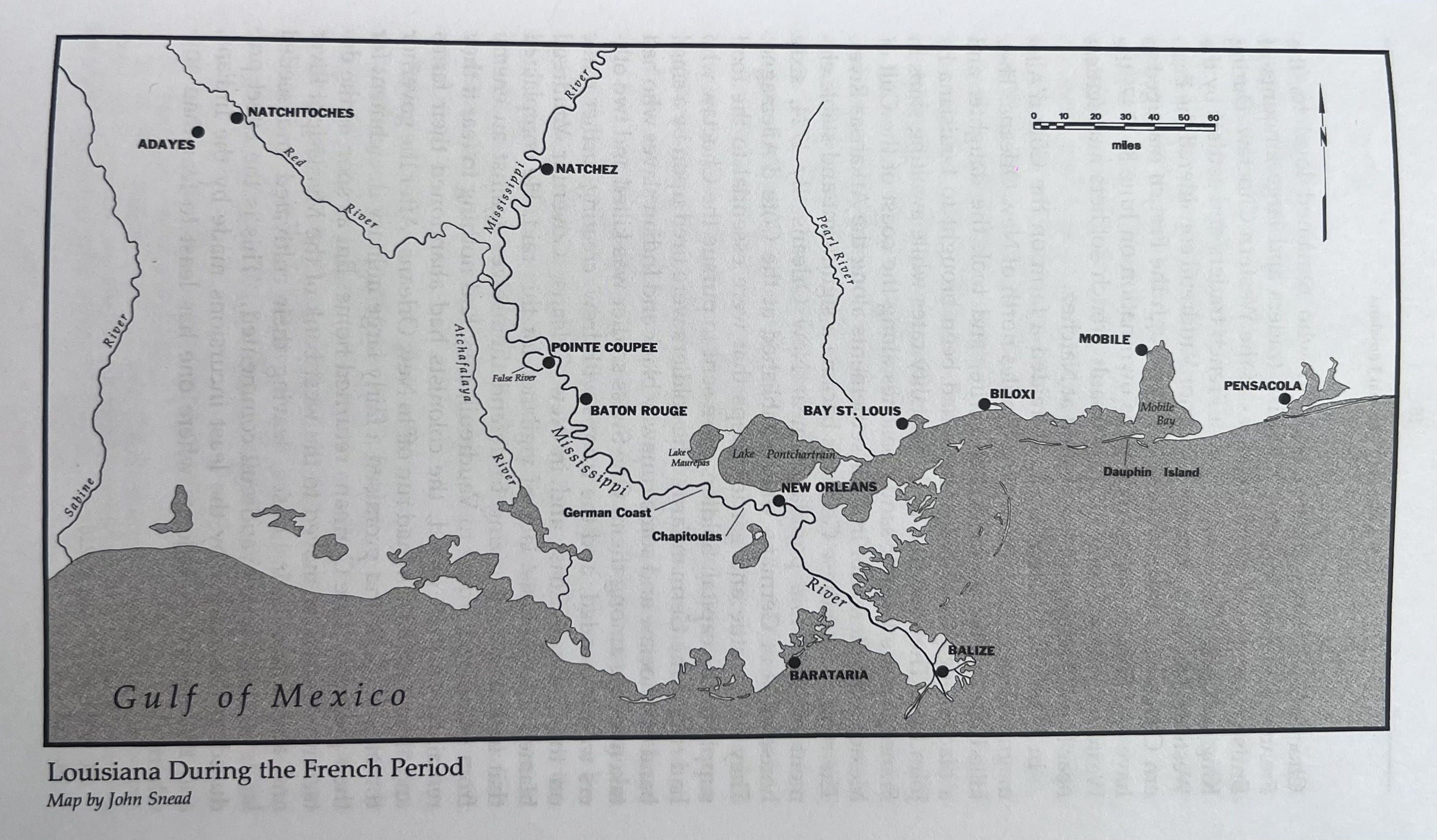
France explored down the Mississippi River from her Canadian settlement and staked her claim, establishing a beachhead at Biloxi, in 1699, on what is now the Mississippi coast of the Gulf of Mexico.
The earliest French attempts actually took place in the early 1680s. 1699 is when they actualized. Given the race to conquer the Americas at that time, this French land claim was of vital military/empire concerns vs. purely economic (i.e., “prevent England from gaining control of the mouth of the Mississippi River”). Green to this territory, but with some experience in frontier conditions (Canada), the French/Canadians were largely unprepared for pre-conquered Louisiana terrain and all its bayous, difficult-to-navigate terrains, etc. So, as they initially did in Canada, the French relied on Native support & guidance to settle in (hunt, house, cook, etc.). There was one particular group of French Canadians adept at this settling in: “Canadian courreurs du bois, fur traders who lived in Indian villages and often took Indian women for wives.” What’s important to note is that an openness to others became an (initial) default practice of the French, purely for safety and posterity. More crudely, they did not want to die –
White settlers, traders, soldiers, and missionaries were killed by Indians, sometimes after slow torture. When they were not mercifully tomahawked and scalped at once, they were sometimes tied to wooden frames and slowly burned to death.
A particularly helpful takeaway and juxtaposition is understanding how the French viewed their crown jewel colonies, the Caribbean (#1) & Canada (#2), versus how they viewed Louisiana. The latter had a striking similarity with how the British colonized Australia – bet you didn’t see that coming – in the late 1700s, largely because of the characters involved. Outside of the ranked military folks who mostly came over from Canada, the French flooded the new colony with those considered “defiant,” not “useful,” and every similar label under the hot Louisiana sun. This included “beggars and vagabonds from Paris,” prostitutes & convicts (like Australia), and you even had cases of people asking the “special police force” to kidnap and deport their family members. Louisiana became a de facto penal colony where 3-year sentences were handed out to the most troubled of French society.
By 1708, Louisiana had “278 persons in French settlements, including 80 Indian slaves of both sexes, 14 major officers, 76 soldiers, including 4 army officers, 13 sailors, including 4 marine officers, 3 Canadians, one of whom served as interpreter for the Chickasaw language, 1 valet, 3 priests, 6 workers, and 6 cabin boys (mousses) who had been brought in to learn Indian languages, as well as to serve on sea and land. The garrison totaled 120 men.”
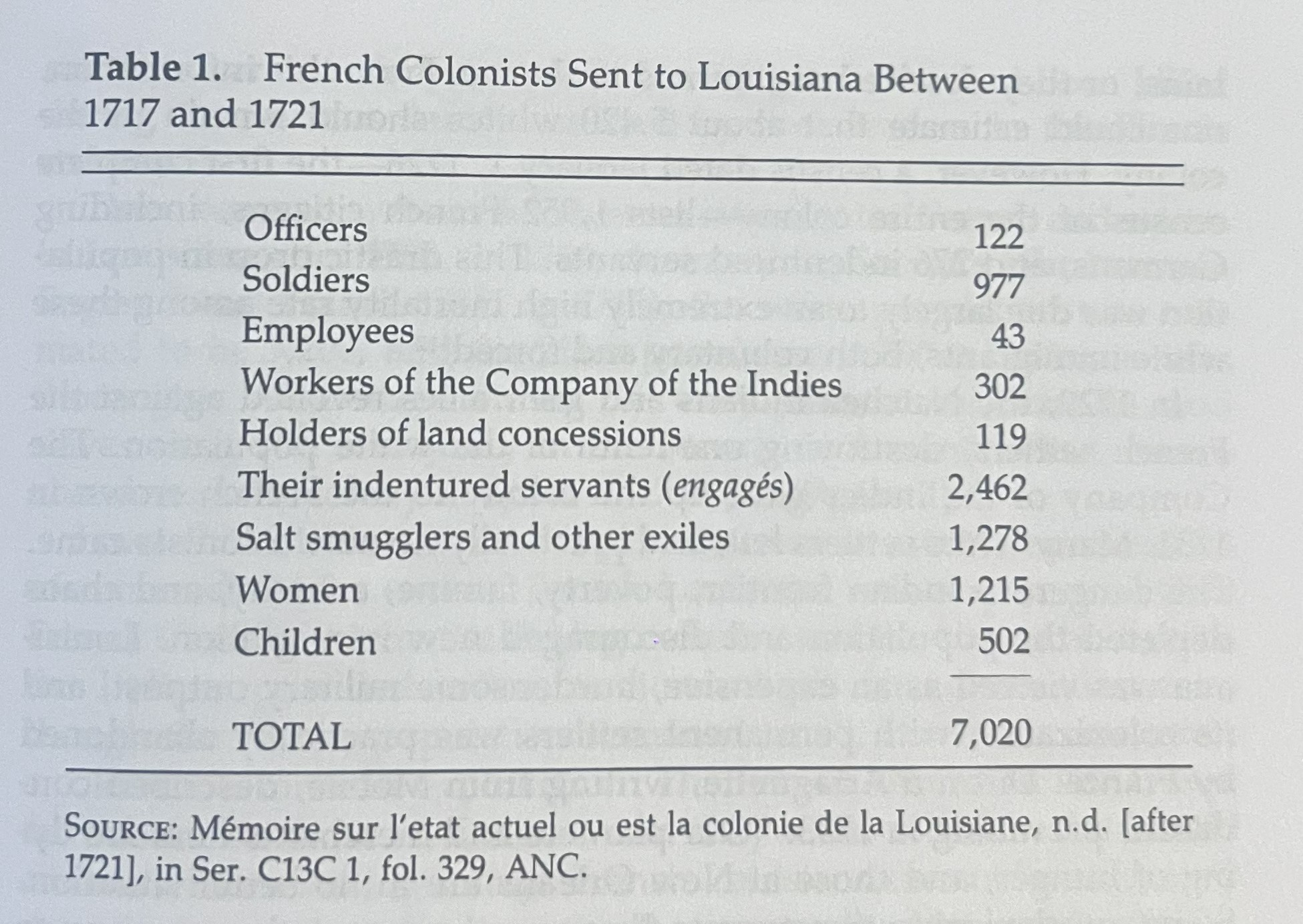
Now, there is a lot more we can cover on the specifics of things like
(a) how the colony functioned,
(b) how and why Paris deprioritized this holding (saw it as a failure), and
(c) how Louisiana’s specific frontier conditions shaped the French/Canadians to operate differently from those in other French colonies.
Case in point: almost nothing was exported from the colony in its early days because the goods in question were either needed in the colony or considered to be of inferior quality relative to what was coming out of the Caribbean and Canada. Not all were at a loss. Some were doing quite all right; leaders spearheading the operation, if you will –
The ruling elite of French Louisiana was a military-bureaucratic clique whose wealth derived mainly from commerce, often smuggling, and sometimes piracy.
Bienville was accused of employing His Majesty’s crews and boats to transport his own goods and those of his clique to Veracruz and to France and of treating the King’s merchandise in the warehouse as his own, appropriating whatever he pleased, and then selling it at an exorbitant price to the desperate settlers, making an enormous profit. When he did not appropriate the king’s goods outright, Bienville bought them at a markup of 25 percent and resold them at a profit of 400 percent.
Note: Pierre Le Moyne, Sieur d’Iberville, and Jean Baptiste Le Moyne, Sieur de Bienville, were French-Canadian brothers and considered the founders of Louisiana and New Orleans, respectively.
I’ll get us back to the Africans in Colonial Louisiana focus shortly. But it would be irresponsible of me not to remind that one of the best ways to understand European colonialism is through the framework of power/control and economics. There is a sum-of-the-parts that we must account for before talking about Africans & Louisiana. Namely, the Company of the Indies (Compagnie des Indes), a conglomerate that the French King awarded monopolistic reign over all responsibilities for the territory, and, therefore, was responsible for overseeing the slave trade:
John Law’s Company of the West (1717) was first “granted a monopoly of Louisiana’s trade for twenty-five years and of the Canadian beaver trade in perpetuity, and it was given ownership of lands and mines as well as the right to build fortifications and to nominate the company directors and colonial officials.”
Company of Senegal (December 1718), Company of China and the East Indian Company (1719), and Company of St. Domingue and the Company of Guinea (September 1720) were all formed.
The above were private enterprises that issued & sold shares.
Financial fallout in the 1720s led to a collapse and consolidation of the above into the Company of the Indies. Side bar – there is a French independent rum bottler named “Compagnie Des Indes.” I wonder if they are familiar with this history, given that they now own a name tied to deep colonial history. All in all, the Company of the Indies opened the way for “true colonization of Louisiana.” Let’s get back to center.
African Louisiana.
Remember when I said the first Africans arrived on ships from Africa in 1719? Well, that may not be the full story. Hall notes that while no Blacks were listed in the 1708 census, Bienville likely procured human cargo for himself in 1709, with Saint Domingue/Haiti & Havana being the most viable candidates. All done, of course, under the pretense of securing other goods (e.g., powder) on behalf (and at the expense) of the King/colony. We know this to be accurate because “the first document evidence of” enslaved persons in the territory showcases 12 Africans in 1712. For official purposes, however, 1719 is the recognized year of mass African arrival in Louisiana. Where did most of these Africans hail from? Senegambia (#1), Bight of Benin (#2), and Congo/Angola (#3). Records –
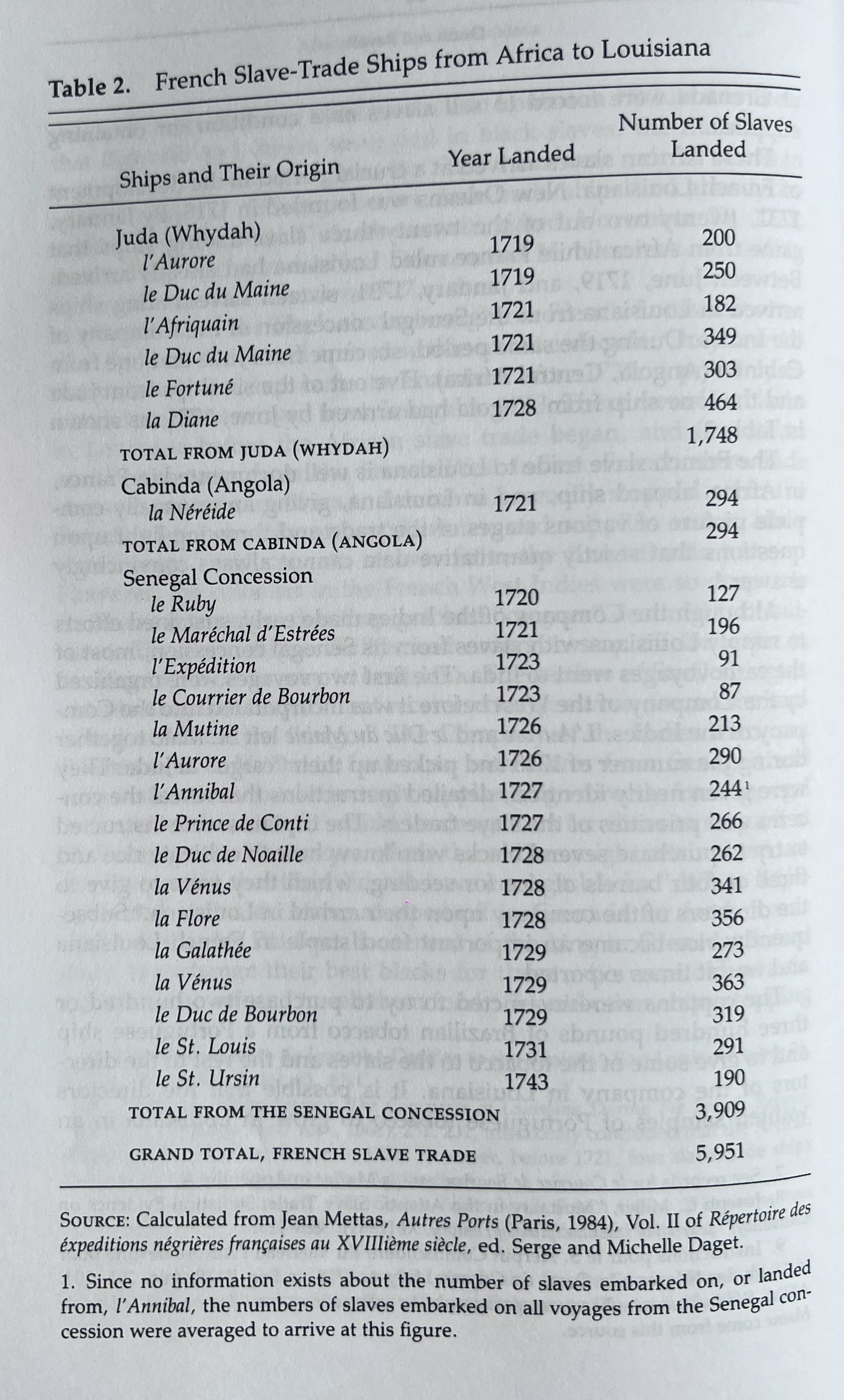
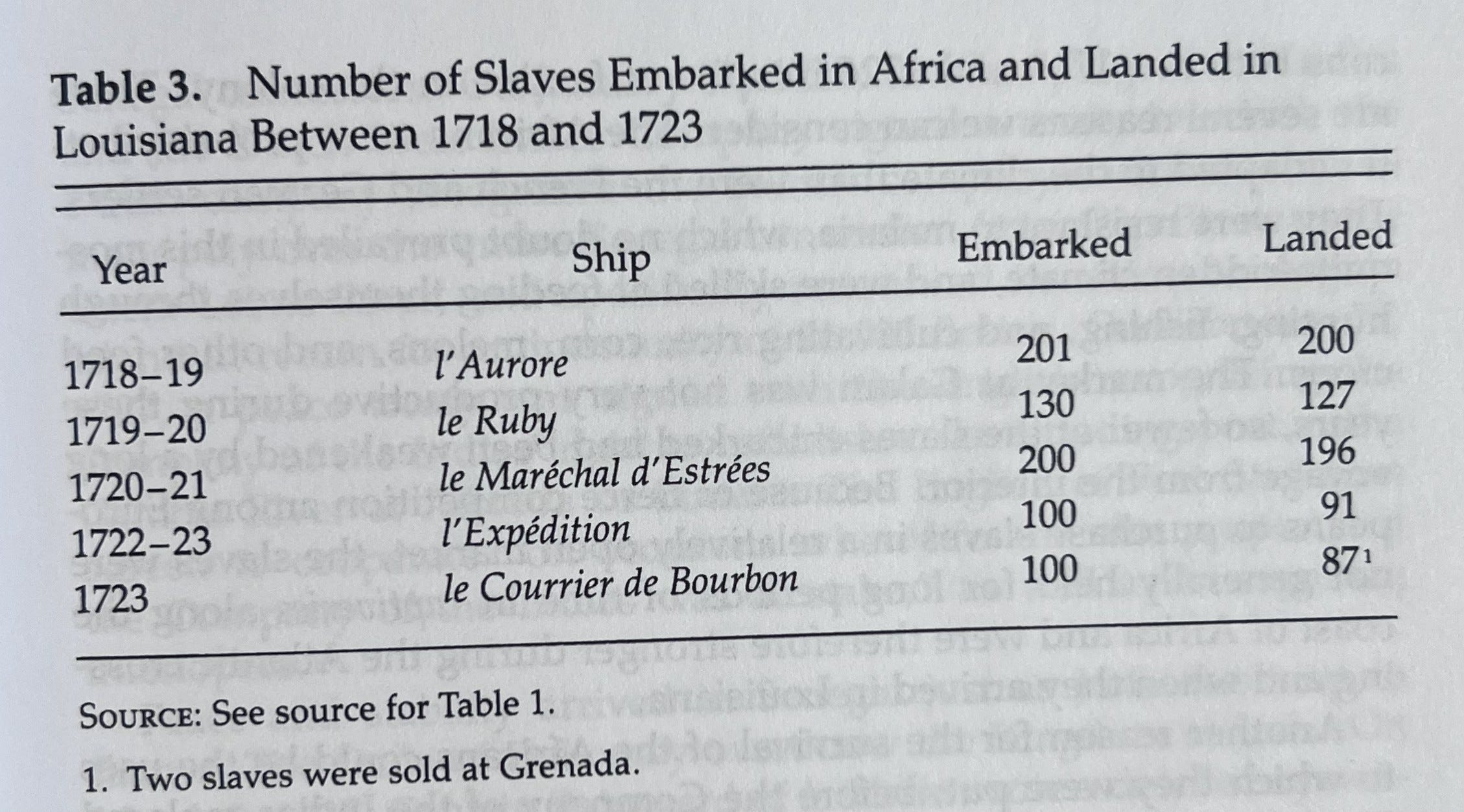
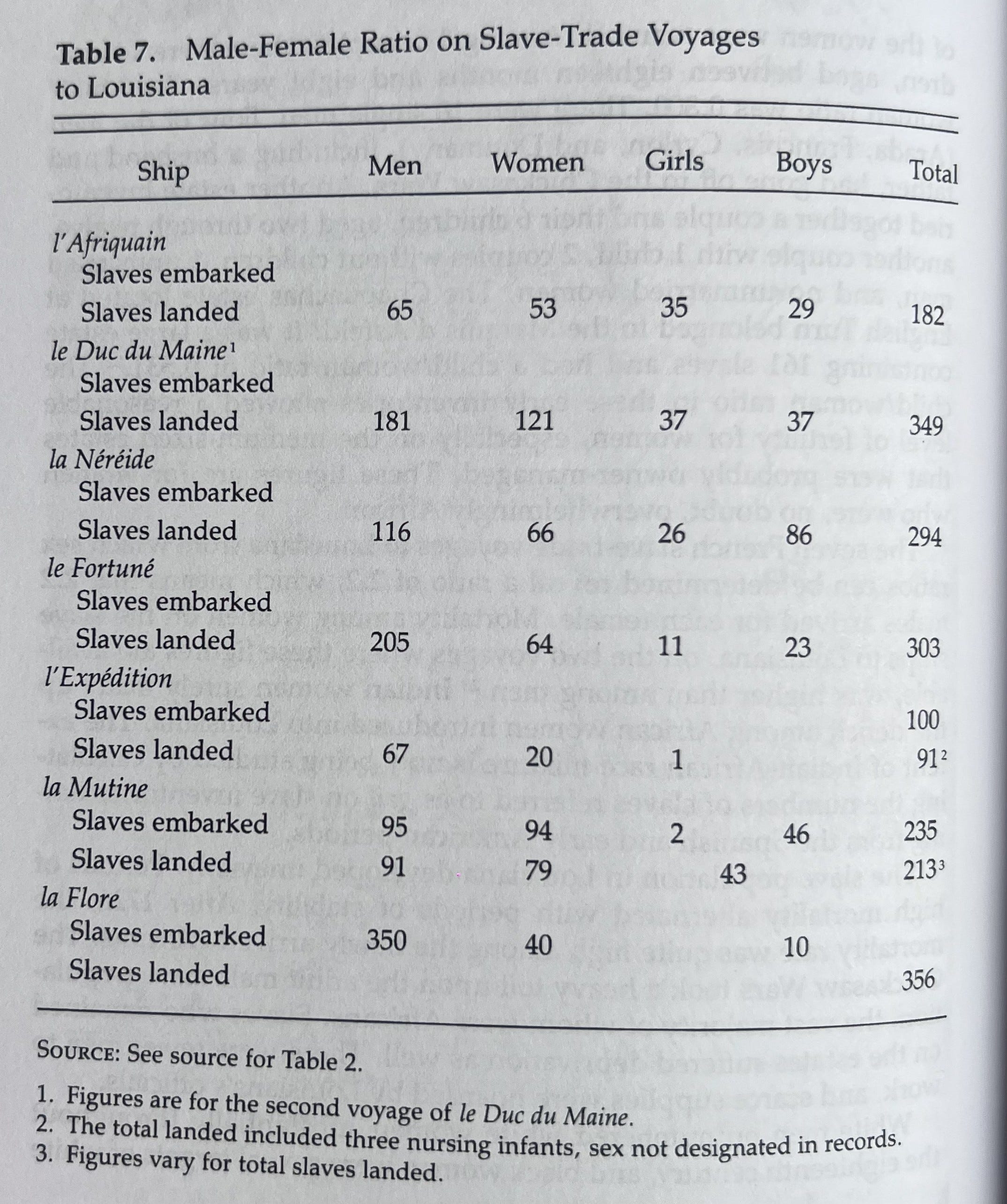
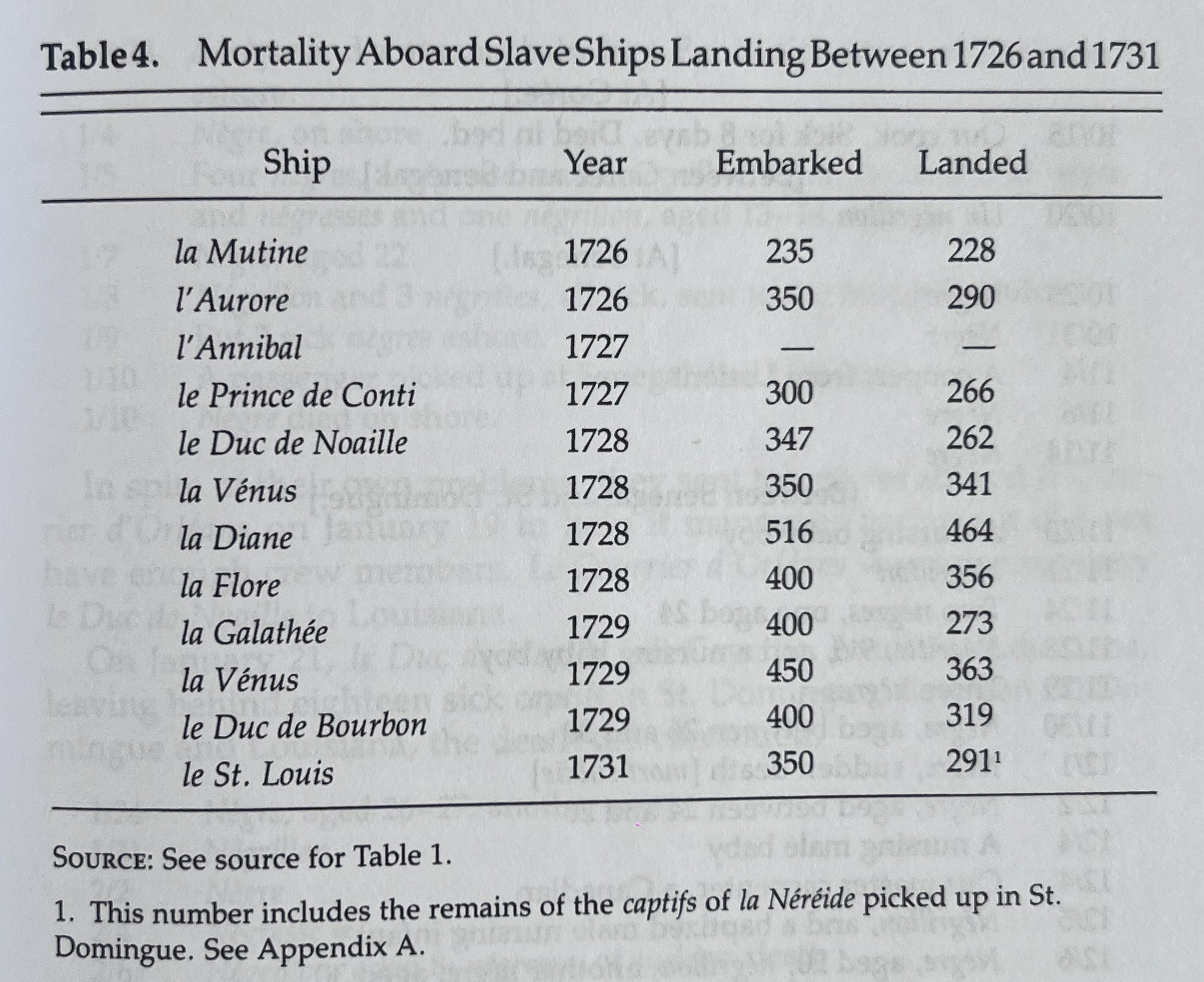
Hall does a great job of showcasing which trading posts (e.g., Bissau in Upper Guinea) the French were guaranteed, and how the “administrative relationship between Senegal and Louisiana” developed over centuries into one of supposed exclusivity. Interestingly, and to highlight the constant state of warfare across both Europe and Africa, the French labeled their human cargo assets as captifs (“probably a legalistic fiction justifying their enslavement as captives of war”). It was not until the humans were sold in the Americas that the French considered them “slaves.” All in all, the human/cultural foundation of what became African Louisiana (“Afro-Creole culture”) was fundamentally Senegambian & Beninese in nature.
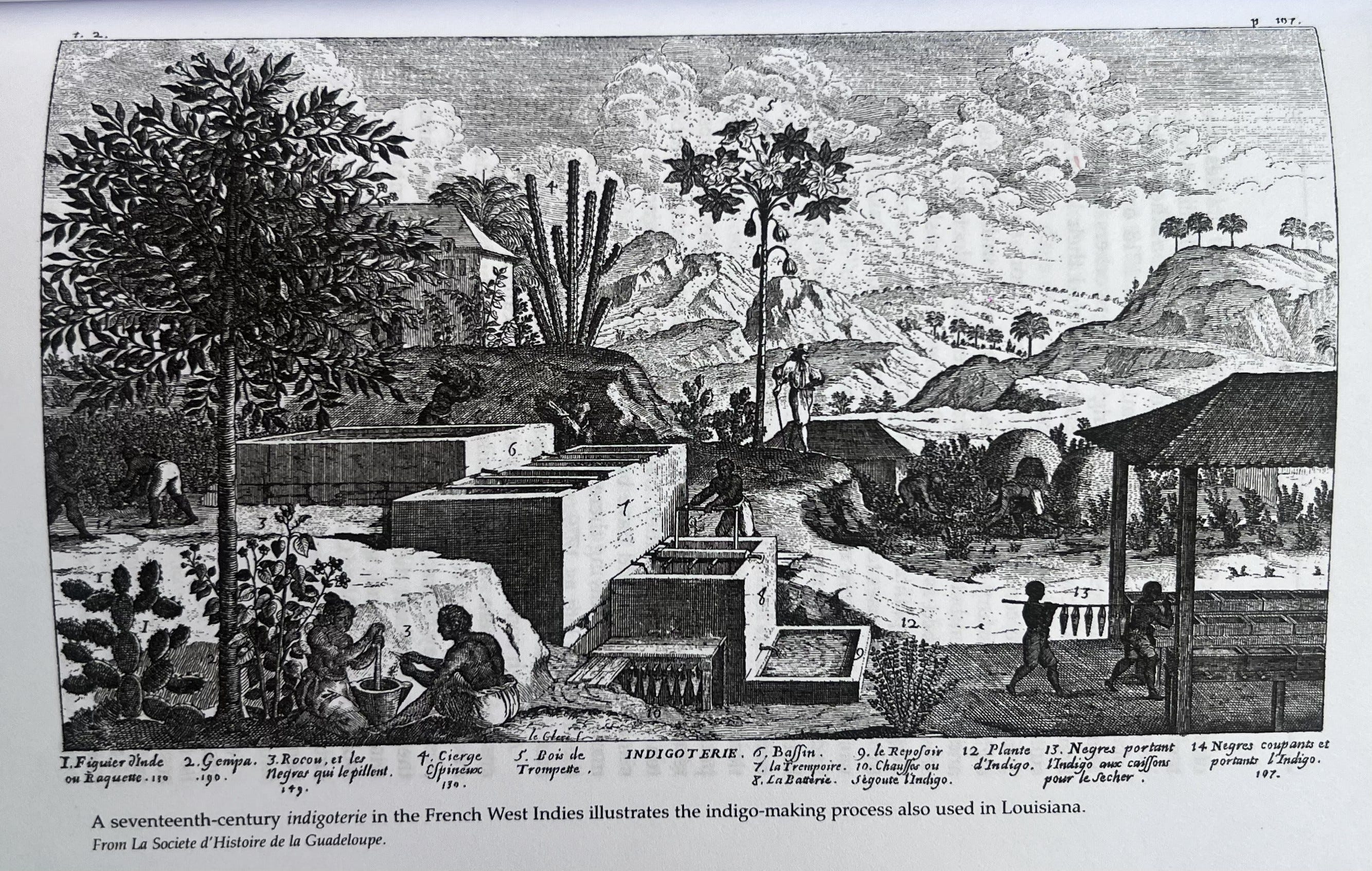
Down to the food. Much of Louisiana’s early staples were intimately familiar to those of the Senegal Valley region: rice, corn (though “boiled Indian corn” was already a Native American staple), tobacco, indigo, peas, salt, etc. It therefore becomes easier to understand why, for instance, tobacco and indigo plantations were some of the first profit engines the colonists explored. Less of a hill to climb when your human labor already intuitively understands the crop.
Indigo grew wild along the rivers of Senegambia, where it was processed into a vivid, blue dye with which cotton cloth was colored.
One of the skills regularly listed on slave inventories was that of indigo maker (indigotier).
In that region of Africa, French traders/plantation owners, such as Père Jean Baptiste Labat, documented what they observed on the ground, especially that of skilled labor. Smiths of all kinds (silver, copper, black, gold), all lumped under the title of “metalworkers.” Interestingly, Labat was stunned at the Africans’ calm and communal approach to working, describing it as “informal manner,” done in “a social and ceremonial occasion.” Lots of talking/smoking because their labor objectives were likely more subsistence-oriented, whereas Labat considered this lazy since they did not overproduce “more cloth than they could consume.” In truth, it ran counter to the “European drive to maximize production and conquer nature.” Other interesting facets of the society he reported on included:
Largely Muslim
Female circumcision was regularly practiced
Literacy was high
People were incredibly polite/friendly
Women were particularly hardworking
French men found the women very attractive
The attraction of French men to the Wolof, partially because of what they considered to be “their pure blood” and their “beautiful, black, lustrous skin [beau noir lustré] calls into question theories positing a revulsion among peoples who least resemble each other in color and appearance in early contact situations.
And this mentality made its way over to Louisiana in a sort of twisted manner because many slaveowners preferred Wolof (pure blood) labor. More crassly, they felt “lighter-skinned slaves smelled bad.”
Quick reminder: if we are to analyze this era accurately, we can’t solely identify Africans by contemporary country naming conventions (Gambian, for instance). The frame of reference used back then was tribes/nation-states, much the same way the French identified with their nation rather than being European. “Wolof,” “Bambara,” “Mande,” and other tribal identifications are more accurate. And if you’re curious why Wolof looks awfully close to Jollof, it is because the Wolof/Jolof empire (circa 1300s) is from the Senegambian region. Slip in, “but Senegal makes it the best,” when your Nigerian and Ghanaian friends are arguing about rice. Alright, back to it.
Hall gives much-deserved attention to the Natchez Rebellion of 1729, and the contributions of enslaved Africans who fought on both sides, French & Native. The frequency of uprisings in colonial Louisiana was surely underplayed/underdocumented. Why? Because an image of ‘we got this under control’ needed to be maintained, for both attracting more colonists and appeasing the crown –
The governor and the ordonnateur [Salmon] would be motivated to deny slave conspiracies, since the existence of such plots would imply negligence and their own inability to control the situation. Even more important, these official[s] tried hard not to alarm the settlers, who were already leaving the colony in large numbers. Officials were often quite cold-blooded, denying dangers in order to avoid panic among the colonists, while the fears of the colonists were often quite realistic.
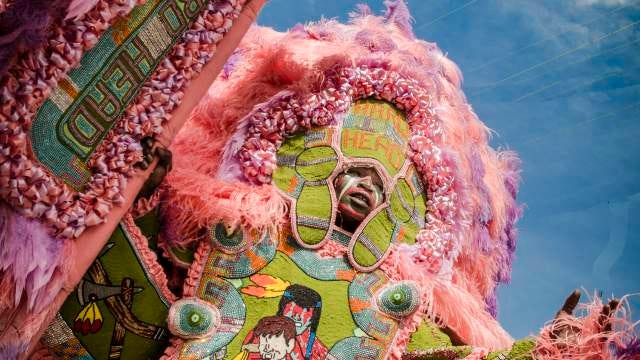
Despite this, the shared identity of being subjugated by the French resulted in alliances between the Natives and Africans, the latter of which often ran away to live among the Natives. This historical connection is resurrected during Mardi Gras, when those of African descent don Native/tribal garb –
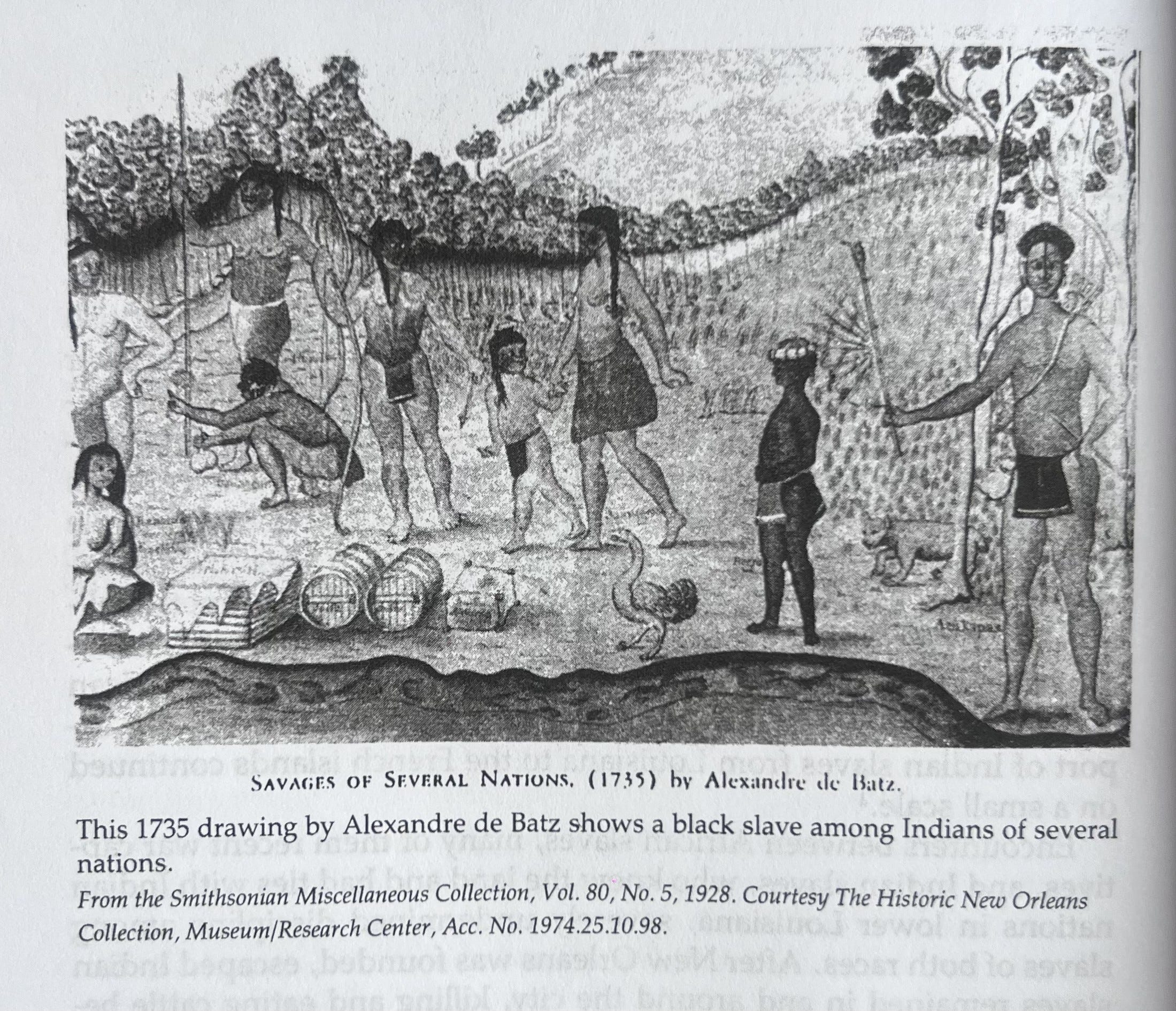
Indian slavery continued in Louisiana, though on a small scale. Matings between Africans and Indians took place both on and off the estates throughout the eighteenth century. Africans and Indians continued to run away together. Documents surviving from the 1730s and 1740s record the departure of Indian and African slaves, who often left together to seek refuge among Indian tribes.
Black-Indian mixtures, designated grif in Louisiana, emerged as a distinctive, self-conscious group among slaves.
Many of these alliances fell through as we approach the mid-18th century. The French militantly and violently fortified the colony to make their best attempt at preventing future dislocation (post-Natchez Rebellion). These events followed the same timeline as when the Company of the Indies returned control of the colony to the King of France (1731). The French subsequently turned up the dial on labor activities: levee construction, tree cutting, drainage, land clearing, building construction, etc.
Despite this, marronage was common given the ease of subsistence (“fish, shellfish, and game”) in and around “the tidal wetlands near the Gulf of Mexico.” The maroons secured cash by cutting cypress and selling craft products, NOLA being a common destination for those who escaped the plantations. We really get a glimpse at how economic constraints, coupled with the ramifications of Le Code Noir, prevented (what is commonly perceived as) a system of perpetual and unrestrained brutality. Slavemasters were often reluctant to dish out harsh punishment on runaways, the defiant, etc., because of the costs: incarcerated labor meant lost money/work, and replacing (renting) labor was not cheap. Moreover, slavemasters were required to front the costs of having persons released from jail, so they were inclined to advocate for fair treatment & second chances.
This mélange of characters across Louisiana created a creolized society that was unique in its step. The very specific conditions of Louisiana warranted a different modus operandi. For instance, in certain parts of Louisiana, freedom of movement and even meaningful socializing were not uncommon. 100% chaos was not as routine in certain circumstances –
While it has become a truism that masters separated slaves who were from the same African nations, in Pointe Coupee, slaves from the same nations and/or who spoke mutually intelligible languages were often clustered on the same estates. Furthermore, as we see from the testimony in the slave conspiracy trials and other documents, the master’s right to stop his slaves from leaving his property was highly theoretical. Slaves of the same nation belonging to various masters met and socialized on a regular basis. They met in the ciprière, and parties held in the slave quarters were attended by slaves from various estates and by free people.
Another example is that enslaved people in the most frontier of conditions were given guns to hunt for food because there were no viable alternatives for securing food –
By 1776, there was a new comandante at the post. He found that all the nègres of the coast were armed and that some estates had fifty slaves with firearms, most of the guns given to them by their masters. He made a rule prohibiting masters from giving guns to their slaves, except for hunters using them with a permit that had to be returned at the end of each day.
Survival was the name of the game, and that mission was pursued by Black and White alike, and by any means necessary. Remember when Labat said that French men found the Wolof women attractive? Well, that did not slow down; the ramifications extended to the highly intimate areas of life, and women of African descent took full advantage of the French-Creole licentiousness.
The Afro-Creole women of Pointe Coupee exploited the white men’s taste for dark women in order to obtain freedom for themselves and for their kin. It was a strategy that often worked.
And if freedom was on the table, many of African descent jumped at the opportunity. One example is Louis Congo, previously owned by the Company of the Indies, but later freed (hired) when he agreed to conduct executions that no one else wanted to do. His claim for justifying his freedom request was that Natives/Blacks attacked him often, which leads one to question, “Why?” Nonetheless, his wish was granted, and he executed both Blacks and Whites. Here was his payroll for the various execution styles –
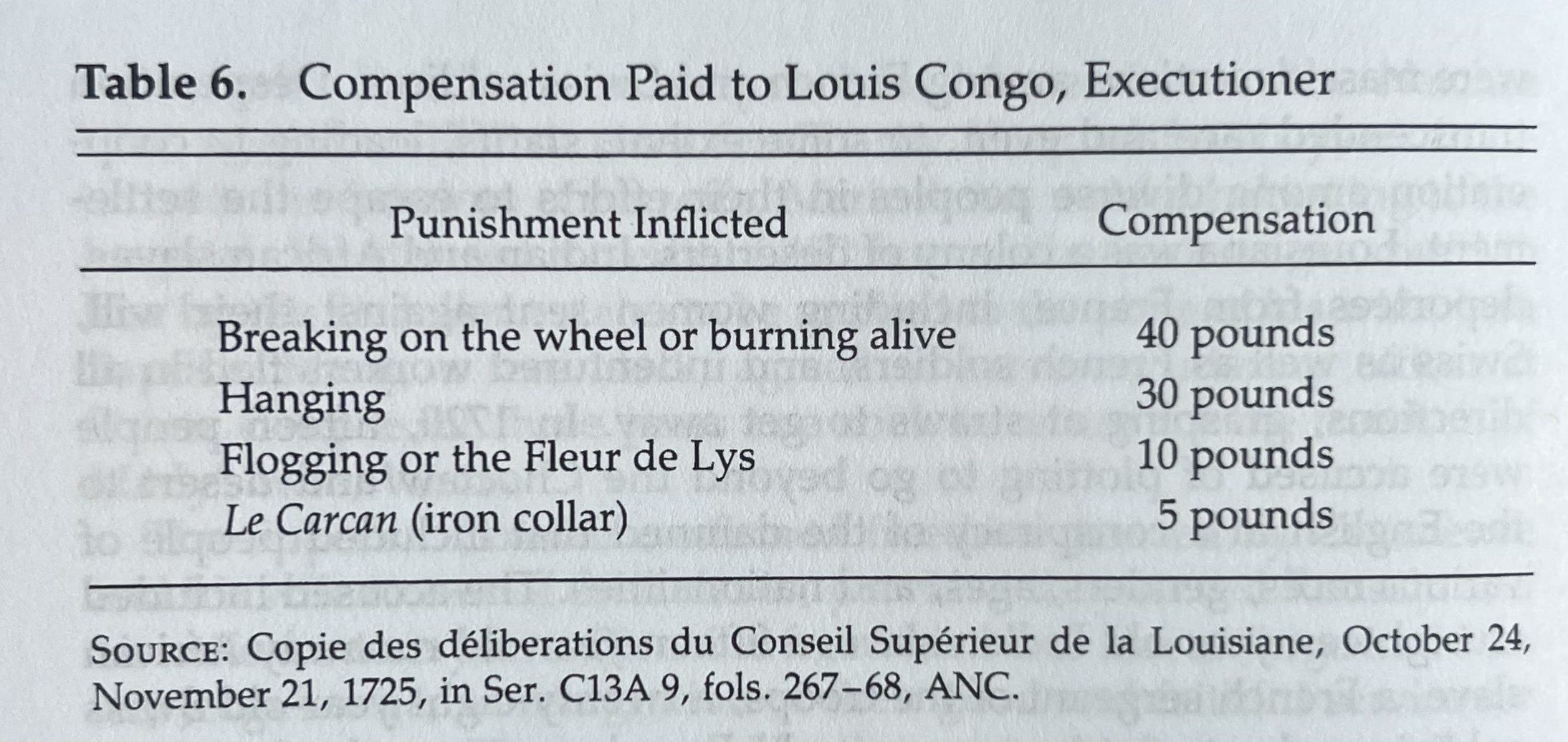
There is much that I left unsaid. After all, the book is 400+ pages long. I highly encourage you to read this gold mine of a text. A true gem of Louisiana history, focused on the African influence specifically, but also the state’s history at large. Again, it is no surprise that Hall’s work is referenced often by other writers. With that, a quick bit on the author herself.
Gwendolyn Midlo Hall (RIP).
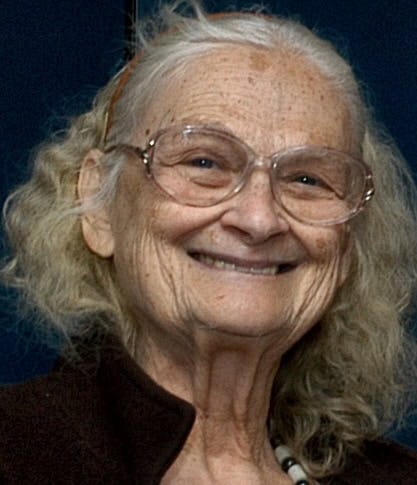
When this writer was growing up in New Orleans during the 1930s and 1940s…
She didn’t just speak about the place. She lived it and could therefore tell these stories with personal and historical context. I encourage you to take a look at the AHA’s write-up on her life. Quickly –
The AHA honored Hall with a posthumous Award for Scholarly Distinction in 2023.
Deserved.
Congo Square: African Roots In New Orleans
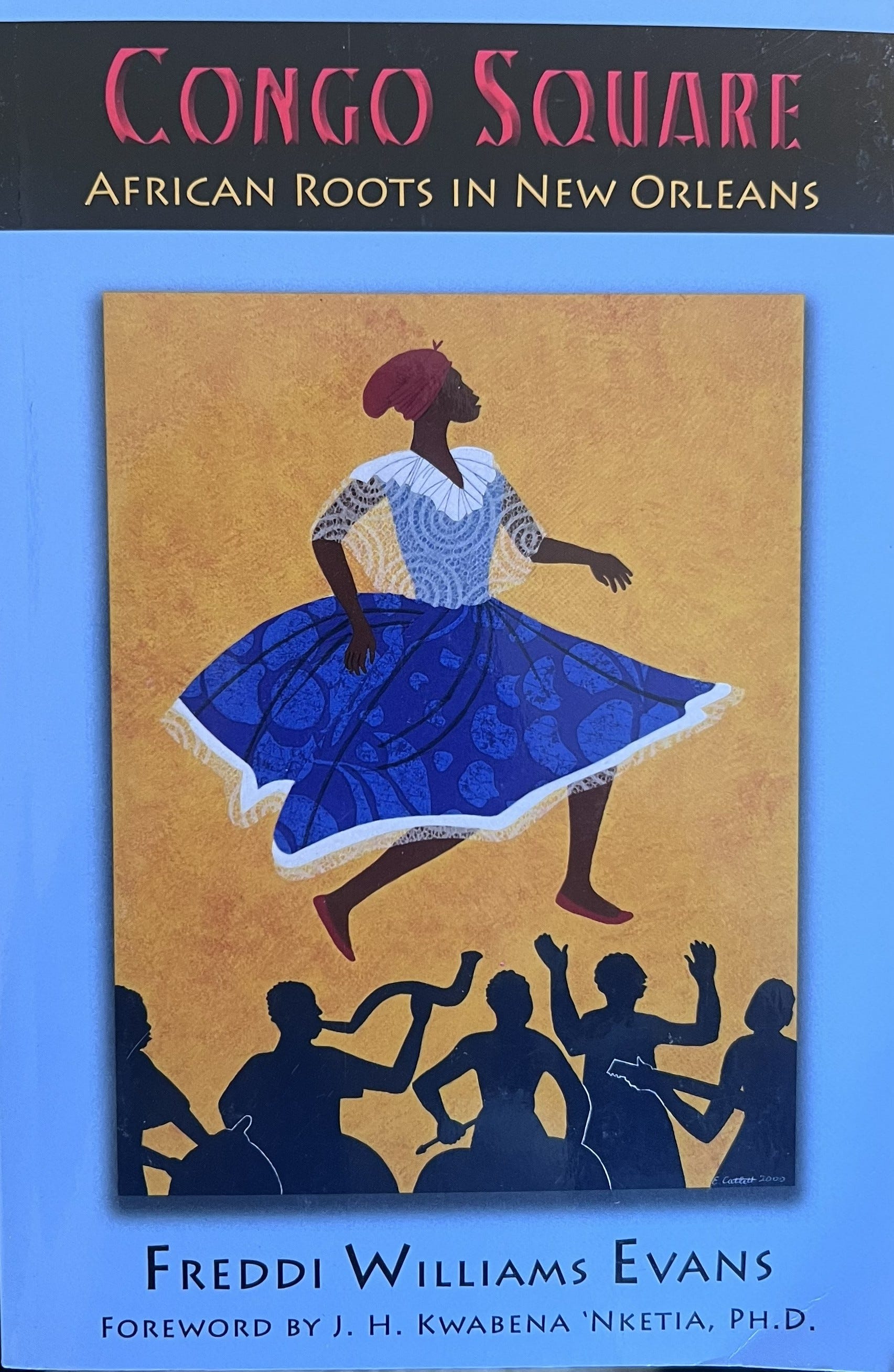
Going to lead us into this book with words from Hall (worth threading the needle) –
It is likely that the Congo (Bantu) impact upon Louisiana folklore has been exaggerated to the neglect of the Senegambian, and particularly the Mande, influence upon folktales and proverbs, though Congo names for folk dances were common. – Hall
Congo influence is, however, discernible in the bamboula, a folk dance, and in the use of the term wanga (ouanga) for a magical charm. – Hall
I know it is in the name, but I’ll reiterate anyway: we are talking about Congo Square. The name of the Square has changed many times over, largely on account of who was in power at the time, and what they felt was best use of the area(s) –
Place Publique, Places des Nègres, Place du Cirque, Circus Place, Circus Square, Congo Park, Places Congo, Congo Plains, Place d’Armes, and Beauregard Square were among the official as well as unofficial names of this location.
Before we dive in, you know what comes first.
Rum/R(h)um/Ron (English/French/Spanish).
Selling wares/goods in markets was a commonplace occurrence, particularly on Sundays, for the enslaved, especially so in New Orleans. And they often maintained practices from their Old World (i.e., women leading the “economic exchange” that took place in buying centers). Apparently, one of the items sold was good old tafia, which you also now know what that means –
The market women also sold lemonade, a Louisiana rum called tafia, and pure streaming coffee… – New Orleans Times, sourced from 1874
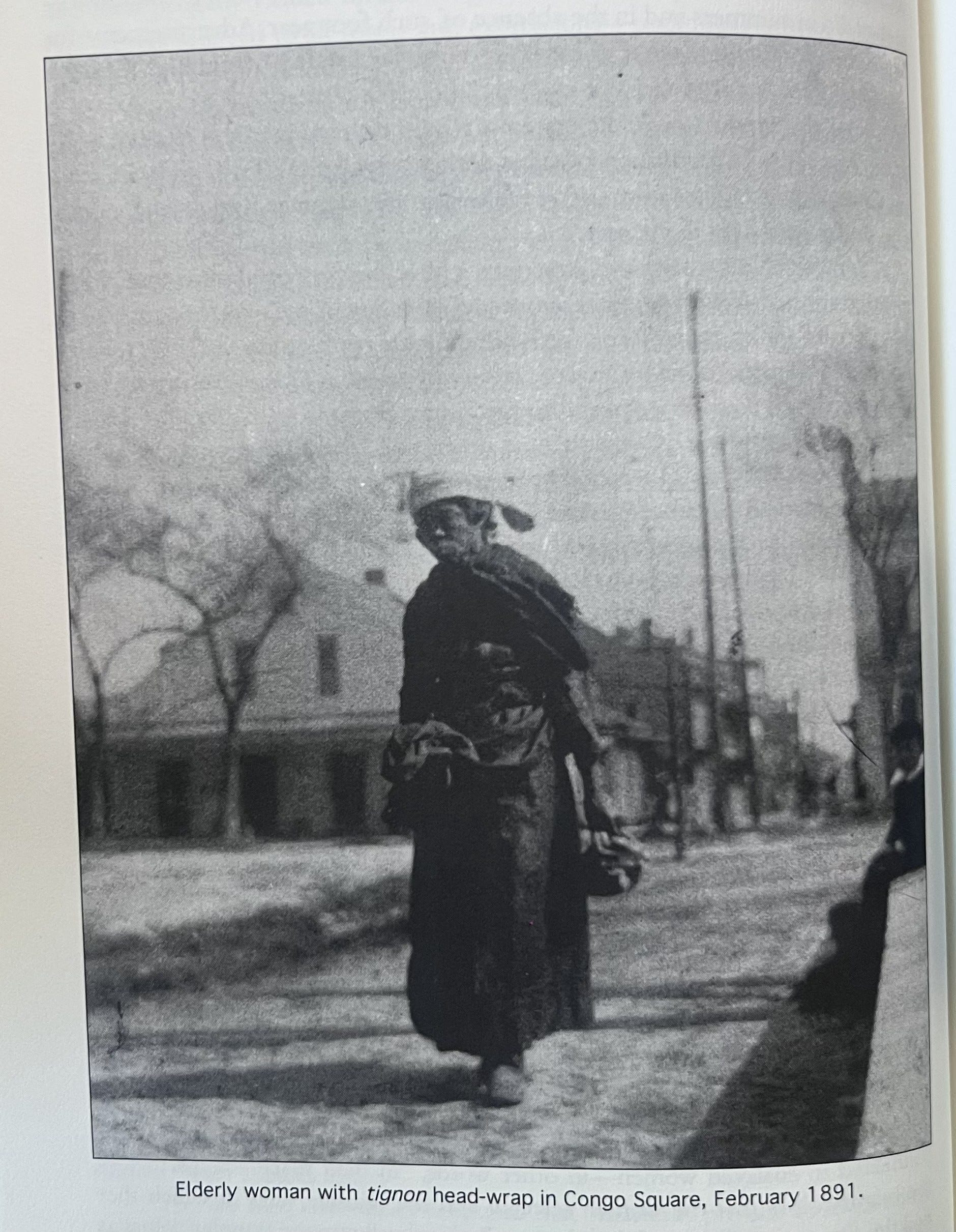
And then there is a reference by a Nina Monroe from 1921 regarding dances in Congo Square, where tafia shows up again –
I have [heard] from the lips of an [elderly man of African descent] once an expert at the Calinda, that there was much sport in it at the stage of dancing with water-filled bottles, and that the last remaining dancer well deserved to have the water in his bottle replaced by good “tafia” (whiskey) celebrate his victory.
The war-like version [of] the Calinda resembled a war dance called the Cadja, which a New Orleanian described in the late 1930s during an interview with the Federal Wrtiers’ Project staff. The dance reportedly came from Africa, was popular during slavery, and continued many years after…The dancer who won by lasting the longest received a bottle of tafia.
Like me, you probably saw the word “whiskey” in parentheses and had this reaction –

I’m fairly confident I know what’s going on here:
“Tafia” became a catch-all term for whiskey/spirits rather than a specific reference to rum, as Louisiana became more Americanized/Anglo. That, or the true definition was simply lost in translation over time.
These things were commonplace. Let’s take the words “Ethiopia” and “Congo” as examples. They were often broadly used to describe people of African descent engaging in specific behaviors or activities, irrespective of their true origin.
I can confidently say that tafia is not whiskey, historically speaking.
Takeaway: Louisiana’s cane spirit heritage continued into the 19th century, but we can conclude that its potency began to dim slowly; people of African descent seemed to maintain its upkeep in some form, though I’d argue other beverages, such as “Creole beer (pine apple cider),” and maybe even whiskey, were more widely consumed. Let’s get back to the heart of the book.
Congo Square.
Code Noir (1724) established Sundays as no-work days for the enslaved, which allowed them to gather within certain limitations. In New Orleans (1817), “a city ordinance [eventually] confined them to one gathering place.” Congo Square. This ordinance was also, in part, a reaction to the 1811 slave revolt. Limit movement, increase surveillance.
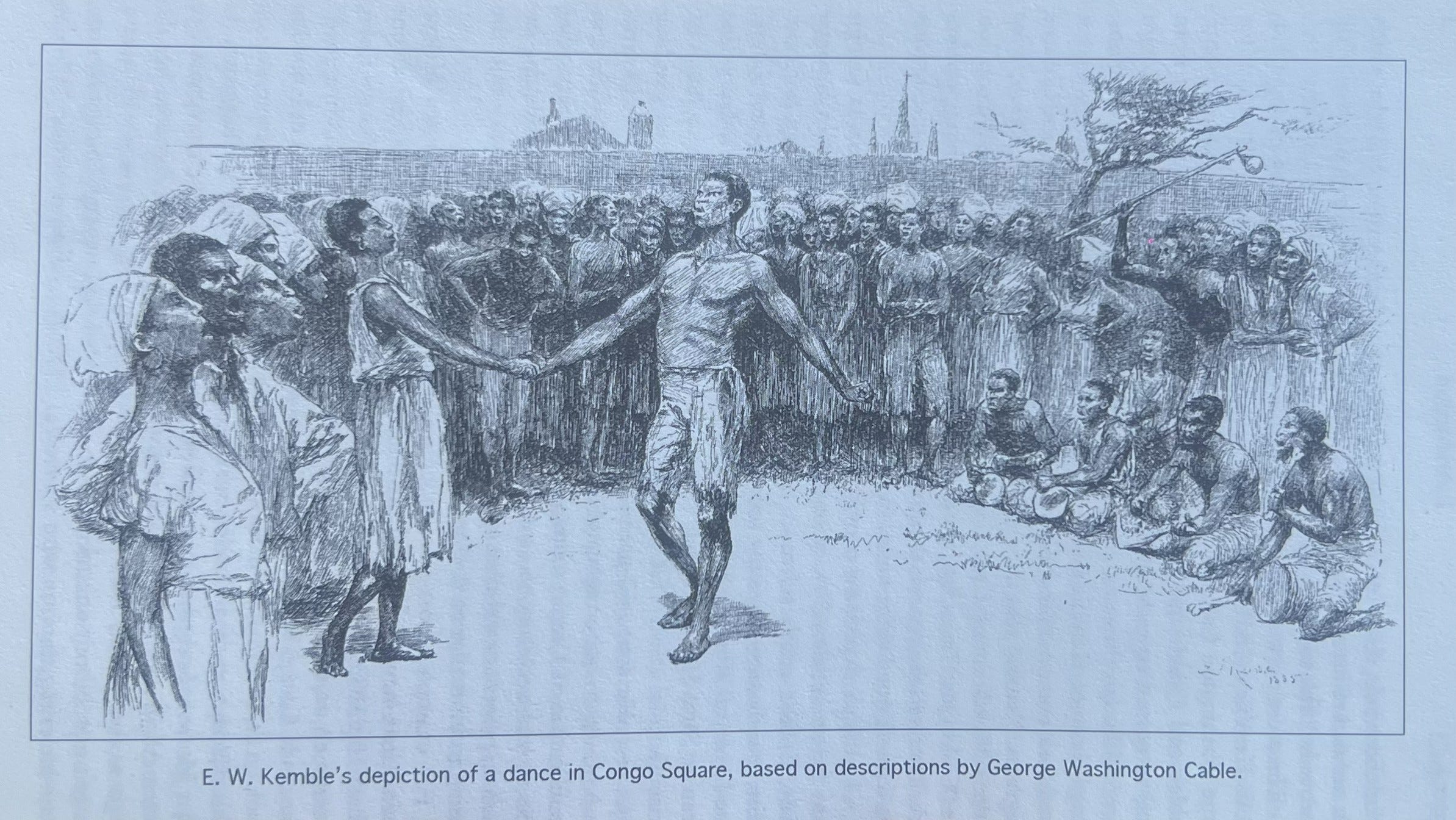
1786 is the earliest reference to the Square, “Place Congo,” where the “Yolofs, Foulahs, Bambarras, Mandingoes, and other races” gathered to “dance the bamboula.” Jumping forward a bit, it becomes evident that the Congo Square gatherings were part of a larger extension of socializing – as we saw from Hall’s references – that took place among the enslaved.
In the early 1840s, newspaper articles indicated that private and “unlawful” balls for the enslaved took place in homes and backyards. An 1841 Picayune article reported that an unlawful “Negro ball,” at “half past two o’clock on Sunday morning … was in full tide of successful operation.” Authorities arrested thirty-four enslaved people, and their owners had to pay the prescribed fines.
The economic status of many of the enslaved explained why, despite laws prohibiting them from visiting taverns, cabarets, balls, etc., newspaper articles and eyewitnesses reported that they continued to do so. Taverns that welcomed the money of the enslaved thrived and multiplied, and free people of color owned many of them. The prevalence and regularity of enslaved people at taverns was so great during the 1830s that an article published in The Bee in 1837 called for the city to regulate the large number of cabarets where “mobs and caucuses” of the enslaved assembled at night.
To be clear, many of those enslaved did need firm permission, in the form of the below passes (example), to congregate. However, we can reason out, logically, that enforcement could have been an ‘every now and again’ sort of thing –
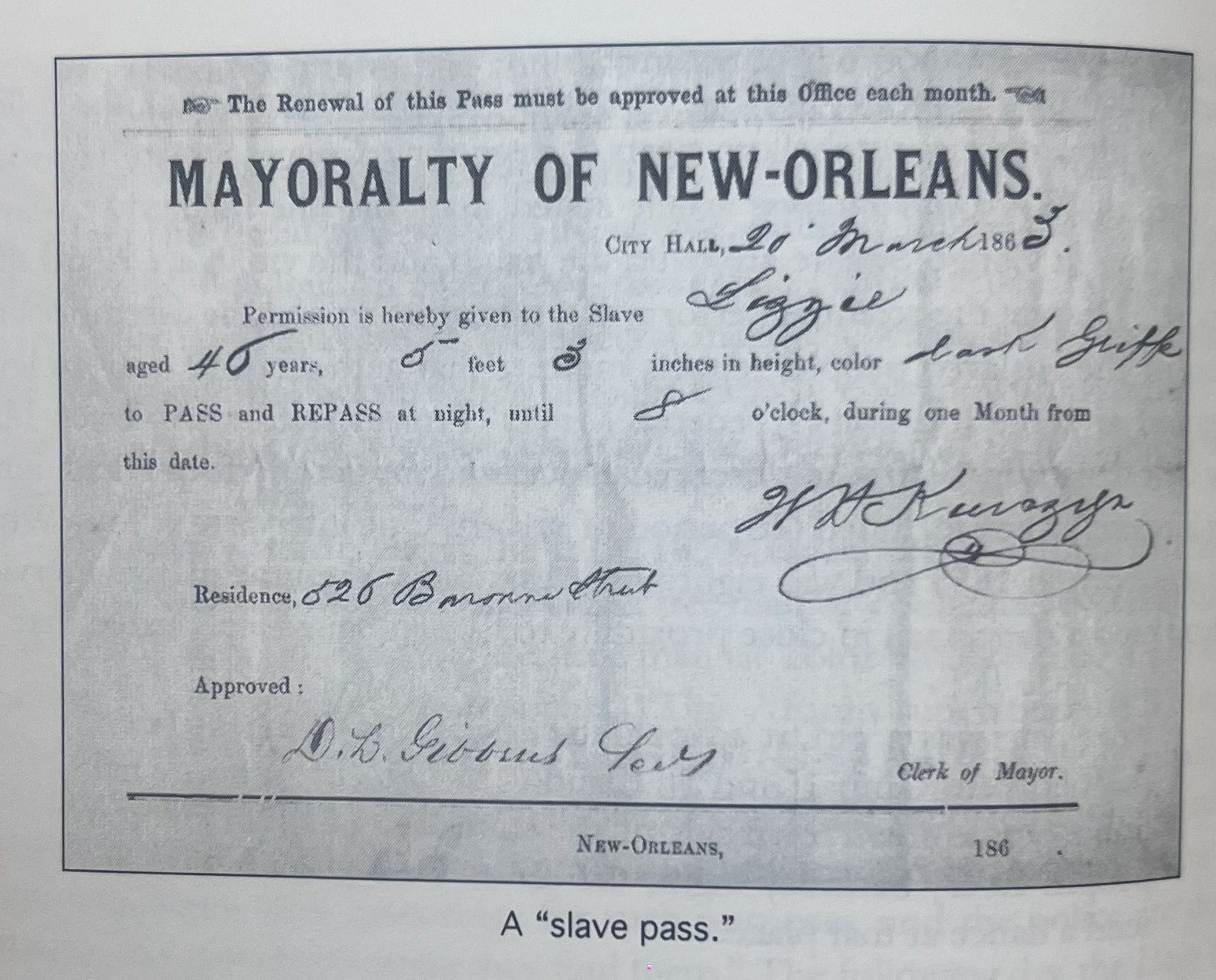
The author provides really rich details around:
Instruments utilized/manufactured (e.g., the quill)
Dances conducted (and what resulted in subsequent generations)
Same with music (i.e., Jazz, Zydeco, etc.)
Chants and spiritual aspects of the gathering
And on that last point, Evans makes an apt distinction between the Congo dance(s) and Voodoo, which would have been obfuscated by the many non-African descent viewers of the time –
One must not confuse the Congo dance with that of the voodoo. The Congo was danced by colored people in general. Dances were given on Sundays in the hall on Claiborne between Esplanade and Bayou Road (river side of the street).
We’ll come back to this in the last book.
I’ll leave you with a few popular songs and chants reportedly sung by the enslaved in the Square. First, what was chanted at 9pm when cannon fire in New Orleans signaled an end to the celebrations, the ‘return to the plantation’ warning shot –
Bon soir dansé. [Soleil] couché.
“Good night dance. The sun has set.”
Note: slight chance of misspelling in the quote above.
And finally –
Drums, along with other instruments, and a Calinda dance accompanied another popular song in Congo Square on Sunday afternoons, “Quand mo te jeune (Bal fini),” translated “When I was Young (The End of the Ball).” Reportedly, gatherers frequently sang this farewell song and performed the corresponding dance at sunset when police dispersed the crowd signaling the end of the Sunday celebrations. The lyrics summarize the sentiment of those who danced there. Life, pleasure, and good times pass away quickly, so enjoy them when you can…
Freddi Williams Evans.
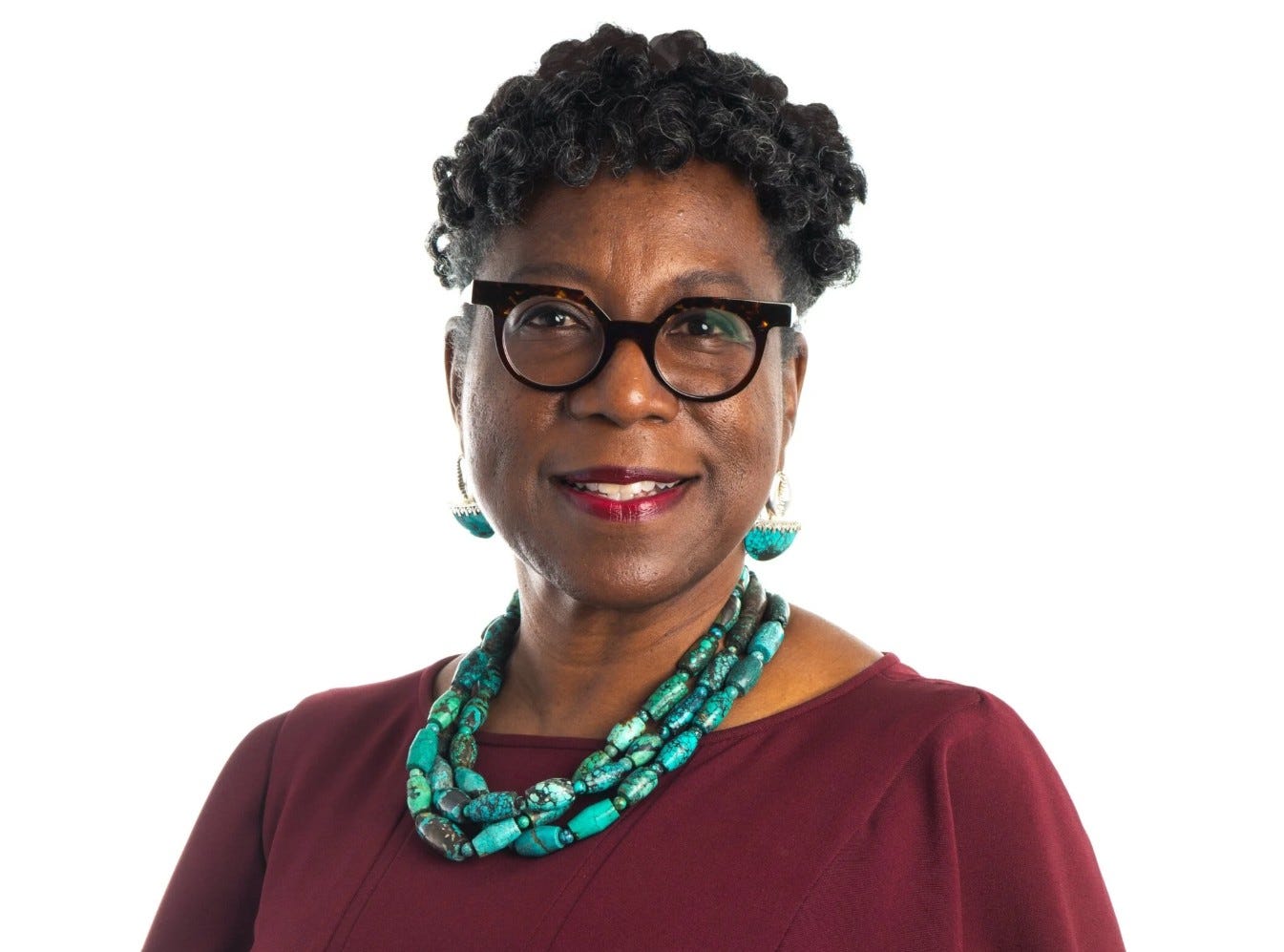
Just now realizing that the author has a rich (academic) music background across both undergraduate and graduate studies. Being from Mississippi and writing about Louisiana, with those academic/home stripes in mind, feels like a sonic satisfaction of massive proportions. For an even deeper dive into Evans’s background, please see her site (and support her work).
Okay, last but not least.
Voodoo Dreams: A Novel of Marie Laveau
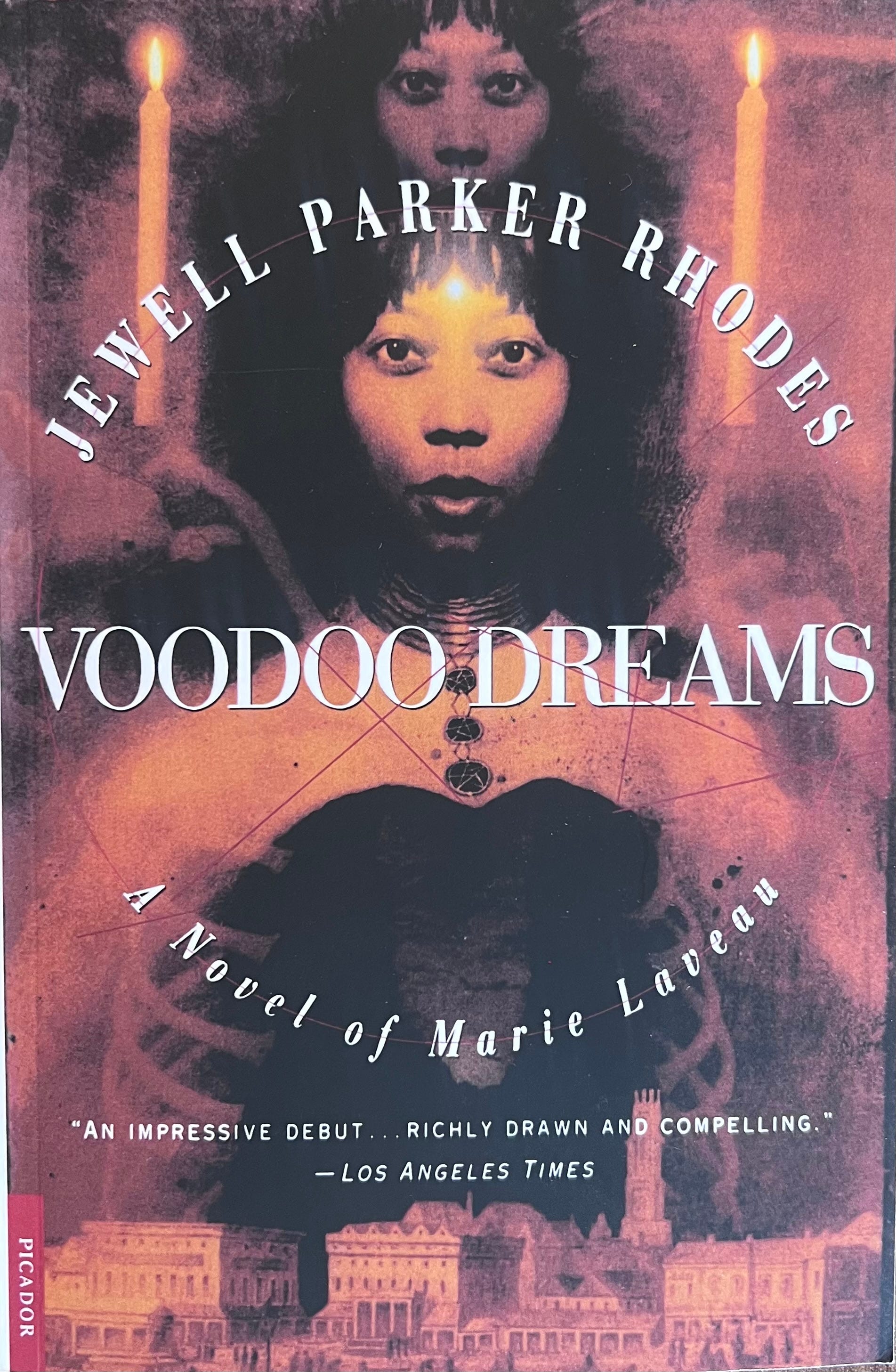
Continuing to thread the needle, this time with Evans speaking to Rhodes (emphasis mine) –
Congo Square resumed its prominence as a gathering place for African descendants after emancipation. Eyewitnesses who spoke with Federal Writers’ Project researchers in 1940 reported that followers of Voudou danced at night, weekdays and Sundays, and their accounts refer to the legend of Marie Laveau. – Evans
“Most of the time old Da-pa Laba would dance (He was a healer, too, who worked with Marie Laveau)…Then there was a big hollow tree in the square where everybody that believed in Marie Laveau would come and put money—fifteen cents, and liquor and cow peas—jambalaya…I did go to her house on St. Ann Street. It was a double house with three brick steps and was one story.” — Joseph Morris, 1940 interview with the Federal Writers’ Project [Evans]
First things first: the beverage.
I am spoiled with this author’s – I’ll call it – homage to the beverage because Rhodes really picks apart and showcases how relevant rum/cane spirits were to the people, time, place, things, and practices of New Orleans and greater Louisiana. I only have one complaint (and I am about to sound like a brat): there is an overuse of the beverage in contexts that lean abusive/desperate/pain numbing/etc. This is, however, nicely juxtaposed against rum being used as a core part of Voodoo practices, so there’s a balance. To clarify, I’m usually wary of leaning too hard into the “demon rum” (not the author’s words) narrative. There would be too many quotes to pull referencing rum, so I’ll give you a few. Author, thank you for this – I’m grateful.
Voodoo ceremony in the square –
Followers moaned while John passed tafia, barrels of molasses and rum.
Paying respect to the history of women dominating the market square, while men dominated the shipping/port activities. Yet still, rum was central to the economic motions of New Orleans –
Women dominated the square. Men dominated the wharf, scurrying barefoot on decks, unloading bales of puffed cotton, rum, and squealing piglets.
Marie Laveau’s elevation-to-Voodoo-Queen ceremony and probate –
Nattie passed tankards of rum. She pressed a rim to Marie’s mouth, forcing her to sip.
And finally –
…Marie used rum to suppress her worries.
“Who is this Marie Laveau?” Let’s take a very necessary first step before I answer that.
Rough primer on the spiritual practice(s) and people of Louisiana.
While I am not 100% sure, the records, popular opinion, and all trails lead us to confirm that Louisiana (broadly) and New Orleans (specifically) are the richest home bases for Voodoo religious and spiritual practices in the Southern U.S., going back a few centuries. While this was further enhanced by those brought to Louisiana after the Haitian Revolution (i.e., flood of slaveowners fled and took Haitians with them), I think it pays to remind ourselves that the original base of these practices came directly from the many African tribes who were originally brought to Louisiana in the 18th century. As a reminder (giving you a two-for-one here):
Gwendolyn Midlo Hall’s research shows the geographical as well as ethnic origins of these Africans. Under French rule, traders brought Bambara, Mandinga, Wolof, Fulbe, Nard, Mina, Fon, Yoruba (Nago), Chamba, Adó, and Kongo-Angola people to Louisiana. These ethnic groups landed directly from Africa within the twelve-year span between 1719 and 1731. Two-thirds of them originated from the Senegambia region from a limited number of nations with relatively homogenous cultural practices; and others originated from the Bight of Benin and the Kongo-Angola region. As the founding contingent in the colony, these Africans adapted and blended languages, food ways, and cultural materials and practices to develop the Creole slave culture and language to which those who arrived later had to largely adjust. – Evans
During the Spanish period, the Africans who traders brought to the colony originated in four main areas of the continent including the three locations involved under French rule along with the Bight of Biafra. These additional nations included the Caraba, Ibo, and Momo people. Among them were also Africans from Sierra Leone (the Kissy), the Wind[w]ard Coast (the Canga), the Gold Coast, and Mozambique. – Evans
The point here is that many Africans practiced a blend of Catholicism and their Old World spiritual practices; many practiced the former out loud and the latter in private –
What developed in general…was a New World religion that blended Catholicism with beliefs and practices from several African nations. In Louisiana, the name of the New World religion was Vodou, which derived from the Fon word “Vodun” meaning “spirit” or “Gods.” In Haiti…Vodou…Ethnic groups credited with the initial “emergence and resilience” of Voudou in Louisiana are the Yoruba and Fon, and the Kongo. – Evans
This, as you may now agree, is a form of religious/spiritual creolization. And we will start with a figure that embodied this creolization and remains a figure of historic proportion in the state: Marie Laveau.
This novel is a fictionalized account of the life and times of Marie Laveau, a nineteenth-century Voodoo Queen. Many New Orleans residents claim that Marie Laveau, the “Widow Paris,” lies in a tomb in St. Louis Cemetery No. 1, where to this day the faithful bring offerings and prayers. In St. Louis Cemetery No. 2 there is a crypt covered with crosses scratched in red brick by followers who believe Marie rests there. Others claim that Marie Laveau never did die.
The book.
The novel starts a little sluggish, but I advise you to keep going. The buildup is a nice one once you get past the feelings of ‘I have no idea what’s going on here.’ Case in point –
Her daughter might still survive. Marie chewed at the corners of her mouth. She was so far from Teché and childhood wonders. She’d been happy in Teché until she turned ten.
When a book opens up with these sentences, and imagery of snakes and feverishness, the reader naturally goes –

Like many great stories, however, Voodoo Dreams opens with a middle-to-end-of-the-story scene, and then tells you to hold your horses and jump back to the beginning. A literary flashback. That end-beginning scene is the aforementioned ‘John passing tafia around while in Congo Square’ quote. We’ll get back to his character in a bit. The real beginning contains the following characters:
→ A young Marie at ten years old.
→ Her grandmother (“Grandmère”).
→ The maternal elephant in the room, Marie’s dead mother, or “Maman.”
→ An understanding that this family is Creole, defined as French & Mulatto (Euro and African).
→ The rural, quiet, and serene setting of Teché, which I assume refers to somewhere along Bayou Teche (in Louisiana).
Something strange happens to Marie as she grows into her teenage years, where she feels as if spirits are speaking to her. Visions of inexplicable things where a man, her Maman, and grandmother feature prominently –
Maman, the man, and her visions were a circle and Grandmère lived in the heart of it, while she was on the outside, disconnected, looking in.
At some point, Marie’s pushing to know more about her Maman, as well as the potency of the “visions” she’s having, becomes too much for Grandmère to bear. So, Grandmère takes the family to New Orleans under the guise of finding Marie a husband.
On arrival, around 1819, the author pays good respect to the history of how the francophone population viewed their newfound countrymates. But also, the reality of New Orleans as a historical military garrison for the colonial power in control at the time. Reminder that Louisiana became a territory of America in 1803 (statehood, 1812). Grandmother on the Americans –
“Soldiers, New Orleans has always needed soldiers to govern her. If they were Spaniards, they’d be more brown, less tall. If they were Frenchmen, they’d be lean and handsome. These must be Americans. They look like mules. Barbarians.”
We are soon after introduced to the Aristocratic and quite chaotic DeLavier family: Antoine & Brigette (twins), and Louis (Protestant cousin from New England).
In the same setting, the author introduces the reader to Jacques, a shipman whom Marie later marries. Long story short: Jacques and Antoine get into a tussle → Black man is not allowed to strike a white man, so Jacques is beaten up → The entire time, Louis cannot take his eyes off of Marie, and is soon to lose contact with her for many decades (though he never stops thinking about her) → Louis is in Louisiana to marry…wait for it…Brigette (his cousin). CHAOS!
As Marie is navigating New Orleans, she recognizes a strange, almost homegrown familiarity with the place, its denizens, and her grandmother –
Marie recalled how strange it was that, in New Orleans, Grandmère had known precisely where to go. Strange, almost magical, how a crowd had greeted them at the Haben’s Haven cottage. People had bowed, given gifts, and, as Grandmère accepted them, each had responded as joyfully as though they’d been blessed.
Through sheer teenage nosiness, Marie eventually realizes that there is significantly more to this story, and that her grandmother is hiding the truth about their family –
“You can’t prevent Marie from knowing. Three generations of women. Three generations of Voodooiennes, all named Marie.” – Nattie speaking to Grandmère
Eventually, “the man” from the visions appears in the flesh: John. He convinces Marie that she will be just like her Maman, the “Queen of the Voudons,” if she follows his lead. And it is at this point that the story goes off on a wild set of twists and turns that I will bullet-point out for you, in as dramatic a fashion as possible, to provide you a preview without ruining the entire story:
John and Marie’s Maman was romantically engaged.
Brigette and Antoine are also romantically engaged (very often, I might add).
John is Brigette’s “voodoo doctor,” whom she consults with to get feedback on how to get rid of the baby that is…wait for it…her twin brother’s.
Brigette unknowingly consults with Marie (the Voodoo Queen who can make things happen); Louis spots/talks to Marie in this chance encounter after many failed attempts at locating her over the years.
Marie gets pregnant (John’s).
Marie kills Antoine.
Half the population of New Orleans claimed to have seen Marie Laveau the morning after she killed Antoine DeLavier.
Marie eventually has Nattie killed (John does it), and Marie kills John.
“John told me to. He ordered the death of Grandmère long ago…Wait and see if the baby survives. If it does, kill Grandmère.” – Nattie
John was smiling. Murder simplified his life. Nattie and Grandmère were two less women to worry about.
Inevitably, and eventually, Marie herself dies.
“NEW ORLEANS, June 17, 1881—Marie Laveau, who preferred to be called the Widow Paris, died last night of natural causes. She was one of the most colorful personages of New Orleans. Reports about her age [vary]: 70 to 103. The attendant doctor, M. Reims, estimates she was in her late 70s.” – Louis DeLavier, Special to the Daily Picayune
Let’s meet the author who penned all of this beautiful chaos.
Jewell Parker Rhodes.
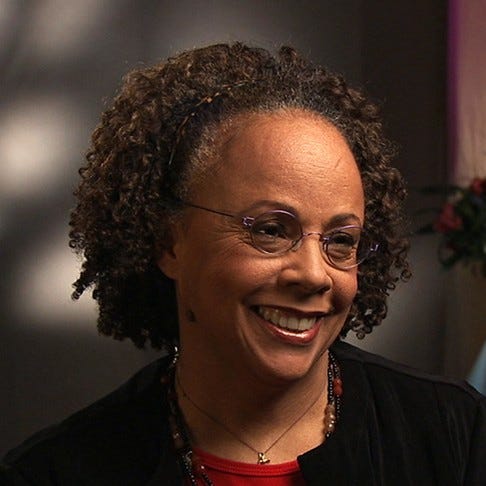
Pittsburgh native, and true embracer of all things homegrown (went to Carnegie Mellon). Contrary to popular belief, they don’t only produce engineers. They pump out great novelists as well. I’ll probably pick up the continuation of the Laveau story, Hurricane (produced ~20 years later), at some point.
Rhodes’s journey to Marie Laveau, and her sentiments more broadly on the history and folklore surrounding the Voodoo Queen –
I first came across a reference to Marie Laveau many years ago in a Time-Life book on Creole and Acadian cooking.
Little is known about Marie Laveau or her introduction to Voodoo. Folklorists seem to agree on certain facts: she was once a hairdresser and a Roman Catholic; she married a man named Jacques Paris (who later disappeared); and as the “Widow Paris,” Laveau transformed herself into a flamboyant and powerful Voodooienne.
Laveau had a daughter (named Marie, of course), who also practiced Voodoo, and this apparently confused people because her daughter claimed to be the original Marie Laveau.
Beyond this, the history of Marie Laveau is obscured by time, legend, and conflicting opinions.
Hope your noggin is knocking from all this information, in the best way possible.
Just remember,
in all that you do, please, don’t ever stop reading.