


Sipping tips: When you pick these up, I implore you to chew your food before swallowing. Most spirits taste harsh if you down them immediately (shots): you’re blasting your taste buds with high-proof alcohol. Take a small swig, let the liquid sit in your mouth, and hug every crevice for 4-5 seconds (open the taste buds). Down it. You’ll pick up all the flavors and truly know what the beverage tastes like. Once you do that 1-2 times, your palate is ready. Drink away. And to my NY’ers, I am sorry for all that wild language.
The last rotation was February 2026: Rhum Bielle’s Blanc, Worthy Park’s 9th Floor Cane Juice WPE, Rhum Clément’s Blanc Agricole, and Clairin (Kléren) Le Rocher.
Many thanks to the incredibly passionate and generous rum enthusiast community for sharing these expressions with me. I will do my part in paying it forward at the many gatherings to come. Cheers.
On to the sample party. Rodney Price, take it away.
Hampden x Maverick.
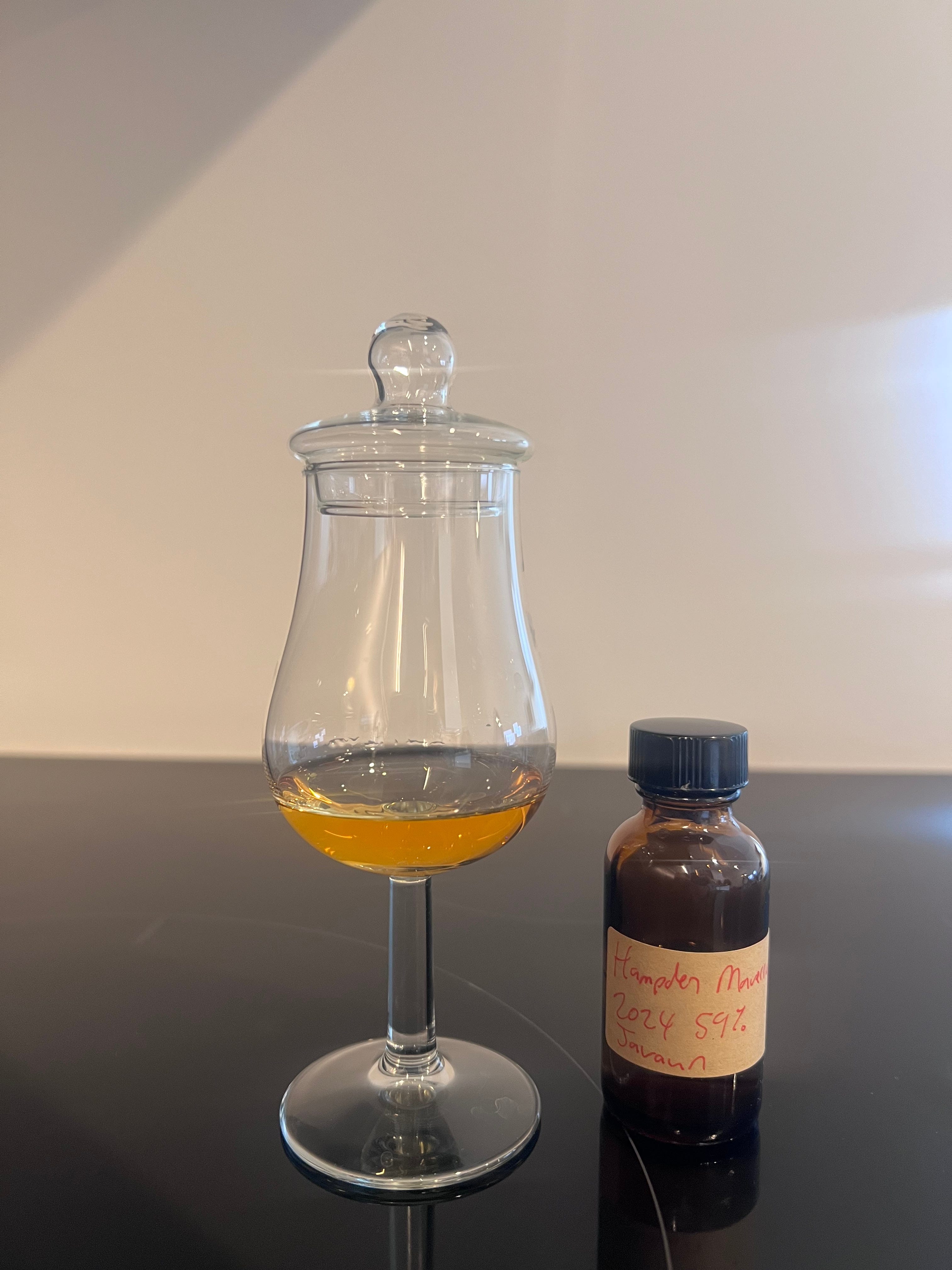
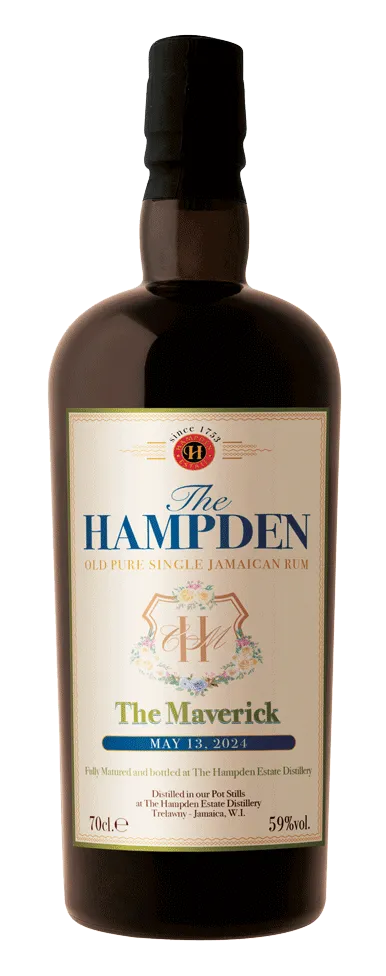
Back in early 2025 or so, I saw this expression in Kingston before the producer released it commercially to the world. At the price point (~$200 or JMD 30,000+), I chose to pass until I tried the liquid. Your decision to purchase it at that price is a personal one. However, I can comfortably say that you will not be disappointed in the experience if you appreciate heavier, bolder, unique(r) BIG MAN Jamaican rums. Why?
Well, there aren’t many rums that will leave as lovely a lingering aroma in your space as Hampden does. When I took the cap off the glass, I smelled the liquid the same way you do a candle in a store. I mean, it just doesn’t get much better than this on the nose. The signatures shine through: pineapple, green apple, and nail polish (in a good way, that always needs a disclaimer).
That 59% ABV lifts the taste right to every corner of your mouth. The bananza of overripe fruit and very dry, overly ripe coconut satiates immediately. The peppery heat tickles the tongue in a ‘relax yourself’ sort of way. Almost as if to remind you that too many tastings will promptly sit you down.
Like most Hampdens, for those uninitiated, there will be a shocking challenge to the palate. Get past that (see Sipping tips). For the initiated, if, like me, you haven’t had a Hampden drink in a while, the Maverick will feel like a nice welcome home. Akin to landing at your three-lettered domestic airport, or crossing over a bridge that signals you’re back in comfortable territory.
All around, Maverick is a hefty rum, but a fantastic sipper. Would I grab this? I’d have to say yes. With it being a limited release, it would behoove you to speed up your run to the store; once these are gone, much like their New Beginnings release, they’re finito.
A little bit on the technicals/background of this expression (full sheet here):
→ It is very common in Jamaican rum culture for different producers to distill a range of rum marques, or desired flavor profiles. In my opinion, the production of multiple flavor profiles on the island is one of many reasons you can find yourself in the Jamaican rum hole, and never leave; You will run a lifetime race trying to taste every marque, blend of marques, aged marques, blend of aged marques, etc.
→ Hampden’s Maverick is the eponymous name for Christelle Harris’s and Matthew Hann’s son. Harris is a leader of the business and member of the Hussey family, Hampden’s owners. From what I recall, Harris and Hann also picked the name/marques for New Beginnings to signify their marriage. This is their thing!
→ The marques/vintages used are “50% HGML 2018, 40% LFCH 2020, and 10% C<>H 2021. HGML is one of the distillery’s most intense marks, LFCH represents Hampden’s second lightest formula, while C<>H is also among the distillery’s most iconic marks.”
→ Batch-distilled, molasses and dunder…what is there not to love?
Note: Some prior pieces on Hampden expressions →
What’s next?
Papalin x Réunion (10 year).
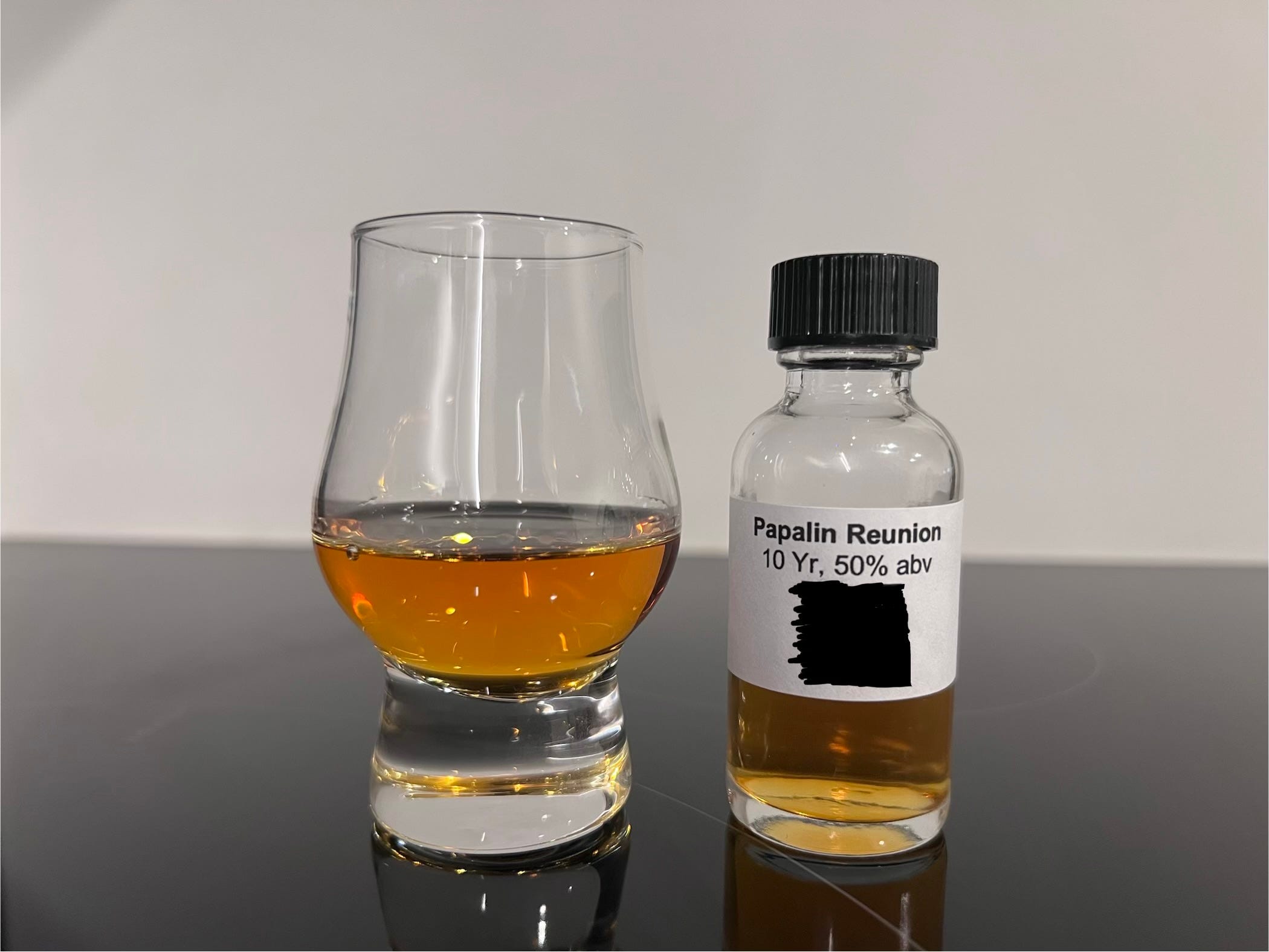
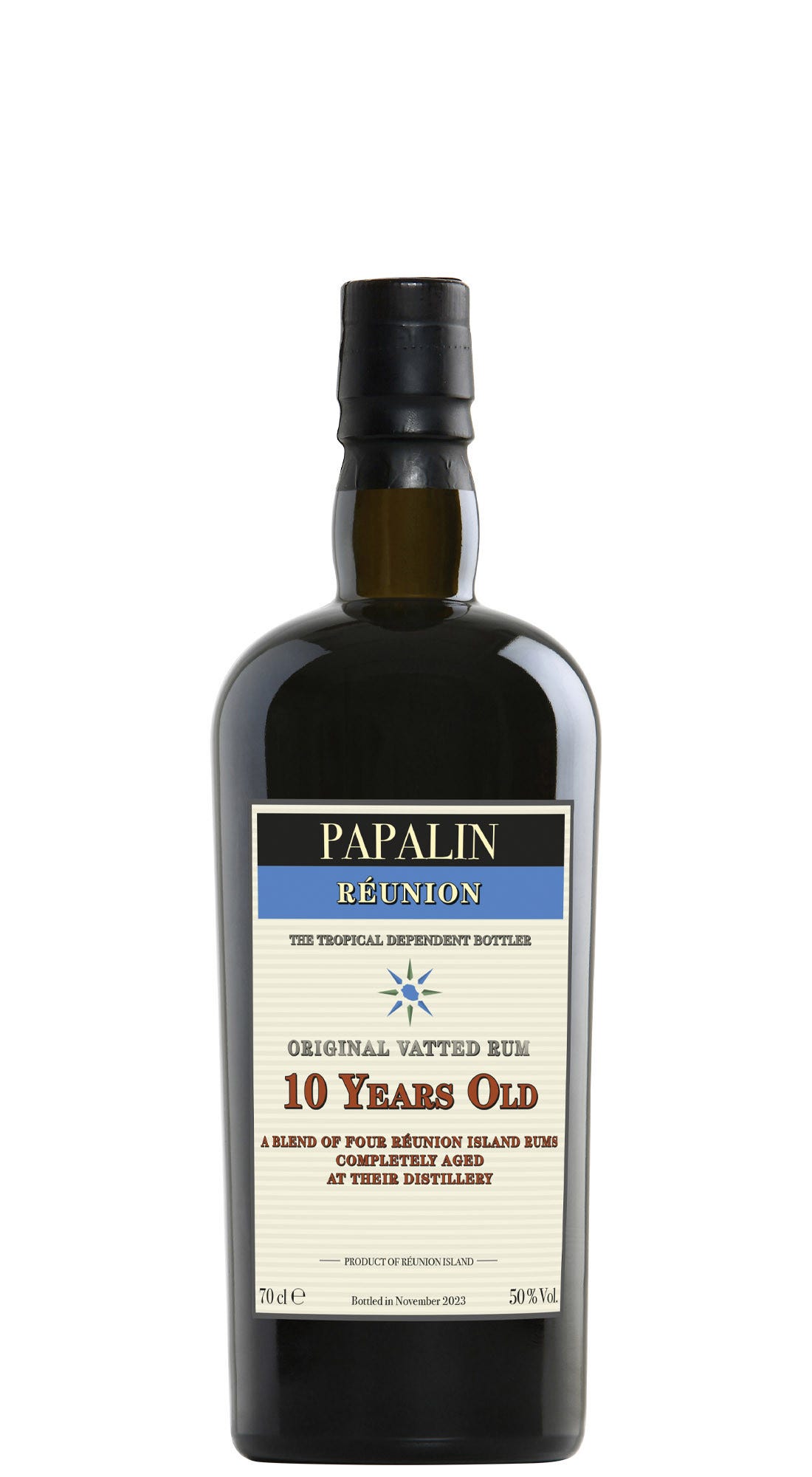
First things first, Paplin is one of many rum projects/sub-brands of the Italian bottler/importer & distributor, Velier. A romantic undertaking that strokes the head of purists (emphasis mine):
Papalin is a project dedicated to blends conceived by Luca Gargano. The idea stems from a desire to return to the history of rum in the late 1800s, when Jamaican traders began to make blends, without indicating which distilleries they came from. Tropical blends have gradually disappeared since the 1970s, when the distilleries began selling their products. Papalin therefore intends to return to the oldest tradition. The aim is to unite rums from a single island that have been totally produed and aged at distilleries. — Velier Explorer
Notably, Réunion Island is not in the “Caribbean.” It is actually so damn far from home base that it would be irresponsible of me not to show the leap between here and there -
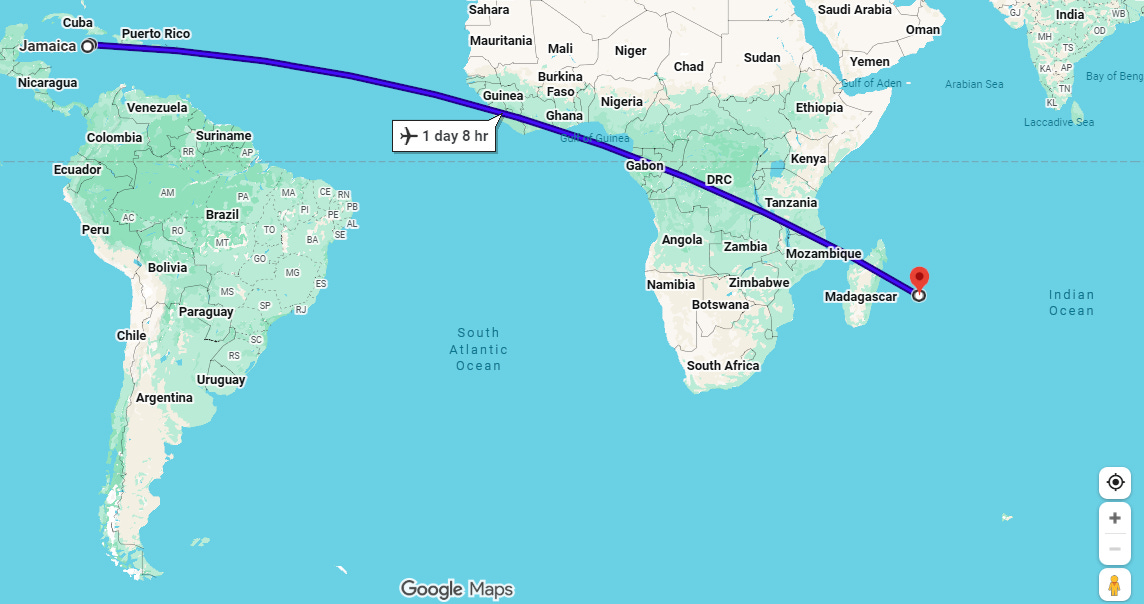
Bye bye Caribbean Sea/North Atlantic Ocean. Hello Indian Ocean. Would I make the journey for Réunion r(h)ums? Yes. This Papalin specifically? Not necessarily. Before we talk about the liquid, quick overview of the non-Caribbean island.
→ Like its Caribbean counterparts, Guadeloupe and Martinique, Réunion is an overseas department of France.
→ Something Réunion does share with its fellow overseas departments is being on land with a volcano. In fact, “[i]t is home to one of the world’s most active volcanoes, the Piton de la Fournaise, which is also a World Heritage site.” (source: BBC)
→ Like other francophone places, they speak both French and their own Creole.
→ Unlike many other francophone places, their population (the original use of the word Creole) is a mixture of European, Asian, African, Malagasy, etc.
→ Note: click the BBC link for a deeper dive on the island. If you’re in NY (Brooklyn), check out Maloya. Great Réunion Island restaurant, plenty of their homeland r(h)ums.
Ok, back to the Papalin Réunion (10 year).
The aroma stands out immediately. Like a baby cousin of Hampden, which I don’t mean in a pejorative way. Before looking up details of the expression, I guessed that some of this blend had to include Grand Arôme (larger/higher aroma) style juice, similar to TCRL’s Guadeloupe (2013). In layman’s terms: the fermentation process resulted in a bit more going on in the nostril and tongue départements.

The big difference between this and the Hampden, though, is that the Papalin has more of a cherry cola (or maybe even grape soda) type of smell that sits on top of the green apple. Like having a green apple while drinking soda. Balance. In a very contradictory way, the taste both fades quickly, while also having enough character to make you go -

With that in mind, I think this is a great r(h)um for the uninitiated who would like to explore something far outside of countries they typically drink from. What you’ll get most is a sort of sweet/sour pomegranate taste. It’s a very mellow r(h)um at 50% ABV, which I think is largely because of the French oak aging—that has to be some of what’s going on—as opposed to resting in ex-Bourbon barrels. This one is okay for me; the Haiti and Jamaica Papalins are lingering on my mind.
Some details on the Réunion (10 year), courtesy of The Auditor:
This molasses based rum is a blend of 3 traditional rums, a 10, 12, and 15 year rum. The other component is a 10 year old aged Grand Arome rum. These were all aged in ex-French oak on the island of Savanna before being blended together and bottled at 50%.
If you want a full overview of the island, its r(h)um characteristics, the players involved, etc., check out Matt Pietrek’s article, Réunion Rendezvous. Per Pietrek -
True confession time: having dug into Réunion’s rum making, the island now tops my list of “must-visit rum destinations.”
All in all, for me personally, this one is okay. Time and place. Let’s go back to Jamaica, where the answer will usually be, “YES!”
Transcontinental Rum Line x Jamaica WP 2012 (5 year).
Note: WP = Worthy Park, the Jamaican rum company that manufactured the juice.
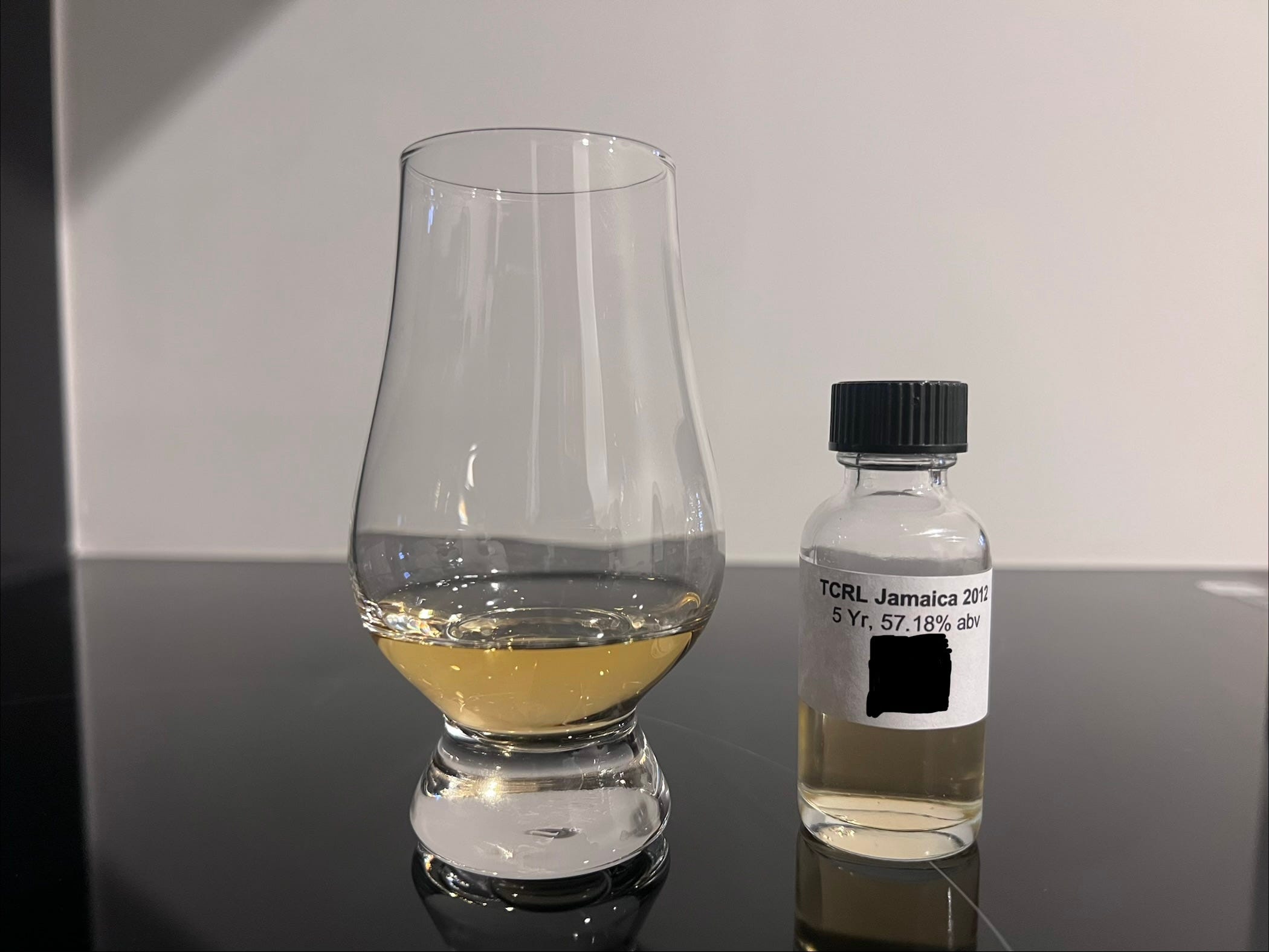
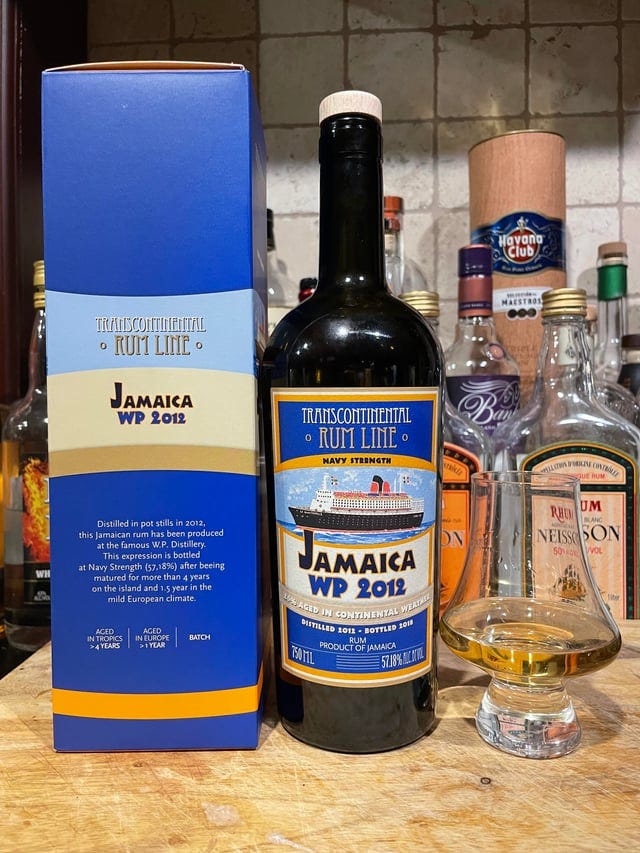
Quick overview on Transcontinental Rum Line (TCRL)—another La Maison & Velier brand/project—pulled from my other piece covering TCRL’s Guadeloupe 2013 -
The Transcontinental Rum Line reflects the great diversity that can be found around the world of rum production. Inspired by the voyage of rum between the country of distillation and its ageing conditions, the founding principle of the range is transparency. No sugar or colouring is added and ageing conditions are clearly stated on every bottle.
Velier said, “Leave it to us, we are going to cover every gamut of this rum blending/aging thing, from pure tropics to tropics-continental.”
Layman’s terms: some of the juice is aged in the tropics, some of it is aged continentally (Europe). The history behind this is sometimes romanticized for commercial & marketing purposes. In other words, former colonial holdings of European nations had very little political/economic alternative but to ship their rum to their former/existing “Mother” metropolis. Alright, on to the liquid.
Aroma is fully back in bold Jamaica land! Roars at you in the best way possible, which I think is further enhanced by how young the aged distillate is. There are some rums that have a golden personality, which is not to imply anything about “gold” labeling in the product description. This golden “thing” isn’t necessarily positive or negative. It just is. Smell-wise, this Jamaica WP 2012 (5 year) fits that golden bill.
For specificity: this smells like when you’re a kid and someone kicks up dust/dirt. Only this time, someone infused that dirt with banana perfume. I promise this is supposed to evoke good imagery. Almost has a citrus/tamarind infusion that cuts through the nose hairs. Love it.
Unsurprisingly, given this is a Worthy Park distillate, that banana fruit-forwardness shines in a very beat-your-chest-as-a-proud-Jamaican manner. That golden taste is there, but with a richness (i.e., not thin). This is a heavy one for non-rum drinkers, unless you regularly indulge high ABV spirits of other varieties. Speaking of, the 57.18% ABV carries the flavors right through to the chest. It stays with you. When you try this one, I advise you to put the glass down after the first couple of sips, rub your tongue around your gums and mouth. Enjoy the linger.
All in all, Worthy Park has yet to make something I don’t like. The continental aging, “1.5 year[s] in the mild European climate,” is pretty negligible for me, insofar as my non-chemistry/distilling brain can reasonably tease out. The “4 years on the island” stands out drastically.
Of the four reviewed here, this is my favorite. See, sometimes the younger spirit is better for certain palates. Disclaimer: Taste is subjective, this is me-specific. I’d probably recommend something else for a non-discerning drinker who wants to explore. However, it is not just I who feels this way about the liquid.
If it were the only liquor I had, I could drink this all day any day. — Reddit user
Last but not least, Haitian juice touched by Trinidad.
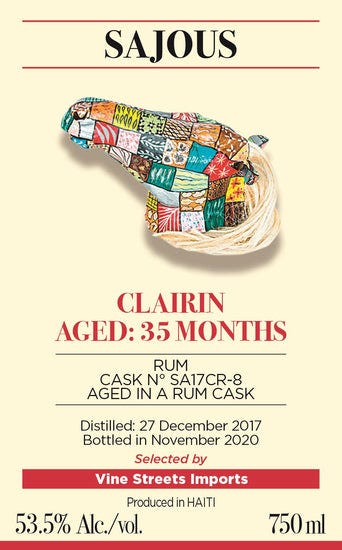
Clairin (Kléren) x Sajous (35 months), ex-Rum/Caroni
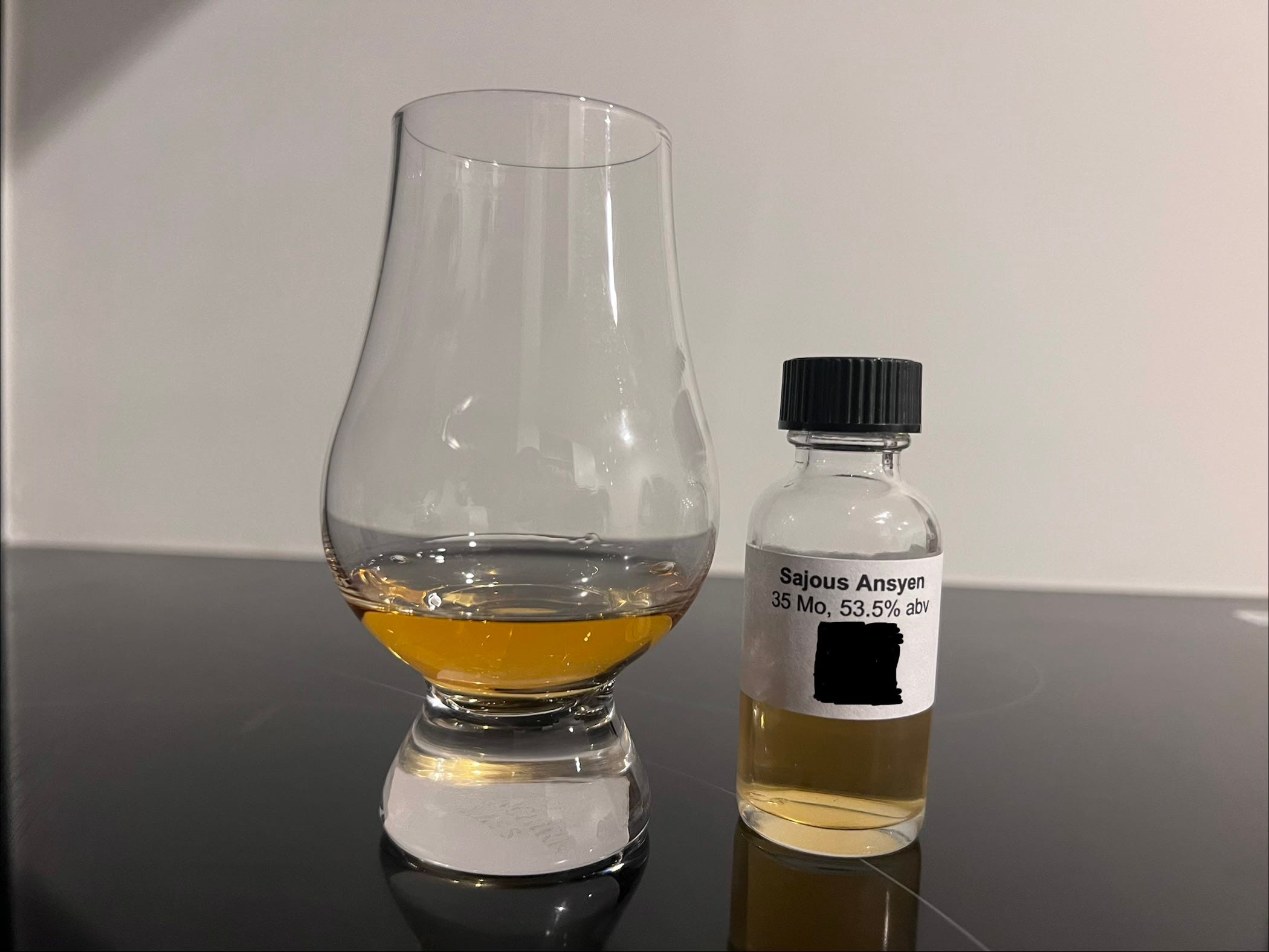
Believe it or not, Velier is all over this one as well. From Matt Pietrek’s Modern Caribbean Rum: A Contemporary Reference to the Region’s Essential Spirit -
In 2013, Velier, La Maison du Whisky, and Berling jointly created a company called the Spirit of Haiti to bottle and distribute Haitian cane spirits in international markets. The partnership assists small, artisinal clairin producers by bottling and exporting their products globally.
The hand-crafted, artisanal nature of clairin production, under the organization’s “key requirements,” makes other spirit producers look like industrial vagabonds -
Sugarcane varietals indigenous to Haiti. No hybrids and no use of chemicals.
Hand harvesting.
Transportation of cut cane to the distillery by animals, e.g., oxcarts.
If cane juice is the source material, it cannot be treated in any way, e.g., dilution or acidification. Similar restrictions apply for cane syrup-based production.
Only natural yeasts and a minimum of fermentation duration of 120 hours.
Distillation must be a batch process, with limits on rectifying plates if used.
Must be bottled at Haiti at distillation strength.
Notably, however, Pietrek correctly points out that the specifications above “have no legal standing” (i.e., HaïRum is the official certification mark/wording for Haitian rums). Also, he notes that the requirements have attracted criticism from some who believe that “it glorifies antiquated production methods and discourages producers from modernizing their production.” Strong arguments can be made on either side of the coin. I’ll get on with the main focus of this piece.
The liquid.
This is my first go at an aged clairin. I love (LOVE!) the unaged, indigenous craftsmanship that comes right off the still, so I’ll admit that I had some skepticism about this aged product. Now, after drinking A LOT of the Rumcast’s Guyana VSG pick, which was aged in a heavy char ex-rum cask, I got a bit more excited about the Sajous (35 months) since it was reportedly aged in an ex-Caroni cask. For rum people, Trinidad’s Caroni needs no explanation. For the uninitiated, here you go -
In today’s rum world, few names cause as much excitement among collectors as Caroni. Although not a drop of rum has emerged from the shuttered distillery in two decades, the substantial stocks of rum left behind have slowly dribbed out to consumers via independent bottlers and command ever-growing premium price. — Matt Pietrek, Modern Caribbean Rum: A Contemporary Reference to the Region’s Essential Spirit
In the end, Caroni’s stock was sold off piecemeal. Angostura got an early look at the casks and acquired some; other purchasers included the Main Rum Company and Italy’s Velier…The value of Caroni’s stock remains a highly contentious issue in Trinidad today. — Matt Pietrek, Modern Caribbean Rum: A Contemporary Reference to the Region’s Essential Spirit
You should be thinking, “Velier again?!” Yes. It would be fair to argue, given Velier’s influence in getting Hampden going-going, that their prints are on every single rum covered in this piece. Off-track, back to the juice.
The aroma is such a pleasant deviation from all of the other liquids covered. It’s an odd balance of freshness, which I assume is coming from the cane juice material, balanced with a grape or pear-like astringency. The ex-Caroni cask is playing a heavy role here because I don’t remember the unaged Sajous (WHICH IS LOVELY) smelling anything like this.
Good burn on the taste. Lingers heavily. I haven’t quite tasted anything like this, so it is hard for me to place it. There’s a nutty-cherry character to it that I really enjoy. I’d say this is a close runner-up to the Jamaica WP 2012 (5 year). I’m fairly convinced I still prefer the unaged Clairins. With that said, I’d buy this in a heartbeat because it’s still damn good juice.
Like the Le Rocher coverage, I’ll drop the video highlighting the distillery where the Sajous distillate was produced. The rum tastes better when you see the heart and soul that went into creating it -
Note: Mr. Sajous tells you exactly how it’s made, so I’ll spare you the quick technicals. On another note, wow, Haiti is beautiful. I cannot wait to go.
Again, handcrafted.
What you think you know about rum is play-play. Indulge in the vast history of the beverage in a meaningful way. Your palate will thank you for the pleasure.
Cheers and #rumresponsibly